Towing a trailer, camper, or work rig makes blind spots much harder to manage. A good monitor can help you change lanes with more confidence and spot vehicles that sit outside your mirrors.
Below, we focus on systems that make sense for towing setups, from radar-based kits to camera-assisted options, so you can choose the right balance of range, warning style, and installation effort.
Best 10 Blind Spot Monitoring System for Towing Picks for 2026
24GHz Radar Lane Change Alert Kit
Universal 12V BSD Safety Assist

- Dual 24GHz sensors monitor rear and side blind spots
- Multi-mode light and buzzer alerts for lane changes
- Works for many 12V cars, SUVs, and pickups
Best For: Drivers wanting radar-based blind spot alerts with clear lane-change warnings
Camera Blind Spot Display System

- 6.25-inch IPS screen shows left and right blind spots
- 120° camera view with night vision and brightness control
- Hidden, non-drilled install with magnetic display mount
Best For: Drivers who want a side-view camera monitor with recording support
24GHz BSD Sensor Alert System

- 24GHz sensors detect moving objects in rear blind zones
- LED and buzzer alerts change with turn-signal use
- Fits many 12V vehicles with plastic bumpers
Best For: 12V vehicles with plastic bumpers needing radar lane-change warnings
1080P Camera Blind Spot Display

- 1080P capture with sound and light warning support
- 6.25-inch IPS display shows both sides at once
- IP68 waterproof camera build for harsh conditions
Best For: Drivers wanting a higher-resolution camera blind spot monitor
Premium 77GHz Coverage
77GHz Millimeter Wave Radar Blind Spot Monitor

- 77GHz radar with 3.5m x 70m moving-object coverage
- Weather-resistant performance in rain, fog, and sandstorms
- BSD, LCA, DOW, AOA, B-pillar warning, and RCTA modes
Best For: DC12V vehicles up to 4.7m with plastic bumpers
Heavy-Duty 77GHz Kit
77GHz BSD Lane Change Warning System
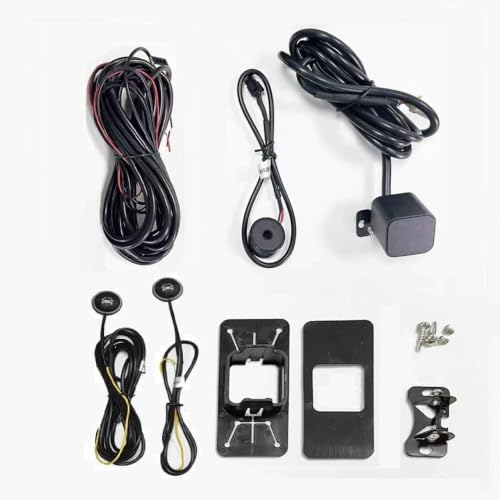
- 4T4R 77GHz radar with improved precision and anti-interference
- Compatible with metal or plastic rear bumpers
- BSD, LCA, DOW, AOA, B-pillar warning, and RCTA alerts
Best For: Larger DC9-16V vehicles needing metal-bumper support
Budget 24GHz Option
24GHz Universal Blind Spot Detection System

- Dual 24GHz radar with 3.5m x 15m rear blind-spot coverage
- BSD, LCA, and DOW alerts with LED plus buzzer warnings
- Automatically starts with the engine and ignores stationary objects
Best For: DC12V vehicles with plastic bumpers needing basic alerts
Ultrasonic Lane Assist
Pyle 5-Meter BSD Reverse Assist

- 5-meter detection with LED and buzzer alerts
- BSD, lane change assist, and rear cross traffic alert
- Designed for 12V vehicles with reverse assistance
Best For: 12V drivers needing a simple blind spot and backup aid
Radar Towing Alert

- 24GHz radar with up to 98 ft detection range
- LED and buzzer alerts for lane changes
- Requires soft rear fascia and pro installation
Best For: Compatible 12V vehicles needing radar-based blind spot coverage
Compact Side Warning

- Ultrasonic blind spot detection for side/rear alerts
- Auto-activates when the vehicle starts
- Detection range starts at 3.5 m and can be set to 5 m
Best For: Drivers wanting a basic ultrasonic warning system for common vehicles
24GHz Radar Lane Change Alert Kit – Universal 12V BSD Safety Assist
If you want a blind spot monitoring system for towing-style lane changes and highway merging, this 24GHz radar kit focuses on moving vehicles approaching from the rear and sides. It is designed for DC 12V vehicles and uses dual millimeter-wave sensors to provide alerts in different driving situations, including normal blind spot detection and turn-signal-assisted warnings.
Best For: Drivers of 12V cars, SUVs, and pickups who want radar-based blind spot alerts and are prepared for professional installation.
Pros:
- Dual 24GHz radar sensors with a 1–32.8 ft detection range
- Multi-mode alerts: solid light, flashing light, and buzzer feedback
- Works in low-visibility conditions like rain, snow, fog, and night driving
- Includes an installation manual and radar angle alignment tool
Cons:
- Professional installation is recommended
- Requires careful sensor placement, angle, height, and wiring setup
- Radar sensors cannot penetrate metal surfaces
This is a practical choice if you want radar-based blind spot coverage rather than a camera display. Its biggest strengths are the dual-sensor design and clear lane-change alerts, but installation requirements matter a lot for real-world performance.
Camera Blind Spot Display System – 6.25" Dual-View Monitor
For buyers who prefer a visual blind spot monitoring system for towing and lane checks, this camera-and-display setup shows the left and right sides on a 6.25-inch IPS screen. The camera offers a 120° side view, adjustable image positioning, and automatic brightness adjustment for easier use day or night.
Best For: Drivers who want a side-view camera system with a built-in display and recording support.
Pros:
- 6.25-inch HD IPS display with simultaneous left/right viewing
- 120° camera angle with adjustable image position for better framing
- Automatic brightness adjustment and high-definition night vision
- Hidden, non-drilled installation with magnetic display mounting
Cons:
- Uses AHD signal compatibility, so setup may be model-dependent
- 5V power system and wired installation may take planning
- Designed around side-view camera monitoring rather than radar detection
This model is best if you want a camera-based view of blind spots instead of an alert-only system. The display quality, night vision, and recording support make it a flexible choice, especially when you want a clearer look at what’s alongside the vehicle.
24GHz BSD Sensor Alert System – Plastic Bumper Lane Assist
This blind spot monitoring system for towing-type lane changes uses 24GHz microwave sensors to watch the rear side area of the vehicle and warn about moving objects in the blind zone. It is built for DC 12V vehicles with plastic bumpers and adds both LED and buzzer alerts when the system detects traffic closing in from the adjacent lane.
Best For: 12V vehicles with plastic bumpers that need radar-based blind spot warnings for safer lane changes.
Pros:
- 2-piece 24GHz microwave sensor setup for blind zone detection
- Range of 6–12 meters with speed-gap-based object detection
- Lane-change mode adds rapid flashing and three buzzer beeps
- Fits many sedans, SUVs, MPVs, and pickups with 12V power
Cons:
- Only installs on vehicles with plastic bumpers
- Professional installer installation is required
- Will not work with metal bumpers due to radar interference
For the right vehicle, this is a straightforward radar blind spot solution with clear warning behavior when you signal a lane change. The main limitation is compatibility: bumper material is critical, so this is only a good fit when the mounting requirements are met.
1080P Camera Blind Spot Display – A65S Warning Monitor
If you want a blind spot monitoring system for towing-style visibility that leans on image quality, this camera display package pairs two blind spot cameras with a 6.25-inch IPS monitor. It adds 1080P capture and sound-and-light warnings, while keeping the installation hidden and non-drilled with side-door mounting.
Best For: Drivers who want a higher-resolution blind spot camera system with warning output and recorder support.
Pros:
- 1080P video capture with sound and light warning function
- 6.25-inch HD IPS display shows left and right blind spot views
- 120° camera angle and adjustable image positioning
- IP68 waterproof, shockproof, and corrosion-resistant design
Cons:
- Uses AHD signal compatibility, so setup may require matching hardware
- Wired, surface-mount installation may take more effort than simple add-ons
- Designed as a camera/display system rather than a radar sensor kit
This version is a stronger pick than lower-resolution camera systems if image detail matters. The combination of 1080P recording, alert support, and waterproof construction makes it a practical visual-monitoring option for drivers who want more than just proximity warnings.
Premium 77GHz Coverage – 77GHz Millimeter Wave Radar Blind Spot Monitor
If you need a blind spot monitoring system for towing or other demanding driving, this 77GHz kit is built to watch moving traffic around the sides and rear of your vehicle. It uses automotive-grade radar to detect moving objects in a 3.5m x 70m range and is designed to stay reliable in rain, fog, and sandstorms, which helps when visibility drops.
Best For: Drivers of DC12V cars, SUVs, MPVs, and pickups up to 4.7m who want weather-resistant blind spot alerts.
Pros:
- 77GHz radar detects moving objects with wide 3.5m x 70m coverage.
- Works in heavy rain, dense fog, sandstorms, and temperature extremes down to -40℃.
- Supports BSD, LCA, DOW, AOA, B-pillar warning, and RCTA alerts.
- Automatically starts and stops with the engine for low-maintenance use.
Cons:
- Fits only DC12V vehicles up to 4.7m unless an extension cable is purchased.
- Only fits plastic bumpers, not metal ones.
This is a strong pick if you want broad radar coverage and extra warning modes for lane changes, overtaking, and reversing. The limitation is fitment, so it’s best matched to vehicles that meet the bumper and length requirements.
Heavy-Duty 77GHz Kit – 77GHz BSD Lane Change Warning System
This blind spot monitoring system for towing is aimed at larger vehicles that need dependable side and rear alerts. It uses a 77GHz millimeter-wave radar with a 4T4R automotive-grade chip, and it is designed to detect moving objects around the vehicle in rain, fog, and snow while reducing unnecessary alarms from stationary objects.
Best For: Drivers of DC9-16V SUVs, MPVs, pickups, trucks, and sedans up to 4.7m who need metal-bumper compatibility.
Pros:
- 4T4R 77GHz radar offers stronger precision, range, and anti-interference than 24GHz systems.
- Works with metal or plastic rear bumpers.
- Provides BSD, LCA, DOW, AOA, B-pillar warning, and RCTA features.
- Automatically powers on with the engine and shuts off when the engine stops.
Cons:
- Vehicle length is limited to 4.7m unless an extension cable is purchased.
- Power and voltage listings indicate DC9-16V compatibility, so fitment should be checked carefully.
If you want a radar-based safety kit for a tow vehicle, this model stands out for its broader compatibility and metal-bumper support. Its main appeal is dependable moving-object detection with fewer false alerts and a wider feature set than basic lane-change systems.
Budget 24GHz Option – 24GHz Universal Blind Spot Detection System
For shoppers looking for a straightforward blind spot monitoring system for towing or everyday driving, this 24GHz kit offers basic lane-change and reversing alerts at a lower-spec radar level. It monitors the left and right rear blind spots within 3.5m x 15m and triggers LED and buzzer warnings when it detects moving objects above the listed speed difference.
Best For: DC12V cars, SUVs, MPVs, commercial vehicles, and pickups with plastic bumpers.
Pros:
- 24GHz dual-radar setup covers left and right rear blind spots.
- Supports BSD, LCA, and DOW warnings.
- Automatically starts and stops with the engine.
- Uses LED indicators plus a buzzer for immediate alerts.
Cons:
- Only fits plastic bumpers, not metal ones.
- Coverage is shorter than the 77GHz models at 3.5m x 15m.
- Only detects moving objects, not stationary hazards.
This is the most basic option in the group, so it makes sense if you want core blind spot and lane-change warnings without the extra 77GHz features. It’s practical for vehicles that meet the bumper requirement, but buyers needing broader range or metal-bumper compatibility should look higher up the list.
Ultrasonic Lane Assist – Pyle 5-Meter BSD Reverse Assist
If you want a blind spot monitoring system for towing that also helps with reversing, this Pyle kit combines BSD, lane change assist, and rear cross traffic alert in one 12V package. Its ultrasonic sensors are designed to monitor nearby vehicles and closing objects in the neighboring lane, with LED and buzzer alerts to warn the driver.
Best For: 12V vehicles that need basic blind spot monitoring plus reverse parking assistance.
Pros:
- 5-meter detection length with 2.5-meter width for nearby lane monitoring
- Includes 2 ultrasonic sensors, LED monitors, buzzer alerts, and installation accessories
- Offers BSD, lane change assist, and rear cross traffic alert functions
- Works with 12V vehicles and includes a 1-year warranty
Cons:
- Requires a 12V vehicle, so it is not universal for every vehicle type
- Ultrasonic design is less advanced than radar-based systems for longer-range detection
- Installation details suggest a more involved setup than a simple add-on
For drivers who want a straightforward alert system for lane changes and backing up, this Pyle option covers the essentials without extra complexity. It is a practical fit for users who value combined blind spot and reverse assistance in one system.
Radar Towing Alert – BY-J 24GHz Blind Spot Kit
This blind spot monitoring system for towing uses 24GHz millimeter-wave radar to help detect collision risks during lane changes and reversing. With left-rear and right-rear sensors, it can warn with LED lighting and buzzer alerts when a moving object enters the monitored area, making it a stronger choice for drivers who want radar-based coverage.
Best For: 12V cars, SUVs, trucks, and RVs that can use a radar system with professional installation.
Pros:
- 24GHz millimeter-wave radar with up to 98 ft detection range
- Uses left-rear and right-rear sensors for lane change monitoring
- Includes BSD, lane change assist, and door-open warning functions
- Automotive-grade waterproof plugs and LED/buzzer alerts
Cons:
- Professional installer installation is required
- Does not work through metal bumpers or on vehicles with a metal bumper
- Only fits vehicles with a soft rear fascia and 12V power
Compared with ultrasonic options, this BY-J kit is aimed at buyers who want radar-style sensing and a longer stated detection range. It is best suited to compatible vehicles where professional installation is acceptable and the rear bumper material matches the system requirements.
Compact Side Warning – Riloer BSD Ultrasonic Kit
If you want a blind spot monitoring system for towing that focuses on simple side and rear warning, this Riloer ultrasonic kit is built to detect moving objects entering the blind area. It automatically activates when the vehicle starts and uses an LED indicator to alert the driver when something comes within range.
Best For: Most passenger cars, SUVs, and MPVs needing a basic ultrasonic blind spot warning kit.
Pros:
- Ultrasonic detection for side and rear blind spot monitoring
- Automatically activates when the vehicle starts
- LED reminder lights up when a vehicle enters the detection range
- Detection range can be set up to 5 m
Cons:
- Base detection distance is listed as 0-3.5 m, so range is modest
- Uses a 16V power rating, which may require checking vehicle compatibility
- Less feature-rich than kits that add lane change or rear cross traffic functions
This Riloer kit is a practical pick if you want a compact warning system without radar complexity. It covers the basics well for drivers who mainly need a simple alert when another vehicle enters the blind spot area.
How We Picked the Best Blind Spot Monitoring System for Towing
We focused on products that fit the real needs of towing: wider detection coverage, dependable side-rear alerts, compatibility with 12V vehicles, and hardware that can work on trucks, SUVs, RVs, and other tow vehicles. We also favored systems that support lane-change warning, rear cross-traffic awareness, and practical install layouts for larger vehicles.
Quick Comparison
Radar-based systems are usually the stronger choice when you want broader detection and more consistent performance in changing weather. Camera-based options can be helpful if you want a visual reference in addition to alerts. Ultrasonic kits are often more affordable, but they can be better suited to slower-speed maneuvering than highway towing.
Key Buying Factors for a Blind Spot Monitoring System for Towing
Detection Type
Millimeter-wave radar is typically the best all-around option for towing because it is designed to detect vehicles in adjacent lanes and can perform well at highway speeds. Camera systems add visibility, while ultrasonic sensors are more limited in range and are often better for parking or low-speed awareness.
Coverage and Vehicle Size
Longer trailers, wide mirrors, and extended truck bodies create more blind area. Look for systems with enough side coverage to match your vehicle length and towing setup, not just a standard sedan install.
Alert Style
Some systems use lights, buzzers, or display prompts. For towing, alerts should be clear but not distracting, especially during lane changes, merging, and backing into a campsite or loading area.
Power and Installation
Most universal kits run on DC 12V, but wiring routes, sensor placement, and display mounting matter. Choose a system that fits your tow vehicle and leaves room for trailer hitch hardware, sensors, and rear accessories.
Driving Conditions
If you tow in rain, darkness, or traffic-heavy areas, radar-based detection is usually more dependable than basic proximity systems. If your main concern is backing, parking, or maneuvering in tight areas, a different sensor style may be enough.
Who Should Buy Which Blind Spot Monitoring System for Towing?
Choose a radar-driven Blind Spot Monitoring System for Towing if you frequently haul on highways, drive in traffic, or want more confidence during merges. Pick a camera-assisted system if visual confirmation matters most. Consider an ultrasonic kit if you mainly need low-speed awareness around the trailer, driveway, or jobsite. For truck, SUV, and RV owners who want a practical universal solution, a 12V radar-based setup is usually the safest place to start.