The right stem can make a touring bike feel more comfortable, stable, and easier to control over long days in the saddle. Reach, handlebar height, clamp size, and adjustment range all affect how well a setup suits your route and riding position.
We’ve gathered 10 bike stems for touring across several designs, from simple fixed alloy and steel models to adjustable and suspension stems. Use the guide below to narrow the options by fit, compatibility, comfort, and intended load.
Best 10 Bike Stems for Touring Picks for 2026
Adjustable Fit Pick
Ritchey Adjustable 4-Axis Stem

- 90mm extension for a compact, upright position
- +/-55° adjustment fine-tunes height and reach
- Forged 6061 alloy with 31.8mm clamp
Best For: Tourers seeking broad cockpit adjustment
Classic Touring Value

- 70mm extension with a 15° angle
- 25.4mm bar clamp and 22.2mm fork diameter
- Simple steel construction in silver
Best For: Traditional touring-bike replacements
Comfort-Focused Choice

- 100mm length with a 30° high rise
- Soft, medium, and firm springs included
- Helps absorb vibration on rough surfaces
Best For: Comfort-oriented road, gravel, and e-bike touring
Wide-Range Adjustability

- 110mm length with 0-60° angle adjustment
- CNC-machined 6061-T6 aluminum construction
- Fits 31.8mm bars and 28.6mm steerers
Best For: Riders experimenting with touring cockpit position
Best Comfort Upgrade

- Angle adjusts from -90° to +90°
- Includes riser, spacers, and tools
- Oxidized aluminum construction
Best For: Touring riders seeking a more upright, customizable position
Best Lightweight Fixed Option

- 115g aluminum construction
- Four available lengths from 60mm to 90mm
- Fixed ±7-degree angle
Best For: Touring riders with a settled fit who want a simple replacement
Best Height-and-Angle Adjustment

- Up to 150mm height adjustment
- 120-degree angle adjustment
- Forged, anodized alloy construction
Best For: Touring riders needing substantial cockpit-position flexibility
High-Rise Comfort Pick

- 35-degree rise for a more upright position
- 6061 T6 aluminum-alloy construction
- Four-bolt clamp with hex wrench included
Best For: Tourers wanting a raised handlebar setup
Most Adjustable Touring Fit

- Angle adjusts from -70 to +70 degrees
- Designed to tune height and reach
- 3D-forged aluminum construction
Best For: Tourers fine-tuning cockpit comfort
Wide Compatibility Option
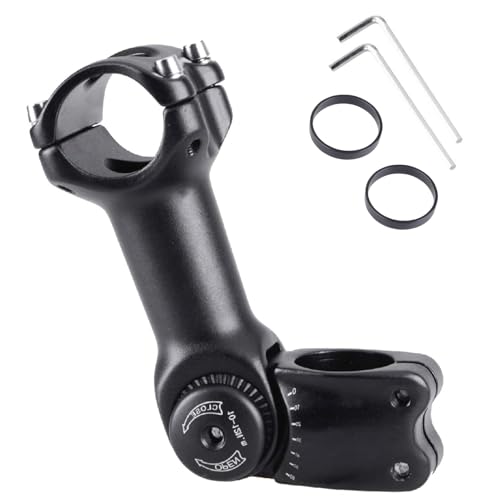
- 0-to-60-degree angle adjustment
- 130mm length in the supplied configuration
- 6061 aluminum alloy with four-bolt clamp
Best For: Tourers using 25.4mm handlebars
Adjustable Fit Pick – Ritchey Adjustable 4-Axis Stem
For riders comparing bike stems for touring, the Ritchey Adjustable 4-Axis is a practical choice when reach and handlebar height may need fine-tuning. Its 90mm extension and wide +/-55-degree adjustment range can help create a more compact, upright cockpit without replacing the stem or rearranging spacers.
Best For: Touring, gravel, commuter, and mountain-bike riders who want a highly adjustable modern cockpit.
Pros:
- Wide +/-55-degree angle range supports substantial reach and height adjustments.
- 31.8mm bar clamp and 1-1/8-inch steerer fit many modern bikes.
- Forged 6061 alloy construction and stainless steel bolts are suited to all-weather use.
Cons:
- Its 228g claimed weight is unlikely to appeal to riders prioritizing the lightest setup.
- Compatibility depends on having the specified 31.8mm bar and 1-1/8-inch steerer dimensions.
The Ritchey stands out for touring setups that need fit flexibility. Confirm the clamp sizes and available cockpit clearance before ordering.
Classic Touring Value – Sunlite Steel Touring Stem
The Sunlite Steel Touring Stem is a straightforward option among bike stems for touring, offering a 70mm length, 15-degree angle, and 25.4mm bar clamp. Its steel construction suits riders looking for a simple replacement with traditional sizing.
Best For: Bikes using a 25.4mm handlebar clamp and 22.2mm fork diameter where a basic touring-style stem is needed.
Pros:
- 70mm length provides a moderate extension for touring-oriented setups.
- 15-degree angle offers a defined rise compared with a flat stem.
- Simple steel construction and silver finish suit practical replacement builds.
Cons:
- Steel construction is heavier than an alloy alternative.
- Its 25.4mm clamp and 22.2mm fork diameter are less universal than modern threadless sizing.
- The fixed 15-degree angle provides less fit adjustment than an adjustable stem.
This is best viewed as a basic, traditionally sized touring stem rather than a highly tunable cockpit component. Verify both diameters carefully before purchase.
Comfort-Focused Choice – KINEKT Suspension Stem
For riders seeking comfort from bike stems for touring, the KINEKT Suspension Stem adds suspension to the handlebar interface. Its 100mm length, 30-degree high rise, and included soft, medium, and firm springs are designed to reduce vibration and chatter on rough pavement, gravel, and uneven paths.
Best For: Road, gravel, commuter, and e-bike riders who want a higher position and adjustable front-end vibration absorption.
Pros:
- 30-degree rise supports a more upright riding position.
- Three interchangeable springs allow riders to adjust the suspension feel.
- Designed to help reduce wrist, shoulder, neck, and hand fatigue from road buzz.
Cons:
- At 0.65kg, it is substantially heavier than a conventional alloy stem.
- Stem-mounted handlebar bags are not compatible.
- Requires a 1-1/8-inch threadless steerer and 31.8mm handlebar clamp; quill systems need an adapter.
The KINEKT makes the most sense when comfort and vibration control matter more than low weight or handlebar-bag compatibility. Measure the bike carefully before ordering.
Wide-Range Adjustability – FIFTY-FIFTY Adjustable Stem
The FIFTY-FIFTY Adjustable Stem gives touring riders a broad range of cockpit positions without changing stems. Its 110mm length and 0-60-degree angle adjustment can accommodate different reach and handlebar-height preferences, provided your bike uses the listed modern clamp dimensions.
Best For: Riders who want a long, adjustable stem for road, mountain, hybrid, e-bike, or other compatible bike setups.
Pros:
- 0-60-degree adjustment offers multiple riding positions.
- 110mm length provides a relatively long reach option.
- CNC-machined 6061-T6 aluminum combines durability with a lighter material than steel.
- Includes two hex keys and four clamp bolts for installation.
Cons:
- Its 0.49kg weight is substantial for riders focused on minimizing component weight.
- Compatible only with 31.8mm handlebars and 28.6mm steerer tubes.
- The 110mm length may be too long for riders seeking a compact touring cockpit.
This stem is useful when position experimentation is a priority, especially across different riding styles. Check both diameters and make sure the 110mm extension suits your current reach.
Best Comfort Upgrade – Adjustable Touring Stem Set
For riders comparing bike stems for touring, this adjustable set is aimed at improving comfort over long days. Its stem riser and adjustable stem let you change both height and angle, helping create a more upright position when your current setup causes back or wrist discomfort.
Best For: Touring riders who want a more upright, customizable riding position.
Pros:
- Adjustable angle from -90° to +90°.
- Includes a 115mm stem riser, a 145mm adjustable stem, and four spacers for positioning flexibility.
- Made from oxidized aluminum for a balance of strength and weight.
- Includes two wrenches and installation instructions.
Cons:
- Compatibility is limited to 31.8mm handlebars, so size confirmation is important.
- The package combines multiple adjustable components, which may require more setup than a fixed stem.
This is a practical choice when touring comfort and riding-position adjustment matter more than a minimalist cockpit. Confirm the required dimensions before installation.
Best Lightweight Fixed Option – 31.8mm 7-Degree Bike Stem
Among bike stems for touring, this FOMTOR model suits riders who already know their preferred reach and angle. It uses a conventional 7-degree design, weighs about 115g, and is available in several lengths to help fine-tune fit without adding an adjustable mechanism.
Best For: Touring riders who want a simple, lightweight replacement stem with familiar dimensions.
Pros:
- Available in 60mm, 70mm, 80mm, and 90mm lengths.
- Uses a 31.8mm handlebar clamp and 28.6mm fork-stem diameter.
- Constructed from CNC-machined 6061-T6 aluminum alloy.
- Four-bolt bar clamp helps hold the handlebar securely.
Cons:
- Only offers a fixed ±7-degree angle rather than on-bike angle adjustment.
- Requires choosing the correct length before purchase.
- Designed around specific 31.8mm and 28.6mm dimensions.
This stem is a straightforward fit-adjustment choice for a touring bike with compatible measurements. Its fixed design is best when you prefer simplicity and have already settled on your cockpit position.
Best Height-and-Angle Adjustment – 120-Degree Stem Riser
This adjustable model is one of the more flexible bike stems for touring because it changes both height and handlebar angle. Its 150mm height adjustment and 120-degree angle range can help riders experiment with a more comfortable position on extended rides.
Best For: Riders who need substantial height and angle adjustment for comfort-focused touring setups.
Pros:
- Adjusts up to 150mm in height and across 120 degrees of angle.
- Fits a 28.6mm fork diameter and 31.8mm handlebar diameter.
- Three-dimensionally forged alloy construction with polished, anodized finish.
- Includes spacers, hex wrenches, threaded rods, cap hardware, and six screws.
Cons:
- Compatibility is restricted to the listed 28.6mm fork and 31.8mm handlebar sizes.
- The extensive adjustment range may be unnecessary for riders who already have a dialed-in fit.
- Installation involves multiple components and hardware.
Choose this stem when maximum fit experimentation is a priority. Before buying, verify both clamp dimensions and allow time to set the angle and height carefully.
High-Rise Comfort Pick – CYSKY 35-Degree Bike Stem
For riders comparing bike stems for touring, the CYSKY offers a pronounced 35-degree rise that can help create a more upright position. It uses a 31.8mm handlebar clamp, a 28.6mm steerer fit, and a 6061 T6 aluminum-alloy construction.
Best For: Touring riders seeking a raised handlebar position and a straightforward replacement stem.
Pros:
- 35-degree angle can support a more upright riding position.
- 6061 T6 aluminum alloy is described as strong, corrosion-resistant, and oxidation-resistant.
- Four-bolt clamp and included hex wrench simplify installation.
Cons:
- Only compatible with 31.8mm handlebars and 28.6mm steerers.
- The supplied size information is inconsistent about the available lengths, so verify the selected option before ordering.
This is a practical comfort-oriented option when your bike uses the listed dimensions and you want more rise without a complicated installation.
Most Adjustable Touring Fit – CXWXC Adjustable MTB Stem
The CXWXC is especially relevant to bike stems for touring because its adjustable angle is designed to help fine-tune handlebar height and reach during long hours in the saddle. This version has a 31.8mm handlebar clamp, a 28.6mm steerer fit, and a 90mm listed size.
Best For: Riders who prioritize adjustability when dialing in touring comfort and reach.
Pros:
- Adjustable from -70 to +70 degrees for broad position changes.
- 3D-forged aluminum construction is intended to provide strength and control.
- Four-bolt clamp supports a secure handlebar connection.
Cons:
- It fits only 31.8mm handlebars and 28.6mm steerers.
- The manufacturer notes that listed lengths such as 90mm, 110mm, and 145mm are not the total stem length.
- Its 0.29kg item weight is higher than some compact stem options.
Among these choices, this is the most flexible for experimenting with reach and bar height, provided you confirm the dimensions and understand the adjustment range.
Wide Compatibility Option – Adjustable 25.4mm Bike Stem
For bike stems for touring, this adjustable model stands out for offering a 25.4mm handlebar option and a broad angle range. The supplied configuration is a 130mm stem for 25.4mm handlebars, with compatibility for 28.6mm steerers and adjustment from 0 to 60 degrees.
Best For: Riders with a standard 25.4mm handlebar who want a longer, angle-adjustable stem.
Pros:
- 0-to-60-degree adjustment allows position customization.
- 130mm length can suit riders seeking a longer cockpit reach.
- 6061 aluminum-alloy construction and a four-bolt clamp provide a durable, stable connection.
Cons:
- The described configuration fits 25.4mm handlebars, not 31.8mm bars.
- At 130mm, it may be longer than riders seeking a compact touring cockpit.
- Compatibility still depends on using a 28.6mm steerer tube.
This model is worth considering when your existing cockpit uses the older 25.4mm bar standard and you want substantial reach and angle adjustment in one stem.
How We Picked the Best Bike Stems for Touring
We focused on the fit and comfort requirements that matter most for loaded or long-distance riding: reliable construction, useful length and rise options, common handlebar and steerer standards, adjustment range, and suitability for road, gravel, hybrid, mountain, or e-bike use. The selection includes fixed stems for straightforward replacements, adjustable models for fine-tuning reach and height, and a suspension design for riders prioritizing vibration reduction.
Before buying, verify every measurement against your bicycle. A stem’s advertised handlebar clamp diameter, steerer diameter, length, angle, and maximum adjustment can determine whether it is compatible and safe.
Quick Comparison
| Stem type | Best suited to | Main advantage |
|---|---|---|
| Fixed alloy | Road, gravel, and touring bikes | Simple, light, and secure |
| Steel touring | Utility and traditional touring builds | Durable construction |
| Adjustable | Riders refining position | Flexible reach and handlebar height |
| High-rise or riser | More upright riding positions | Raises the handlebar |
| Suspension | Rough roads and comfort-focused setups | Helps reduce transmitted vibration |
Key Buying Factors for Bike Stems for Touring
Compatibility and Clamp Sizes
Most newer handlebars use a 31.8mm clamp, while many older, city, and utility bars use 25.4mm. The steerer clamp must also match your fork, commonly 1-1/8 inch or 28.6mm. Never assume similar-looking dimensions are interchangeable.
Length, Angle, and Rise
A longer stem generally increases reach and can make steering feel calmer, while a shorter stem brings the bars closer and may feel more responsive. Higher angles and riser designs help create a more upright posture, which can reduce pressure on the hands, neck, and lower back. Make small changes rather than choosing an extreme position without checking handling and fit.
Adjustability and Security
Adjustable stems are useful when experimenting with fit or sharing a bike, but they add moving parts and must be tightened correctly. Follow the manufacturer’s torque guidance, keep the steerer and handlebar clamps properly engaged, and inspect the hardware regularly—especially before carrying touring luggage.
Material and Riding Conditions
Aluminum is common because it balances weight, strength, and corrosion resistance. Steel can be a practical choice for durable utility builds. For rough surfaces, a suspension stem may improve comfort, but it should be selected only when its specifications and installation requirements suit the bike.
Who Should Buy Which Bike Stems for Touring?
Choose a fixed alloy stem if your current position is close and you want a light, uncomplicated upgrade. A steel touring stem makes sense for a traditional or utility-oriented bicycle where durability matters more than minimum weight. Pick an adjustable stem if you are still dialing in reach or handlebar height, particularly on a multi-use bike.
Riser and high-angle models are best for riders seeking a more upright posture, provided the resulting position does not compromise control or cable routing. A suspension stem is worth considering for riders who regularly tour on broken pavement, gravel, or other rough surfaces and place a high priority on reducing hand and upper-body fatigue. For any option, confirm sizing, inspect the installation, and have a qualified mechanic check the setup if you are uncertain.