Winter riding exposes tubeless tires to colder temperatures, wet roads, grit, and more frequent puncture risks. The right sealant can help maintain dependable protection when temperatures drop and trail or road conditions become unpredictable.
We compared 10 bike tubeless sealants for winter riding across cold-weather performance, sealing speed, longevity, compatibility, and ease of maintenance. The guide below helps match each formula to your bike, tire setup, and riding conditions.
Best 10 Bike Tubeless Sealants for Winter Riding Picks for 2026
Deep-Freeze Defender

- Rated effective down to -20°F
- Fits fat bike, MTB, road, CX, and gravel tires
- 16-ounce refill bottle
Best For: Cold-weather riders seeking a dedicated subzero formula
All-Conditions Pick

- Works at high and low pressures
- Ammonia-free formula for road, MTB, and gravel
- Claims to seal punctures up to 7 mm
Best For: Mixed-terrain riders wanting broad temperature versatility
Cold-Weather Workhorse

- Rated from -4°F to 158°F
- Seals holes up to 6 mm
- Works in tubes, tubulars, and tubeless tires
Best For: 20–70 PSI MTB and gravel tire setups
Extreme-Cold Protector

- Effective down to -30°F
- Seals punctures up to 1/4 inch
- 16 fl oz treats four tires
Best For: Extreme-cold commuting, fat biking, and early-spring gravel
Classic All-Rounder

- Seals punctures up to 6.5 mm
- Works across road, gravel, MTB, and commuter tires
- Stays liquid for approximately 2–7 months
Best For: Versatile year-round tubeless protection
Cold-Weather Specialist

- Rated from -20 to 50°C
- No shaking required before use
- Seals holes and tears up to 6 mm
Best For: Cold-weather riding and low-fuss maintenance
Endurance Choice
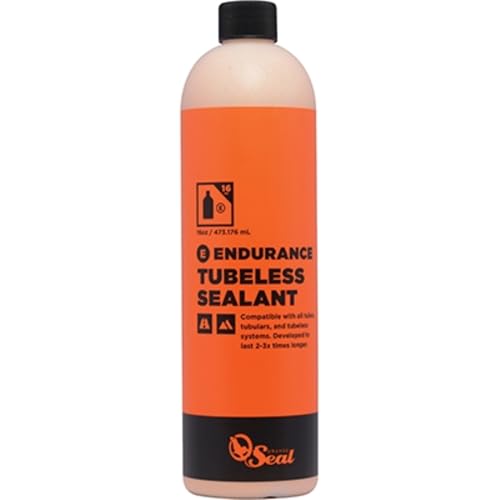
- Designed for 60–120 days between top-offs
- Seals punctures up to 1/4 inch and slices up to 1/2 inch
- Compatible with major tubeless-ready and UST tires
Best For: Long-distance riders seeking fewer sealant checks
High-Pressure Protection

- Seals holes up to 7mm
- Rated up to 110psi
- Lasts around 3–6 months
Best For: Road, gravel, XC, and commuting riders
Cold-Weather Endurance
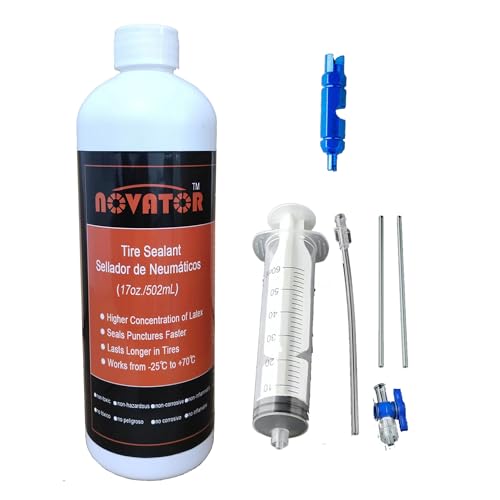
- Rated from -25°C to +70°C
- Lasts up to 5–9 months
- Seals punctures up to 6.5mm
Best For: Cold-weather riders wanting a longer service interval
Durable Road Coverage

- Seals holes up to 7mm
- Rated up to 110psi
- Supplied in a 500ml bottle
Best For: Road, gravel, commuter, and XC riders
Deep-Freeze Defender – Subzero Formula
For riders comparing bike tubeless sealants for winter riding, Orange Seal Subzero Formula is built around cold-weather use, with performance rated down to -20°F. This 16-ounce refill is suitable for fat bike, MTB, road, cyclocross, and gravel tires.
Best For: Cyclists who need a dedicated winter sealant for varied bike and tire types, especially fat bikes and mountain bikes.
Pros:
- Effective down to -20°F.
- Compatible with fat bike, MTB, road, CX, and gravel bicycle tires.
- 16-ounce refill provides a practical supply for bike maintenance.
- Water-resistant liquid formula designed for rubber compatibility.
Cons:
- The supplied notes do not specify the maximum puncture size it can seal.
- It is a refill, so an application method is not described.
Choose this option when subzero capability is the main priority and you want one formula that covers several bicycle categories. Its stated -20°F rating makes it particularly relevant for genuinely cold winter riding.
All-Conditions Pick – Vittoria Universal Sealant
Vittoria Universal Tubeless Tire Sealant - Ammonia Free Sealant for All Bikes - 8.5 FL Oz - 250ml
Check Price On AmazonVittoria Universal is a versatile choice among bike tubeless sealants for winter riding because it works across high and low pressures and all temperature ranges. Its ammonia-free liquid formula is intended for road, mountain, and gravel bikes.
Best For: Riders who want one ammonia-free sealant for mixed-terrain bikes and changing temperatures.
Pros:
- Works across all temperature ranges and at high or low pressure.
- Seals punctures up to 7 mm, according to the supplied product information.
- Ammonia-free formula is suitable for road, MTB, and gravel applications.
- Thin liquid base targets small punctures, while platelets help seal larger openings.
Cons:
- The 250 ml bottle is smaller than several 16-ounce options in this roundup.
- The supplied notes do not give a specific subzero temperature rating.
This is a strong general-purpose pick when winter conditions vary rather than staying deeply below freezing. Its broad pressure and temperature claims, plus stated 7 mm sealing capability, make it a flexible option for mixed riding.
Cold-Weather Workhorse – Joe's Super Sealant
Joe’s No Flats Super Sealant is aimed at high-volume, low-pressure MTB and gravel tires, making it a practical contender among bike tubeless sealants for winter riding. It is rated from -4°F to 158°F and seals holes up to 6 mm in tubeless tires, tubulars, and tubes.
Best For: Gravel and mountain-bike riders using 20–70 PSI tires who want one sealant for tubeless, tubular, or tube setups.
Pros:
- Effective across a stated -4°F to 158°F temperature range.
- Seals holes up to 6 mm in tubes, tubulars, and tubeless tires.
- Designed for high-volume, low-pressure tires at 20–70 PSI.
- Offers three years of shelf life and 6–8 months in use.
Cons:
- Its -4°F rating is less cold-tolerant than the dedicated -20°F and -30°F options.
- The supplied notes emphasize MTB and gravel use rather than road applications.
Pick Super Sealant when your winter riding centers on gravel or MTB and you value compatibility beyond tubeless tires. The broad operating range and long stated shelf life add convenience, though extreme-cold riders may want a lower-temperature formula.
Extreme-Cold Protector – Latex-Free Sealant
This tube-and-tubeless formula is one of the most cold-focused choices among bike tubeless sealants for winter riding, remaining effective down to -30°F. It seals punctures up to 1/4 inch, injects through the valve, and the 16-ounce bottle treats four tires.
Best For: Winter commuters, fat-bike riders, and early-spring gravel cyclists who need extreme-cold protection and valve-based application.
Pros:
- Works in temperatures down to -30°F.
- Seals punctures up to 1/4 inch, according to the supplied notes.
- Made without natural rubber latex and suitable for tube or tubeless tires.
- Valve-injectable formula avoids unseating the tire; included valve-core tool aids application.
Cons:
- At approximately 4 fl oz per tire, the 16-ounce bottle is intended to treat four tires rather than provide a large reserve.
- The supplied notes do not specify a pressure range or detailed compatibility beyond bicycle tubes and tubeless tires.
This is the most compelling choice here for riders expecting severe cold, particularly below the limits stated for the other formulas. Its latex-free composition, valve injection, and four-tire treatment capacity make it convenient for seasonal winter preparation.
Classic All-Rounder – Stan's NoTubes Original
For riders comparing bike tubeless sealants for winter riding, Stan’s NoTubes Original is a versatile latex option for road, gravel, mountain, cyclocross, and commuter tires. It is designed to seal punctures up to 6.5 mm (1/4 inch) and remains liquid inside the tire for approximately 2–7 months.
Best For: All-around riders who want broad bike compatibility and long-lasting proactive puncture protection.
Pros:
- Seals punctures up to 6.5 mm (1/4 inch).
- Suitable for road, gravel, mountain, cyclocross, and commuter bikes.
- Can remain liquid for 2–7 months.
- Can be installed through the valve with a Stan’s sealant injector.
Cons:
- The stated liquid life varies widely from 2 to 7 months, so maintenance timing may differ.
- Valve installation requires a compatible Stan’s sealant injector.
Its combination of broad compatibility and a relatively large claimed sealing capacity makes it a practical baseline for winter-ready tubeless setups. Check the sealant periodically, especially before extended rides.
Cold-Weather Specialist – milKit Tubeless Sealant
For bike tubeless sealants for winter riding, milKit stands out with a stated operating range down to -20°C (-2°F). Its synthetic latex and microfiber formula is ready to use without shaking and is designed to repair holes and tears up to 6 mm (0.25 inch).
Best For: Winter riders who prioritize cold-temperature usability, simple handling, and compatibility with road, gravel, and mountain bikes.
Pros:
- Works from -20 to 50°C (-2 to 122°F).
- Requires no shaking because the microfibers do not settle.
- Repairs holes and tears up to 6 mm (0.25 inch).
- Contains no ammonia or chemically aggressive ingredients and can be rinsed with water.
Cons:
- The claimed maximum puncture size is slightly smaller than some competing options in this roundup.
- The supplied notes do not specify a maintenance or top-off interval.
milKit is particularly compelling when winter temperatures and easy preparation matter. Its wide stated temperature range and no-shake formula reduce fuss, while the non-aggressive formulation is intended to be gentler on rims and tires.
Endurance Choice – Orange Seal Endurance
Orange Seal Endurance is a strong candidate among bike tubeless sealants for winter riding when minimizing service stops is important. Its long-lasting latex formula is designed to remain effective two to three times longer than standard sealants, with a stated 60–120 days between top-offs.
Best For: Endurance cyclists, gravel riders, and commuters seeking extended service intervals and broad tire compatibility.
Pros:
- Designed for 60–120 days between top-offs.
- Seals punctures up to 1/4 inch and slices up to 1/2 inch.
- Compatible with major tubeless-ready and UST tire brands and a wide range of rubber compounds.
- Uses biodegradable ingredients.
Cons:
- The product notes still recommend periodic top-offs, so it is not maintenance-free.
- The supplied information does not give a specific minimum operating temperature.
Choose this refill when longevity and a larger claimed slice-sealing capacity are more important than a specifically stated cold-weather rating. Its broad compatibility and casing-focused formula also suit mixed road, gravel, and MTB use.
High-Pressure Protection – Muc-Off Road & Gravel Sealant
For riders comparing bike tubeless sealants for winter riding, this Muc-Off formula is designed for road, gravel, XC, and commuting tires. Its synthetic latex and bamboo sealing particles target punctures up to 7mm and are rated for pressures up to 110psi.
Best For: Road, gravel, XC, and commuting riders who want broad puncture coverage and a formula that can last around 3–6 months.
Pros:
- Seals punctures and tears up to 7mm.
- Designed for pressures up to 110psi.
- Non-corrosive, allergen-free formula that washes off easily.
- Free-flowing formula helps coat the inside of the tire.
Cons:
- Its stated 3–6-month service interval may require more frequent checks than longer-lasting alternatives.
- Optimized for road, gravel, XC, and commuting rather than specifically for every tire type.
With strong high-pressure performance and a 500ml bottle, this is a practical option for riders who prioritize sizable puncture sealing and straightforward maintenance.
Cold-Weather Endurance – NOVATOR Endurance Sealant
Among bike tubeless sealants for winter riding, NOVATOR stands out for its stated operating range of -25°C to +70°C. The higher latex concentration, micro-fiber additive, and extended liquid life are aimed at dependable sealing across road, gravel, and mountain-bike applications.
Best For: Riders seeking a cold-temperature-rated sealant that can remain liquid for 5–9 months, with dosage guidance for different tire sizes.
Pros:
- Works from -25°C to +70°C.
- Claims up to 5–9 months of service life, and potentially 12 months in some cases.
- Seals punctures up to 6.5mm and helps address porous tires and bead/rim gaps.
- Micro-fiber is designed to improve sealing while remaining injectable through the valve stem.
Cons:
- Dosage varies substantially by tire type and size, so larger tires use more sealant.
- The product’s stated puncture limit is slightly below 7mm.
Its explicit low-temperature rating and longer claimed service interval make NOVATOR particularly compelling for winter riders who want less frequent replenishment.
Durable Road Coverage – Muc-Off No Puncture Hassle
This Muc-Off No Puncture Hassle formula is a road-and-gravel-focused choice for shoppers evaluating bike tubeless sealants for winter riding. It uses synthetic latex, bamboo particles, and advanced polymers to seal holes up to 7mm while remaining suitable for commuting and XC bikes.
Best For: Road, gravel, commuter, and XC riders who want a large 500ml bottle and a sealant that is easy to apply and clean during refills.
Pros:
- Seals punctures up to 7mm and is rated for pressures up to 110psi.
- Helps seal porous tires and bead/rim gaps.
- Non-corrosive formula washes off easily when preparing for a refill.
- Free-flowing consistency is intended to distribute through the tire.
Cons:
- Its stated service life is around 3–6 months, so seasonal inspection is still important.
- The supplied notes do not provide a specific sub-zero operating-temperature rating.
This is a straightforward, high-capacity option for riders who want broad road and gravel compatibility, strong puncture coverage, and simple cleanup.
How We Picked the Best Bike Tubeless Sealants for Winter Riding
We focused on formulas suited to road, gravel, mountain, cyclocross, and fat-bike tires, giving priority to products with clear performance claims and practical use cases. Our comparison considers low-temperature capability, puncture-sealing range, expected service life, compatibility with different tire systems, and how easily riders can install or refresh the sealant.
Cold-weather claims matter, but they are not the only factor. A sealant that works well in freezing conditions may require more frequent checking, while a long-lasting formula can be more convenient for riders who spend less time servicing their tires. We also noted latex-free and ammonia-free options for riders concerned about materials or rim compatibility.
Quick Comparison
- Best for freezing temperatures: Orange Seal Subzero and other formulas with explicit low-temperature ratings.
- Best for long maintenance intervals: Orange Seal Endurance, milKit, and NOVATOR Endurance.
- Best for fast puncture sealing: JOE’S NO FLATS Super Sealant and Stan’s NoTubes.
- Best for road and gravel: Vittoria Universal, Muc-Off Road & Gravel, and the Muc-Off No Puncture Hassle formula.
- Best for latex-free needs: The latex-free bicycle tire sealant option listed in this roundup.
Key Buying Factors for Winter Riding
Temperature Range
Check the manufacturer’s stated operating range before riding in freezing weather. Standard sealants may become less fluid or less effective as temperatures fall, so a cold-rated formula is especially important for fat bikes, winter commuters, and riders in consistently subfreezing climates.
Sealing Speed and Puncture Size
Look for a published puncture-size limit, but treat it as a guideline rather than a guarantee. Tire pressure, casing construction, hole location, and sealant distribution all affect results. Faster formulas can be valuable on rocky trails or rough winter roads where punctures are more frequent.
Longevity and Maintenance
Sealant gradually dries out, even when a tire appears to hold air. Long-lasting formulas can reduce service frequency, but every setup should be checked periodically, especially after extended storage or repeated rides in dry conditions.
Compatibility and Installation
Confirm that the product is intended for your tubeless, tubular, or tube setup. Check valve-core compatibility and use the recommended volume for your tire size. Ammonia-free or latex-free formulas may be preferable for specific rim, tire, or allergy concerns.
Who Should Buy Which Bike Tubeless Sealants for Winter Riding?
Choose a dedicated subzero formula if winter rides routinely reach freezing or below-freezing temperatures. Pick an endurance sealant if you want fewer refreshes for commuting, touring, or regular gravel riding. Fast-sealing formulas are a strong fit for aggressive MTB and mixed-surface riders who prioritize puncture protection.
Road and gravel riders should favor a low-viscosity formula that distributes easily in narrower tires, while fat-bike riders should prioritize cold-weather performance and sufficient volume. If you are sensitive to latex or want to avoid ammonia, select a clearly labeled alternative. Whichever product you choose, install enough sealant, rotate the wheel after setup, and inspect the tire periodically throughout the winter season.