Shopping for car diagnostic scanners can save time, money, and guesswork when a warning light appears. The right tool helps you read fault codes, check emissions readiness, and decide whether a repair is simple or urgent.
Below, we focus on practical options for everyday drivers, DIY mechanics, and anyone who wants clearer answers before heading to a shop.
Best 10 Car Diagnostic Scanners Picks for 2026
Budget Check-Engine Reader
ANCEL AD310 OBD2 Basic Fault Code Tool

- Reads and clears emission-related codes
- Shows live data, freeze frame, and I/M readiness
- Compact and powered directly from the OBDII port
Best For: Drivers who need a simple basic code reader
All-System Home Scanner
FOXWELL NT604 Elite ABS SRS Tool

- Scans engine, ABS, SRS, and transmission systems
- Includes live data, DTC lookup, and AUTOVIN
- No extra software fee and comes with a protective case
Best For: Drivers who want multi-system diagnostics at home
Easy Starter Scanner
ANCEL AD410 Check Engine Code Reader

- Reads and clears engine-related fault codes
- Offers live data, O2, EVAP, and I/M readiness
- No app needed and powered by the vehicle
Best For: Beginners focused on check-engine and emissions checks
Value Multi-Function Scanner
Innova 5210 OBD2 with Battery Test

- Adds battery testing and oil reset to code reading
- Includes live data and drive cycle readiness
- Pairs with RepairSolutions2 for verified fixes
Best For: DIYers who want maintenance features and repair guidance
Best Budget Basic Reader
MOTOPOWER MP69033 OBD2 Scanner

- Reads and clears engine fault codes
- Shows live data, freeze frame, and I/M readiness
- Works with many 1996+ OBDII vehicles
Best For: Affordable basic check-engine diagnosis
Best for DIY Diagnostics

- Reads and clears engine codes quickly
- Adds I/M readiness and live data graphing
- Supports O2 sensor and EVAP testing
Best For: DIY diagnostics and emissions readiness checks
Best Full-System Value
BLCKTEC 460T Diagnostic Scanner

- Reads engine, ABS, SRS, and transmission codes
- Offers 12+ reset and service functions
- Includes AutoVIN, AutoScan, and free updates
Best For: Full-system diagnosis and maintenance resets
VDIAGTOOL VD10
Budget-Friendly Basic Engine Code Reader
- Reads and clears common OBDII engine codes
- Includes live data, freeze frame, and I/M readiness
- Plug-and-play with built-in code definitions
Best For: DIY drivers who want a simple, affordable code reader for basic engine checks
FIXD Bluetooth Scanner

- Bluetooth scanner with iPhone and Android support
- Free app offers unlimited scans and simple explanations
- Tracks vehicles, reminders, and scan history
Best For: Drivers who want phone-based diagnostics and easy-to-understand repair guidance
ZMOON ZM201
Color-Screen Engine Scanner With Live Data

- Reads and clears engine codes with 50,000+ DTCs
- Includes live graphing, freeze frame, and O2/EVAP checks
- Standalone color screen with no app required
Best For: Home mechanics who want a clear, easy standalone engine scanner
Budget Check-Engine Reader – ANCEL AD310 OBD2 Basic Fault Code Tool
If you want straightforward car diagnostic scanners for check-engine troubleshooting, the ANCEL AD310 keeps things simple. It reads and clears emission-related codes, shows live data and freeze frame info, and gives you a fast way to confirm whether the problem is in the OBD2 emission system before you head to a shop.
Best For: Drivers who want a compact, no-frills code reader for basic check-engine light diagnostics.
Pros:
- Reads and clears emission-related trouble codes quickly
- Supports live data, freeze frame, and I/M readiness checks
- Works without batteries or a charger because it draws power from the OBDII port
- Compact, lightweight design with a clearly labeled screen and buttons
Cons:
- Only supports OBDII and emission-related engine faults
- Does not diagnose ABS, SRS, or transmission systems
- Compatibility should be confirmed for your specific vehicle
For basic home use, the AD310 is a practical entry-level scanner that focuses on the essentials. It is best if you want fast answers on a check-engine light without paying for advanced diagnostics you may never use.
All-System Home Scanner – FOXWELL NT604 Elite ABS SRS Tool
Among car diagnostic scanners, the FOXWELL NT604 Elite stands out for owners who want to check more than just the engine light. It scans engine, ABS, SRS, and transmission systems, includes live data and a built-in DTC library, and is ready to use right out of the box with no extra software fee.
Best For: Car owners who want an affordable scanner for common system checks across multiple modules.
Pros:
- Scans engine, ABS, SRS, and transmission systems
- Includes live data, data playback, print, and built-in DTC lookup
- Uses AUTOVIN to retrieve vehicle info quickly on supported vehicles
- Comes with a protective case and lifetime updates
Cons:
- Does not support maintenance functions like oil reset or relearn
- Cannot clear crash/collision data in the SRS system
- Vehicle compatibility varies, so checking fitment is important
The NT604 Elite is a strong choice if you want broader diagnostics without moving into professional-level pricing. It is especially useful for driveway troubleshooting when warning lights involve more than the engine.
Easy Starter Scanner – ANCEL AD410 Check Engine Code Reader
If you are shopping for car diagnostic scanners that are easy to use, the ANCEL AD410 is built for basic engine-light troubleshooting. It reads and clears engine-related codes, explains them with a large built-in code library, and adds live data plus smog-check readiness features for everyday DIY maintenance.
Best For: Beginners who want a simple, plug-in scanner for engine and emissions checks.
Pros:
- Reads and clears engine-related fault codes with 42,000+ DTC lookups
- Supports live data, freeze frame, O2 sensor test, and EVAP test
- Includes I/M readiness to help before smog or emissions inspections
- No app, battery, or charger required; powered by the OBD2 port
Cons:
- Does not support ABS, SRS, transmission, or service reset functions
- Limited to engine and emission-related diagnostics only
- Compatibility should be checked against your vehicle year and model
The AD410 is a sensible pick if you mainly want to understand a check-engine light and confirm repairs. It offers more guidance than a bare-bones code reader while staying approachable for first-time users.
Value Multi-Function Scanner – Innova 5210 OBD2 with Battery Test
The Innova 5210 is a practical option in the car diagnostic scanners category if you want more than basic code reading. It combines OBD2 diagnostics with a battery tester, live data, oil reset, and access to the RepairSolutions2 app for verified fixes and repair guidance.
Best For: DIYers who want a scanner with repair help, battery testing, and maintenance features.
Pros:
- Combines code reading with battery and alternator health testing
- Includes live data, drive cycle readiness, and oil reset
- Works with the RepairSolutions2 app for verified fixes and repair guidance
- No subscription fees, according to the product notes
Cons:
- ABS coverage may vary by vehicle
- Features can differ across makes, models, and years
- Compatibility should be checked with Innova’s coverage checker
The 5210 fits well if you want a scanner that supports both troubleshooting and routine maintenance. Its app-based guidance adds useful context for owners who prefer step-by-step help rather than raw fault codes alone.
Best Budget Basic Reader – MOTOPOWER MP69033 OBD2 Scanner
If you want a straightforward car diagnostic scanner for check-engine troubleshooting, the MOTOPOWER MP69033 covers the essentials without extra complexity. It reads and clears engine codes, shows live data, and includes a built-in DTC lookup to help you understand why the light came on.
Best For: Drivers who want an affordable, no-fuss OBD2 reader for basic engine diagnostics and quick checks.
Pros:
- Reads and clears check engine codes plus freeze frame, I/M readiness, and live data
- Supports 9 OBDII protocols and works with many 1996+ US, 2000+ EU, Asian, and newer CAN vehicles
- Built-in DTC lookup and quick VIN retrieval buttons make basic diagnosis easier
- Powered by the vehicle, with a compact design and 2.8-inch LCD screen
Cons:
- Does not support ABS, airbag, or other non-OBDII systems
- Screen size is small compared with larger shop-style scanners
- Best suited to engine-light diagnostics rather than full-system service work
As an entry-level option, this scanner is best when you need reliable engine-code readings and clear basics rather than advanced service functions. It is a practical fit for routine DIY troubleshooting and simple pre-shop checks.
Best for DIY Diagnostics – FOXWELL NT301 OBD2 Scanner
The FOXWELL NT301 is a solid choice if you want a dependable car diagnostic scanner for check-engine light troubleshooting and emissions checks. It reads and clears codes quickly, adds live graphing, and includes I/M readiness hotkeys to help you confirm whether your vehicle is ready for inspection.
Best For: DIY owners who want a more capable OBD2 scanner for code reading, readiness checks, and live data.
Pros:
- Reads and clears engine fault codes with one-click operation
- Includes I/M readiness hotkeys and a red-yellow-green status indicator for smog-check prep
- Supports advanced OBDII modes like O2 sensor testing and EVAP checks
- Live data graphing helps monitor sensors, fuel trims, coolant temperature, and RPM
Cons:
- Focused on engine and OBDII functions rather than all-system diagnostics
- Functionality depends on vehicle year, make, model, and VIN
- Does not include the reset and service features of higher-end shop tools
For most home mechanics, the NT301 offers a strong balance of speed, clarity, and useful diagnostic depth. It stands out when you want more insight than a basic code reader without moving into full professional scan-tool territory.
Best Full-System Value – BLCKTEC 460T Diagnostic Scanner
If you need a more advanced car diagnostic scanner, the BLCKTEC 460T is built for deeper troubleshooting and service tasks. It goes beyond basic engine-code reading with all-system diagnostics, ABS and SRS support, live data, and a long list of dealer-style reset functions.
Best For: Home mechanics and professionals who want full-system diagnosis plus service resets in one scanner.
Pros:
- Reads and clears Engine, Transmission, ABS, and SRS codes with all-system diagnostics
- Includes 12+ reset functions such as oil, TPMS, EPB, SAS, DPF, battery, and throttle relearn
- Offers AutoVIN, AutoScan, AutoReLink, and real-time graphing of multiple data streams
- Comes with free lifetime updates and access to the RepairSolutions2 app
Cons:
- Feature availability depends on the vehicle, so compatibility should be verified first
- More advanced than a basic code reader, so it may be more scanner than casual users need
- Not every reset or OEM function is supported on every make and model
The 460T is the strongest option here if you want a scanner that can handle diagnosis and maintenance services together. It is best viewed as a serious tool for users who need broader system coverage and more repair workflow support.
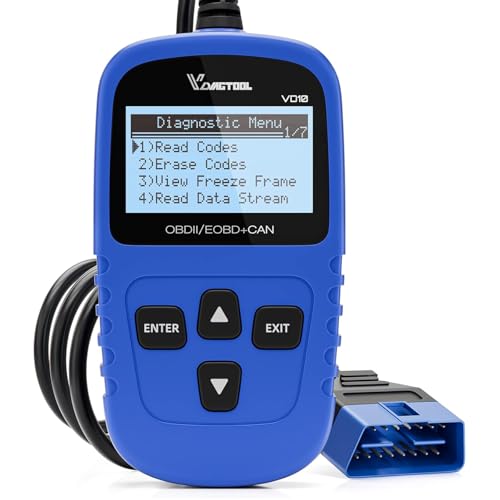
VDIAGTOOL VD10 – Budget-Friendly Basic Engine Code Reader
If you want car diagnostic scanners that make basic troubleshooting simple, the VDIAGTOOL VD10 focuses on the essentials. It reads and clears codes, shows live data and freeze frame info, and includes I/M readiness checks, making it a practical pick for everyday check-engine-light issues.
Best For: DIY drivers who want a straightforward plug-and-play scanner for quick engine diagnostics.
Pros:
- Reads and clears generic, manufacturer-specific, pending, and stored trouble codes.
- Built-in DTC library with more than 3,000 code definitions on-screen.
- Displays live data, freeze frame, vehicle info, and I/M readiness status.
- Plug-and-play design with no battery or charging required.
Cons:
- Focused on engine diagnostics rather than advanced systems.
- Uses a basic two-line LCD screen instead of a color display.
- Works only with OBDII-compliant vehicles.
Overall, the VD10 is a solid entry-level scanner if you mainly need fast answers for engine faults and emissions readiness. It keeps the workflow simple without adding app setup or advanced features you may not use.
FIXD Bluetooth Scanner – App-Based Car Health Tracker
Among car diagnostic scanners, FIXD stands out if you prefer phone-based diagnostics and easy-to-read explanations. It connects by Bluetooth to iPhone and Android, scans vehicle issues through the app, and can store scans, track reminders, and help you understand what the codes mean without a steep learning curve.
Best For: Drivers who want app-based scans, maintenance reminders, and simple explanations on their phone.
Pros:
- Bluetooth connection works with iPhone and Android.
- Scans 39,000+ issues across thousands of vehicles.
- Free app includes unlimited scans and simple issue explanations.
- Stores scans by vehicle and supports mileage-based reminders.
Cons:
- Depends on a smartphone and app workflow.
- Features can vary by vehicle make and model.
- Advanced insights may require the optional premium upgrade.
FIXD is a good fit if you want a compact scanner that stays hidden under the dash and is always ready when a warning light appears. Its biggest strength is convenience: it turns diagnostic data into plain-language guidance on your phone.
ZMOON ZM201 – Color-Screen Engine Scanner With Live Data
If you want car diagnostic scanners with a little more usability, the ZMOON ZM201 adds a color screen, live graphing, and a large built-in trouble code library. It is built for engine-related diagnostics only, but it covers the core tasks most people need before heading to a shop or emissions test.
Best For: Home mechanics who want a clear, standalone scanner for engine codes and live data.
Pros:
- Reads and clears engine fault codes with over 50,000 DTC definitions.
- Shows live data in graph view plus freeze frame, O2 sensor, EVAP, and onboard monitor checks.
- Color 2.8-inch display with adjustable brightness and light/dark modes.
- Plug-and-play operation with no app, plus lifetime software updates.
Cons:
- Engine diagnostics only; no ABS, SRS, transmission, or other advanced systems.
- Windows software support is limited to older versions listed in the notes.
- Requires an OBD2-compliant vehicle and 16-pin port.
For users who value a standalone tool over app-based scanning, the ZM201 is a strong middle-ground choice. It combines a readable screen, broad compatibility, and deeper engine-focused functions without making setup complicated.
How We Picked the Best Car Diagnostic Scanners
We prioritized ease of use, broad vehicle compatibility, clear fault-code interpretation, and features that add real value, such as live data, freeze frame, I/M readiness, and reset functions. For higher-end picks, we looked for support beyond basic engine codes, including systems like ABS, SRS, transmission, and common maintenance resets.
Quick Comparison
If you only need check-engine-light basics, a simple code reader is usually enough. If you want more insight into sensor behavior or plan to handle routine maintenance tasks yourself, choose a scanner with live data and service reset capability. Bluetooth models can be convenient for app-based diagnostics, while handheld units are often easier for fast, no-phone use.
Key Buying Factors for Car Diagnostic Scanners
Vehicle Compatibility
Most OBD2 scanners work with 1996-and-newer vehicles in the U.S., but support can vary for diesel models, older imports, and advanced systems. Always verify compatibility with your exact make, model, and year.
Code Coverage
Basic readers handle engine codes, while more advanced Car Diagnostic Scanners may access ABS, airbag, transmission, and other modules. Choose the level of coverage that matches the problems you’re likely to troubleshoot.
Live Data and Readiness Checks
Live data helps you see sensor values in real time, which is useful for tracking intermittent issues. I/M readiness and freeze frame data are especially helpful before emissions testing or when diagnosing a recurring fault.
Reset and Service Functions
If you maintain your own vehicle, features like oil light reset, EPB, BMS, TPMS, SAS, or throttle relearn can be worth paying for. Only buy these if you know you’ll use them.
Who Should Buy Which Car Diagnostic Scanners?
Budget shoppers and first-time users should focus on simple code readers that are fast, reliable, and easy to interpret. Commuters who want app-based convenience may prefer a Bluetooth scanner. DIYers who handle routine maintenance should look for midrange models with live data and reset features. If you want broader system access, choose an advanced scanner with ABS, SRS, and transmission coverage.
The best choice depends on how much diagnostic detail you need today and how likely you are to use extra functions later.