Choosing an EV charger with solar integration can help you use more of your home’s renewable energy while reducing reliance on peak-rate grid electricity. The right model depends on your vehicle connection, electrical capacity, solar equipment, and preferred level of automation.
We’ve gathered 10 home EV chargers spanning hardwired and plug-in installations, smart energy management, portable charging, and broad J1772 or NACS compatibility.
Best 10 Ev Charger with Solar Integration Picks for 2026
Best Solar-Ready Load Manager

- Three solar charging modes
- Optional dynamic load balancing
- 50A hardwired J1772 charging
Best For: Solar-aware home energy management
Best Plug-In NACS Option
EVIQO 40A Tesla-Compatible Charger

- Direct NACS connection for Tesla vehicles
- Plug-in NEMA 14-50 installation
- App scheduling and energy tracking
Best For: Tesla owners with a 240V outlet
Best Whole-Home Energy Insight

- Included Vue energy monitor
- Automatic PowerSmart load balancing
- Plug-in or hardwired installation
Best For: Energy monitoring and managed home charging
Best Established Smart Charging App

- Up to 50A Level 2 charging
- App scheduling and usage data
- Plug-in NEMA 14-50 design
Best For: App-connected non-Tesla home charging
Best Enphase Solar-Ready Plug-In

- 40A output at up to 9.6 kW
- Enphase solar power adjustment
- NEMA 4 enclosure and 5-year warranty
Best For: Enphase Energy System owners wanting a rugged plug-in charger
Best Universal App-Controlled Option

- Works with J1772 EVs across major brands
- App scheduling and energy tracking
- IP66/NEMA 4 weather-resistant housing
Best For: Multi-brand EV households wanting plug-in smart charging
Best Advanced Solar Integration
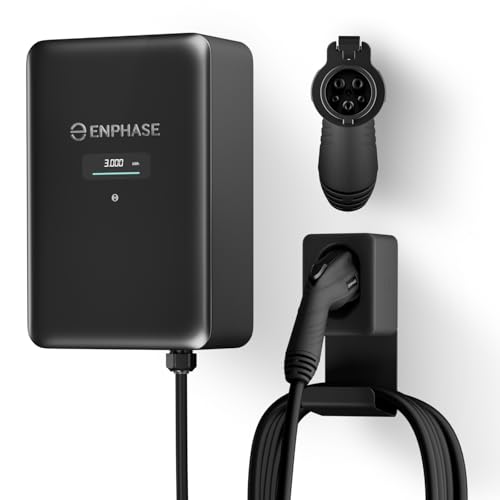
- Connects with a home solar system
- Green, goal-based, and Storm Guard modes
- Revenue-grade meter and 5-year warranty
Best For: Enphase solar owners wanting advanced monitoring and controls
Connected Home Integration

- 40A output up to 9.6kW
- My Leviton Wi-Fi app compatibility
- NEMA 3R indoor/outdoor enclosure
Best For: Homeowners building a connected charging setup
Simple Scheduled Charging
CHARGEHERE 32A Portable EV Charger

- 120V/240V charging with included adapter
- Adjustable 6A–32A output
- 25-foot cable and 1–10 hour timer
Best For: Drivers needing flexible portable charging without an app
Best Solar-Ready Load Manager – ELECQ 50A Smart EV Charger
If you want an ev charger with solar integration, the ELECQ combines 50A Level 2 charging with three solar charging modes and optional dynamic load balancing. Its hardwired design, J1772 connector, and app-based controls make it a strong fit for homeowners planning a managed energy setup.
Best For: Homeowners who want solar-aware charging, active household load management, and a durable indoor/outdoor installation.
Pros:
- Offers up to 50A charging and up to 48 miles of range per hour, depending on the vehicle and electrical capacity.
- Includes three solar charging modes and can pair with the ELECQ Power Monitor for dynamic load balancing.
- NEMA 4 and IK10 certifications, -40°F to 122°F operating range, and 10kV/5kA surge protection support outdoor use.
- Supports 2.4GHz and 5GHz Wi-Fi, Bluetooth, scheduling, and over-the-air updates.
Cons:
- Requires hardwired installation rather than a standard plug-in setup.
- The Power Monitor is needed for the described dynamic load-balancing feature.
- Tesla vehicles using NACS require an adapter.
The ELECQ is one of the more purpose-built choices here for solar-conscious charging. It is especially appealing if you are willing to hardwire the unit and add the Power Monitor for broader home energy coordination.
Best Plug-In NACS Option – EVIQO 40A Tesla-Compatible Charger
The EVIQO is a practical plug-in alternative for drivers seeking an ev charger with solar integration capabilities through app-based energy scheduling. Its built-in NACS connector supports Tesla vehicles directly, while the NEMA 14-50 connection simplifies installation where a suitable outlet is already available.
Best For: Tesla and NACS-equipped EV owners who prefer plug-in installation, app scheduling, and a long charging cable.
Pros:
- Built-in NACS connector works directly with Tesla Model S, 3, X, and Y, as well as other NACS vehicles.
- Delivers up to 40A through a 240V NEMA 14-50 outlet and includes a 25-foot cable.
- App supports start/stop control, adjustable charging from 6–40A, energy tracking, and off-peak scheduling.
- UL, ETL, FCC, and Energy Star certifications complement the IP66/NEMA 4 weather-resistant housing.
Cons:
- Solar-specific charging modes are not listed in the supplied product information.
- Requires a dedicated 50A circuit and an existing NEMA 14-50 outlet.
- J1772 vehicles need a separate NACS-to-J1772 adapter.
This charger stands out for Tesla compatibility and straightforward plug-in use. It can help coordinate charging with lower-cost energy periods, but buyers looking for dedicated solar surplus controls should consider a model that explicitly lists solar modes.
Best Whole-Home Energy Insight – Emporia Pro 48A EV Charger
The Emporia Pro is a strong candidate for an ev charger with solar integration setup when the priority is understanding and balancing household energy use. Its included Vue monitor works with PowerSmart technology to manage loads, while the app adds scheduling and real-time usage tracking.
Best For: Homeowners who want included whole-home energy monitoring, automatic load balancing, and flexible installation.
Pros:
- PowerSmart technology automatically balances charging load with the existing electrical panel.
- Includes an Emporia Vue monitor for real-time household energy insights.
- Provides up to 48A charging and supports either NEMA 14-50 plug-in or hardwired installation.
- App features include scheduling, peak-rate avoidance, and usage tracking.
Cons:
- Uses a J1772 connector and does not support Tesla vehicles without an adapter.
- The supplied information describes energy monitoring and load management, but does not specify dedicated solar charging modes.
- Installation flexibility still requires suitable electrical service and setup.
Emporia is particularly compelling for energy-conscious households because the Vue monitor is included rather than treated as a separate add-on. It is a smart choice for coordinating EV charging with broader home consumption, including solar-generated energy visibility.
Best Established Smart Charging App – ChargePoint HomeFlex
The ChargePoint HomeFlex is a straightforward Level 2 option for buyers comparing an ev charger with solar integration alongside established app features. It does not list dedicated solar modes, but its mobile controls, charging data, and scheduling can help owners manage when the vehicle uses household electricity.
Best For: Non-Tesla EV owners who want a familiar app ecosystem, fast home charging, and plug-in installation.
Pros:
- Provides up to 50A input and up to 45 miles of range per hour, depending on the vehicle.
- App supports charging control, reminders, smart-home connections, and charging data.
- UL-certified and suitable for indoor or outdoor installation by an electrician.
- Uses a NEMA 14-50 plug and includes a cold-resistant cable.
Cons:
- Dedicated solar integration or solar charging modes are not listed in the supplied details.
- Uses a J1772 connector; Tesla vehicles require an adapter.
- Requires a 40A or 50A circuit and a compatible 240V outlet.
HomeFlex is best viewed as a dependable, app-connected home charger rather than a solar-specialist unit. Its scheduling and data tools can complement a solar-aware energy plan, while the plug-in format keeps installation relatively familiar.
Best Enphase Solar-Ready Plug-In – IQ 50 Smart EV Charger
The Enphase IQ 50 is a practical ev charger with solar integration for households using an Enphase Energy System. Its 40-amp, 9.6-kW output supports fast Level 2 charging, while Wi-Fi scheduling helps shift charging to off-peak periods. Solar users should note that Enphase integration requires at least 2.4 kW of excess solar power to begin charging.
Best For: Enphase solar-system owners who want a rugged plug-in charger with smart scheduling.
Pros:
- Charges at up to 9.6 kW, delivering up to 38 miles of range per hour for compatible EVs.
- Adjusts charging in 25% intervals based on available excess solar power when paired with an Enphase Energy System.
- Includes a rugged J1772 connector, flexible cold-weather cable, and NEMA 4-rated enclosure.
- Offers Wi-Fi control, off-peak scheduling, and a five-year warranty.
Cons:
- Solar charging integration is specifically tied to an Enphase Energy System.
- Requires at least 2.4 kW of excess solar power before solar charging begins.
The IQ 50 combines strong charging speed with weather resistance and Enphase-specific solar coordination. It is a particularly sensible fit when the rest of your home energy equipment already uses the Enphase platform.
Best Universal App-Controlled Option – EVIQO 40A Level 2 EV Charger
The EVIQO 40A charger is a flexible choice for drivers comparing an ev charger with solar integration and broader smart-energy controls. It does not list direct solar-system integration, but its app can schedule charging during off-peak hours, control current from 6 to 40 amps, and track energy use and cost. The plug-in NEMA 14-50 design simplifies installation where a suitable dedicated circuit is available.
Best For: Multi-brand EV households that prioritize app scheduling, weather protection, and simple plug-in installation.
Pros:
- Works with non-Tesla EVs using a standard J1772 connector; Tesla drivers can use the included vehicle adapter.
- Supports up to 40 amps through a 240V NEMA 14-50 outlet and includes a 25-foot cable.
- App control includes start/stop functions, current adjustment, energy tracking, and off-peak scheduling.
- IP66/NEMA 4 weather protection, UL and ETL certification, and a three-year warranty support indoor or outdoor use.
Cons:
- The supplied specifications do not identify direct solar charging integration.
- Requires a dedicated 50A circuit, a compatible NEMA 14-50 outlet, and 2.4 GHz Wi-Fi for app features.
For solar households without a stated ecosystem-specific charging feature, the EVIQO is best viewed as a smart load-scheduling charger rather than a dedicated solar-surplus controller. Its broad vehicle compatibility and sealed enclosure make it versatile for everyday charging.
Best Advanced Solar Integration – Enphase IQ EV Charger 2
The Enphase IQ EV Charger 2 is the strongest match here for shoppers specifically seeking an ev charger with solar integration. It connects with a home solar system and offers green charging, goal-based charging, and Storm Guard modes through the app. Its 40-amp, 9.6-kW output, revenue-grade meter, and load-adjustment capability add useful functionality for solar owners and utility-program participants.
Best For: Enphase solar households seeking integrated charging modes, energy monitoring, and access control.
Pros:
- Connects with a home solar system and includes a dedicated green-charging mode.
- Delivers up to 9.6 kW, or about 38 miles of range per hour for compatible vehicles.
- Revenue-grade metering may support utility rebate programs and provides accurate energy monitoring.
- Includes Wi-Fi and Bluetooth, app or RFID access, automatic power adjustment, and a five-year warranty.
Cons:
- Solar integration and some smart features may be most useful within an Enphase-based home energy setup.
- The J1772 connector serves one vehicle at a time.
With explicit solar connectivity and several purpose-built charging modes, the IQ EV Charger 2 is the most complete option for Enphase users. Its metering, security controls, and overload prevention also make it more than a basic high-speed charger.
Flexible Smart Charging – AIMILER 32A Wi-Fi EV Charger
The AIMILER is a practical ev charger with solar integration for drivers who want app-based scheduling and adjustable charging. Its 240V NEMA 14-50 connection delivers up to 32A, while the included display and Wi-Fi app help monitor charging and schedule lower-cost periods. Solar integration would require a compatible home-energy system or automation setup; the charger itself does not claim built-in solar controls.
Best For: J1772 EV owners who want a portable, Wi-Fi-enabled charger with a long cable and adjustable current.
Pros:
- Adjustable 16A–32A charging with up to 7.68kW output on a suitable 240V circuit.
- Wi-Fi app supports charging schedules, cost tracking, history, and full-charge notifications.
- Includes a 25-foot cable, smart display, and NEMA Type 4-rated enclosure.
Cons:
- Requires a separate J1772-to-Tesla/NACS adapter for Tesla and other NACS vehicles.
- The 110V adapter is not included and reduces charging to Level 1 speeds.
- It is not recommended for direct exposure to sunlight or rainy conditions.
Choose the AIMILER if app controls and flexible amperage matter more than built-in solar management. Confirm your outlet, circuit, and vehicle connector before buying.
Connected Home Integration – Leviton 40A Smart EV Charger
The Leviton EV40P is a strong option for shoppers considering an ev charger with solar integration as part of a broader connected-home setup. It works with the My Leviton app over Wi-Fi and delivers up to 9.6kW at 40A from a 240V NEMA 14-50 outlet. The supplied information does not specify built-in solar controls, so solar coordination would depend on the surrounding energy-management system.
Best For: Homeowners who want a higher-output, app-connected charger that can be installed indoors or outdoors.
Pros:
- 40A output provides up to 9.6kW for compatible 240V installations.
- My Leviton app connects the charger with other compatible home devices.
- NEMA Type 3R enclosure, weather-oriented cable design, and UL/Energy Star certification support flexible installation.
Cons:
- It uses a J1772 connector; Tesla and other NACS vehicles require a compatible adapter.
- Solar-specific charging controls are not listed in the supplied product details.
- Installation is tied to a compatible NEMA 14-50 receptacle and appropriate circuit.
The EV40P stands out when you want Leviton ecosystem compatibility and more charging capacity than a typical 32A portable unit. It is especially sensible for a managed home installation, but verify solar-control compatibility separately.
Simple Scheduled Charging – CHARGEHERE 32A Portable EV Charger
The CHARGEHERE portable unit suits buyers looking for an uncomplicated ev charger with solar integration that can work alongside time-of-use or home-energy routines. It supports up to 32A and 7.68kW on 240V, or Level 1 charging through the included 5-15 adapter. Its built-in delay timer works without Wi-Fi, while solar coordination would need to come from an external energy system because integrated solar controls are not specified.
Best For: Drivers who need one portable charger for both 120V and 240V outlets, with manual current selection and scheduled starts.
Pros:
- Supports 6A–32A adjustment and a 1–10 hour delay-start timer.
- Includes both a NEMA 14-50 plug for Level 2 and a 5-15 adapter for Level 1 charging.
- ETL certified to UL 2594, with IP66 weather-resistant construction and a 25-foot cable.
Cons:
- No Wi-Fi or app-based charging control is listed.
- Tesla and other NACS vehicles require a compatible J1772 adapter.
- Actual charging speed depends on the outlet, circuit, selected amperage, and vehicle.
This CHARGEHERE model is a good value-oriented choice for flexible outlet access and straightforward scheduling. Pick it over a smart charger if physical controls and portability are more important than app integration.
How We Picked the Best Ev Charger with Solar Integration
We selected chargers based on charging output, connector compatibility, installation flexibility, smart controls, solar-management potential, safety certifications, cable length, warranty coverage, and real-world convenience. We also considered whether each unit supports load management, app-based scheduling, Wi-Fi connectivity, or integration with a broader home-energy system.
Solar compatibility varies considerably. Some chargers can respond directly to solar production, while others are best paired with a compatible inverter, energy-management platform, or third-party automation system. Confirm the manufacturer’s supported integrations before assuming a charger will automatically divert excess solar power.
Quick Comparison
| Feature | What to Look For |
|---|---|
| Charging speed | Up to 9.6 kW at 40A or 48A on a suitable 240V circuit |
| Installation | Plug-in NEMA 14-50 convenience or hardwired weather-resistant installation |
| Vehicle connector | J1772 for most non-Tesla EVs, or NACS for compatible Tesla applications |
| Solar control | Excess-solar charging, energy monitoring, load management, or supported inverter integration |
| Smart features | Wi-Fi, Bluetooth, scheduling, usage reports, and firmware updates |
Key Buying Factors for an Ev Charger with Solar Integration
Electrical Capacity and Installation
A 40A charger typically requires a properly sized 240V circuit, while 48A models often need a larger circuit and hardwired installation. Have an electrician verify panel capacity, wire sizing, breaker requirements, and local code compliance. If your service is constrained, active load management may be more useful than maximum amperage.
Solar and Energy-Management Compatibility
Look for chargers that can measure household consumption, adjust output according to solar generation, or communicate with your inverter and energy-management system. A charger that merely has an app is not necessarily solar-aware. Check whether solar charging requires additional hardware, a subscription, or a specific inverter ecosystem.
Connector, Cable, and Environment
Choose J1772 or NACS according to your vehicle and future plans. A 25-foot cable can simplify garage placement, but it may be heavier to manage. For outdoor installation, prioritize appropriate weather protection, certification, secure cable storage, and a durable enclosure.
Control and Scheduling
Scheduled charging can align vehicle charging with daylight production or lower utility rates. Reliable connectivity, local controls, and clear energy reports are especially valuable if solar output changes throughout the day.
Who Should Buy Which Ev Charger with Solar Integration?
Choose a solar-focused smart charger if you want automated excess-solar charging and detailed energy control. A high-output hardwired model suits households with ample electrical capacity and frequent daily driving. A plug-in NEMA 14-50 charger is better for simpler installation or future relocation. Tesla drivers should select a compatible NACS unit or verify adapter requirements, while mixed-EV households may prefer a J1772 charger with flexible smart controls. If you travel or rent, a portable dual-voltage charger offers the most flexibility, though it may charge more slowly than a dedicated wall station.