When you’re out exploring rugged terrains, having a reliable handheld GPS device can make all the difference. Whether you’re charting dense forests or rocky trails, the right GPS can enhance your adventure considerably. From lightweight options like the Garmin eTrex 22x to feature-rich devices like the GPSMAP 67i, each model offers unique advantages. Let’s take a closer look at the top picks that could transform your outdoor experiences.
Garmin 010-02256-00 eTrex 22x, Rugged Handheld GPS Navigator, Black/Navy

The Garmin 010-02256-00 eTrex 22x is the perfect companion for outdoor enthusiasts who crave adventure beyond the beaten path. Weighing only 5 ounces, it’s lightweight yet rugged, designed to withstand tough conditions. The 2.2-inch sunlight-readable display guarantees you can navigate easily, even in bright light. Preloaded with Topo Active maps, you’ll always have access to the latest trails and roads. With a remarkable 25-hour battery life and the ability to expand memory via micro SD, this navigator keeps you on course without fail. It’s ideal for hiking, cycling, or geocaching in remote areas, providing reliable performance when you need it most.
Best For: Outdoor enthusiasts seeking a reliable GPS navigator for hiking, cycling, and geocaching in remote areas.
Pros:
- Lightweight and rugged design, making it easy to carry in various outdoor conditions.
- Long battery life of up to 25 hours, ensuring extended use without frequent recharging.
- Preloaded with Topo Active maps, providing detailed trails and routes for outdoor exploration.
Cons:
- Screen visibility may be challenging in direct sunlight, affecting usability.
- Users may experience a learning curve with the interface and functions.
- Requires a micro SD card for map updates, adding an extra step for users.
Garmin eTrex SE GPS Handheld Navigator

For outdoor enthusiasts who crave adventure, the Garmin eTrex SE GPS Handheld Navigator stands out as an essential tool. Its 2.2” high-resolution display guarantees readability in bright sunlight, while the digital compass helps you maintain accurate heading even when stationary. With an impressive battery life of up to 168 hours in standard mode, you can trust it for extended trips. Plus, its multi-GNSS support enhances tracking in tough environments. Waterproof and rated IPX7, it withstands the elements. Pair it with the Garmin Explore app for seamless connectivity, software updates, and access to smart notifications, making your adventures even better.
Best For: Outdoor enthusiasts and adventurers looking for a reliable GPS device for navigation in challenging environments.
Pros:
- High-resolution display that is readable in bright sunlight.
- Long battery life, lasting up to 168 hours in standard mode and up to 1,800 hours in expedition mode.
- Multi-GNSS support for enhanced tracking, providing access to GPS, GLONASS, Galileo, BeiDou, and QZSS.
Cons:
- Requires 2 AA batteries which are not included, adding to the cost of initial setup.
- Limited screen size may not display detailed maps as clearly as larger devices.
- Some users may find the wireless connectivity features are less intuitive without prior experience with the Garmin Explore app.
Garmin GPSMAP 67i Rugged GPS Handheld

Adventure enthusiasts seeking reliable off-road navigation will appreciate the Garmin GPSMAP 67i Rugged GPS Handheld. Its large 3” sunlight-readable display makes viewing easy, while preloaded TopoActive mapping guarantees you’re always on track. With multi-band GNSS support, you can navigate confidently, even in challenging conditions. Stay connected with two-way messaging and location tracking through the global Iridium satellite network. The interactive SOS feature connects you with Garmin Response℠ for emergencies. Plus, with smartphone integration and premium mapping content via Wi-Fi, planning your adventures becomes seamless. Enjoy impressive battery life, lasting up to 425 hours in expedition mode.
Best For: Adventure enthusiasts seeking reliable off-road navigation and communication capabilities.
Pros:
- Large, sunlight-readable 3” color display for easy viewing in various lighting conditions.
- Two-way messaging and SOS features provide enhanced safety and connectivity in remote areas.
- Long battery life with up to 425 hours in expedition mode, perfect for extended adventures.
Cons:
- Requires an active subscription for certain features, such as emergency SOS and premium mapping content.
- May be complex to set up for users unfamiliar with GPS and satellite communication devices.
- The rugged design might be bulkier than some users prefer for everyday use.
Garmin GPSMAP 65 Handheld GPS

With its advanced GNSS support and multi-band technology, the Garmin GPSMAP 65 is an ideal choice for outdoor enthusiasts who demand precision in challenging environments. Weighing just 7.7 ounces, it features a 2.6” sunlight-readable display and rugged design, perfect for hiking or geocaching. You’ll appreciate its quick satellite acquisition and accuracy of about 6 feet, even indoors. Bluetooth and ANT+ connectivity enhance your experience, allowing you to manage tracks and routes via the Garmin Explore app. While some users find the software complex, its reliability and mapping capabilities make it a top pick for outdoor navigation.
Best For: Outdoor enthusiasts who require high precision and reliability in challenging navigation environments.
Pros:
- Accurate GNSS support with multi-band technology ensures reliable location tracking, even in dense forests and urban canyons.
- Rugged and weather-resistant design makes it suitable for various outdoor activities like hiking and geocaching.
- Bluetooth and ANT+ connectivity allow for easy management of tracks and routes via the Garmin Explore app.
Cons:
- Some users find the software complex and require multiple apps for updates and functionality.
- Battery management can be cumbersome, as it requires standard AA batteries and may need frequent replacements.
- Limited user interface may be considered dated compared to more modern touchscreen GPS devices.
Garmin Tread Powersport Off-Road Navigator
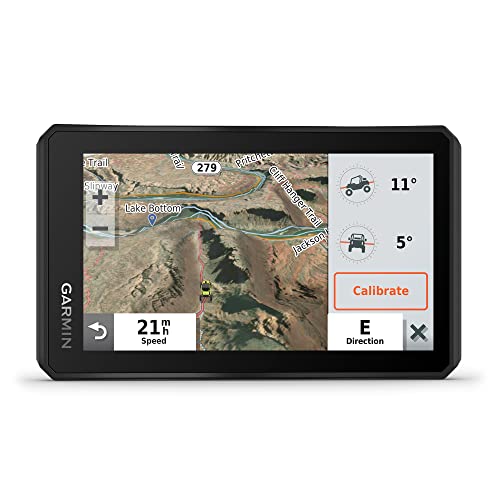
The Garmin Tread Powersport Off-Road Navigator stands out as the ultimate choice for off-road enthusiasts who demand rugged reliability and advanced navigation tools. With its 5.5″ glove-friendly touchscreen and IPX7 weather-resistant rating, you can trust it in tough conditions. Preloaded topographic and street maps cover North and Central America, plus it includes public and private land boundaries. Pair it with an inReach satellite communicator for global connectivity, and utilize the Tread app to sync your routes and waypoints. Built-in instruments like an altimeter and compass guarantee you navigate challenging terrains with confidence. It’s truly an adventurer’s companion!
Best For: Off-road enthusiasts seeking a rugged and reliable navigation solution for adventurous terrains.
Pros:
- Rugged and weather-resistant design ensures functionality in tough conditions (IPX7 water rating).
- Preloaded maps of North and Central America with detailed public and private land boundaries for enhanced navigation.
- Built-in instruments like altimeter and compass provide critical data for navigating challenging terrains.
Cons:
- Size may be cumbersome for some users who prefer a more compact device.
- Subscription required for pairing with inReach satellite communicator for global connectivity.
- Additional costs for compatible GPS dog trackers and BirdsEye Satellite Imagery may add to the overall expense.
Garmin GPSMAP 79sc Marine GPS Handheld
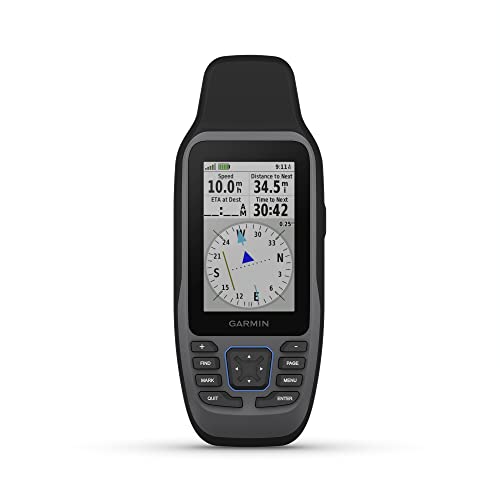
Designed for outdoor enthusiasts who demand reliability in challenging environments, the Garmin GPSMAP 79sc Marine GPS Handheld stands out with its rugged, water-resistant construction. This GPS device features a high-resolution color display that’s scratch-resistant and fogproof, ensuring visibility in various conditions. You’ll benefit from multiple satellite constellations for dependable tracking and a built-in compass that provides accurate heading, even when stationary. With preloaded BlueChart g3 coastal charts and ample memory for 10,000 waypoints, you can easily navigate your adventures. Plus, enjoy up to 20 hours of battery life, making it a reliable companion for all your outdoor excursions.
Best For: Outdoor enthusiasts seeking a reliable and rugged GPS device for marine navigation and outdoor adventures.
Pros:
- High-resolution color display that is scratch-resistant and fogproof for clear visibility in various conditions.
- Supports multiple satellite constellations for enhanced tracking accuracy.
- Preloaded with BlueChart g3 coastal charts and ample memory for extensive waypoint and route management.
Cons:
- Battery life of up to 20 hours may require frequent recharging for extended trips.
- Limited to marine use, which may not appeal to users looking for a versatile GPS for other activities.
- The rugged design may be bulkier compared to non-waterproof handheld GPS devices.
Garmin GPS 73, 2.6 inches, Black
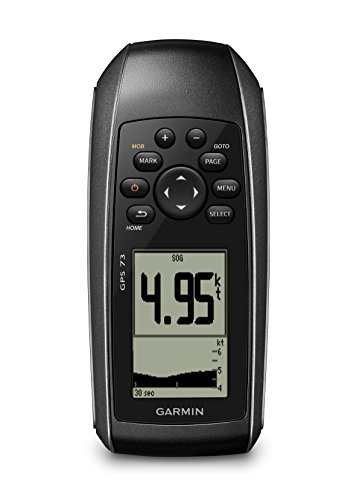
If you’re looking for a reliable handheld GPS device specifically for off-road navigation, the Garmin GPS 73 is an excellent choice, especially for boating enthusiasts. Weighing just 8 ounces and featuring a 2.6-inch high-contrast screen, it’s easy to handle. With Sail Assist functionality, you can use countdown timers and track your speed history. The device stores up to 1,000 waypoints and 100 tracks, ensuring you won’t lose your way. Plus, it operates for over 18 hours on just two AA batteries. Its intuitive design and backlit buttons make navigation smooth, even in low light.
Best For: Boating enthusiasts and outdoor adventurers looking for a lightweight and reliable handheld GPS device.
Pros:
- Lightweight and portable at only 8 ounces, making it easy to carry.
- Long battery life of over 18 hours on just two AA batteries for extended use.
- User-friendly interface with backlit buttons for easy operation in various lighting conditions.
Cons:
- Limited display size of 2.6 inches may not be suitable for detailed navigation.
- No built-in mapping capabilities, which may require additional resources for navigation.
- Niche functionality primarily focused on marine use, which may not appeal to all outdoor enthusiasts.
Magellan TN7881SGLUC TR7 Trail and Street GPS Navigator with A Camera

For outdoor enthusiasts seeking reliable navigation in rugged terrain, the Magellan TN7881SGLUC TR7 Trail and Street GPS Navigator stands out with its impressive feature set. This device boasts over 160,000 preloaded OHV routes and an award-winning navigation software that delivers turn-by-turn directions. Its rotatable camera, equipped with Sony’s Premium STARVIS Sensor, auto-starts recording as you approach trails, ensuring you capture every adventure. With advanced trail searching and access to millions of points of interest, you’ll never feel lost. Weighing just 12.6 ounces, it’s portable and user-friendly, making it a must-have for any serious off-road adventurer.
Best For: Outdoor enthusiasts and off-road adventurers seeking a reliable GPS navigator with integrated camera functionality.
Pros:
- Comprehensive Navigation: Preloaded with over 160,000 designated OHV routes and award-winning navigation software for both trails and streets.
- Advanced Camera Features: Built-in rotatable camera with high-quality video capabilities and instant playback for capturing adventures.
- User-Friendly Design: Lightweight and portable with a touchscreen interface, making it easy to use in rugged terrain.
Cons:
- Average Customer Ratings: Rated only 3.3 out of 5 stars based on customer feedback, indicating mixed reviews.
- Limited Support: Best Sellers Rank of #122,074 suggests it may not be as widely recognized or supported as other GPS units.
- Dependence on Battery: Operates on a single Lithium Ion battery, which may require recharging during extended trips.
A6 Handheld GPS for Hiking

The A6 Handheld GPS is perfect for outdoor enthusiasts who crave reliable navigation in rugged terrains. This lightweight, waterproof device supports four global navigation satellite systems, ensuring you stay on track with less than 5 feet of position accuracy. Its 2.4-inch sunlight-readable display makes navigation easy, even at night. You can save up to 1,000 waypoints and record tracks for a seamless hiking experience. With a 20-hour battery life and various charging options, you’ll always be powered up. Though some users report a learning curve, many find it a dependable tool for their adventures.
Best For: Outdoor enthusiasts seeking reliable navigation in rugged terrains.
Pros:
- Lightweight and rugged design, making it suitable for hiking, camping, and backpacking.
- Multi-GNSS support provides improved position accuracy in challenging environments.
- Long battery life of up to 20 hours with various charging options ensures it stays powered during adventures.
Cons:
- Reports of a clumsy menu system can hinder user experience.
- Some users experience a learning curve, making initial usage challenging.
- Limitations in coordinate options, such as UTM, may not meet all users’ needs.
Bushnell BackTrack Mini GPS Navigation

Bushnell BackTrack Mini GPS Navigation is perfect for outdoor enthusiasts who crave simplicity and reliability in their adventures. This compact device excels in hiking, backpacking, and hunting, capturing trips and waypoints effortlessly. With a battery life of up to 35 hours and rugged, waterproof construction, it’s built for the elements. Its easy-to-read display features large buttons that work well even with gloves. You’ll appreciate the added functions like elevation gain, barometric pressure, and sunrise/sunset times. Plus, with Bluetooth capability, you can sync your journeys with the Bushnell Connect app, enhancing your navigation experience on the go.
Best For: Outdoor enthusiasts seeking a reliable and user-friendly GPS device for hiking, backpacking, and hunting.
Pros:
- Easy-to-read display with large, glove-friendly buttons for convenient use in various weather conditions.
- Long battery life of up to 35 hours and rugged, waterproof design suitable for outdoor adventures.
- Bluetooth capability allows for syncing and sharing of trips and waypoints with the Bushnell Connect app.
Cons:
- Rated only 3.6 out of 5 stars, indicating some customer dissatisfaction.
- Relatively heavy for a GPS device at 2 ounces, which may not appeal to ultralight backpackers.
- Limited additional features compared to more advanced GPS units, which may not meet all users’ needs.
Factors to Consider When Choosing a GPS Handheld for Offroad Navigation
When choosing a handheld GPS for off-road navigation, you need to evaluate several key factors. Display quality, battery life, and navigation features can greatly impact your experience in the wilderness. Additionally, durability and mapping options play critical roles in ensuring you stay on track no matter the conditions.
Display Quality and Size
Choosing a handheld GPS device for off-road navigation hinges critically on display quality and size. A high-resolution display is essential for clear visibility, especially in bright sunlight, allowing you to read maps and navigation details with ease. Consider the screen size, as larger displays can show more information at once, making it easier to navigate complex terrains. Look for sunlight-readable screens with good contrast and brightness levels to minimize glare in various lighting conditions. While touchscreen interfaces can enhance usability, button-operated designs might be more reliable in wet or rugged environments. Finally, verify the display features durable materials, like scratch-resistant and fog-proof glass, to withstand harsh conditions and deliver long-term performance.
Battery Life Considerations
Battery life is one of the most critical factors to evaluate for off-road navigation, as it directly impacts the reliability of your GPS device during extended trips. Many handheld GPS devices offer battery life ranging from 20 hours to over 400 hours, depending on the selected mode. Devices with standard AA batteries allow easy replacement in remote areas, while rechargeable lithium batteries can provide longer usage but require planning for recharging. Energy-saving modes can greatly extend battery life, ensuring your device lasts through long excursions. Also, consider the operating temperature range, as extreme cold can affect performance. Finally, be mindful that features like backlighting and connectivity can drain battery life quickly, so plan accordingly.
Navigation Features and Support
While guaranteeing your GPS device has a reliable battery is essential for off-road adventures, the routing features it offers can make all the difference in your experience. Look for multi-GNSS support, which enhances tracking accuracy in tough environments like dense forests. Preloaded topographic maps are a must, as they help you steer through trails and understand terrain features effectively. A high-resolution, sunlight-readable display guarantees you can easily read routing information even in bright conditions. Also, consider devices that allow waypoint saving, track recording, and finding your way back to starting points, as these features are crucial for planning and retracing your routes. Opt for models with extended battery life to support your longer outdoor excursions. Choose wisely to enhance your adventures!
Durability and Weather Resistance
When you’re out in the wild, a GPS device’s durability and weather resistance can make all the difference. Look for a device with a high water resistance rating, like IPX7, which can handle immersion for up to 30 minutes. Rugged designs are essential; they should withstand drops, bumps, and extreme weather. Choose models that are dustproof and have a tough outer casing to protect against scratches while traversing rough terrain. Battery life matters too; pick a device that offers over 20 hours in GPS mode, ensuring you won’t be left stranded on long trips. Finally, lightweight designs enhance portability, reducing fatigue during your outdoor adventures. Your GPS should be a reliable companion, ready for anything nature throws at you.
Mapping and Software Options
Choosing the right mapping and software options for your handheld GPS device can greatly impact your off-road navigation experience. Look for devices preloaded with topographic maps and off-road navigation software to guarantee accurate routing and trail information. It’s vital that your GPS supports multiple global navigation satellite systems (GNSS) like GPS, GLONASS, Galileo, and BeiDou for better tracking in tough terrains.
Also, check if the device allows uploading custom maps or accessing community-sourced databases for more route options. Consider models with wireless connectivity for software updates and trip planning, which enhances usability. Finally, review the memory capacity to verify it can store enough waypoints, routes, and tracks for your extended adventures.
Connectivity and Integration Capabilities
Having the right mapping and software options sets the foundation for successful off-road navigation, but connectivity and integration capabilities can take your experience to the next level. Look for handheld GPS devices with wireless options like Bluetooth, allowing you to sync with mobile apps for updates, trip planning, and live weather data. Make sure your device supports multiple global navigation satellite systems (GNSS) like GPS, GLONASS, Galileo, and BeiDou for better tracking accuracy in tough terrains. Automatic cache updates through compatible apps can enhance your geocaching experience, while the ability to import and export GPX files makes sharing waypoints and routes effortless. Finally, check for compatibility with third-party navigation apps to access community-sourced tracks and premium mapping content.