A thermal night vision system for cars can help drivers spot people, animals, and obstacles sooner than standard headlights or cameras alone.
Below, we’ve narrowed the field to ten standout options for commuters, fleet drivers, and night-road travelers who want more confidence after dark.
Best 10 Thermal Night Vision System for Cars Picks for 2026
Thermal Road Assist
7-inch Automotive Thermal Night Vision

- 256 x 192 thermal sensor with 7-inch display
- AI-assisted detection for people and vehicles
- Defrost function and 9-24V compatibility
Best For: drivers who want a simple thermal driving display with AI support
Three-Mode Safety View

- Visible, infrared, and fusion display modes
- AI collision warning with audible alerts
- 328-yard long-range vision and voice control
Best For: drivers wanting a flexible multi-mode thermal camera with alerts
Long-Range Hazard Scan
1000ft Thermal Security Camera

- Up to 984 ft thermal detection range
- AI alerts with dual-spectrum imaging
- 64GB storage and IP68 rugged design
Best For: truckers, off-road drivers, and fleet vehicles needing long-range thermal monitoring
Triple-View Driver Aid

- 328-yard thermal long-range vision
- AI collision warning with 3 view modes
- Smart voice control and quick installation
Best For: drivers who want the NV300 Max feature set in a black finish
Urban Night Commuter
Vehicle Thermal Imager Automotive Thermal Camera System
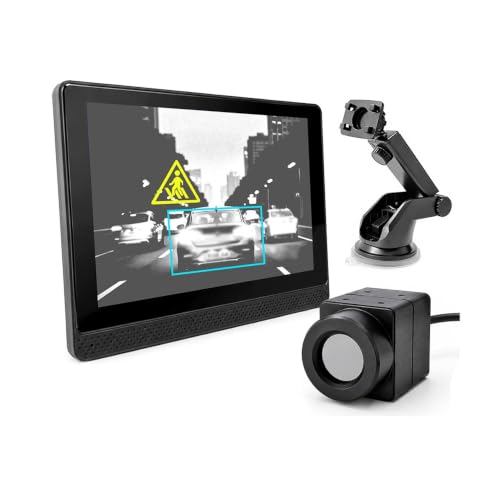
- 7-inch screen with 256x192 thermal sensor
- AI detects pedestrians, bicycles, motorcycles, and vehicles
- Built for glare, dark roads, and light fog
Best For: Drivers who want a simple, larger-screen thermal driving aid
Long-Range Safety Pick
TOPDON NV001 Thermal Camera for Cars

- 656ft range with 384x288 thermal clarity
- AI collision alerts for people, vehicles, and animals
- Fits cars, trucks, RVs, buses, and jeeps
Best For: Drivers who want long-range visibility and alert warnings
Fleet Visibility Upgrade
Car Thermal Camera Night Vision System
- Up to 984ft detection distance
- 6.25-inch HD heads-up display
- Supports rain, snow, fog, haze, sand, and dust
Best For: SUV, RV, pickup, and fleet drivers needing long-range thermal aid
AI Thermal Guard
InsightDrive Thermal Camera for Car

- 656 ft thermal hazard detection
- AI alerts for vehicles, pedestrians, and animals
- Plug-and-play setup with app control
Best For: drivers wanting long-range thermal alerts for highway, commute, or off-road use
All-Weather Alert Rig
Thermal Imaging Night Vision Camera

- 650 ft thermal viewing range
- Collision alerts for cars, pedestrians, and animals
- IP68 waterproof with DIY install kit
Best For: RV and truck owners needing a rugged thermal assist system
OEM Screen Vision
GUA Thermal Imager Camera for Car

- Displays on compatible Ford Sync3 OE screens
- 400 meter thermal viewing range
- 388×284 high-resolution infrared image
Best For: Ford truck owners wanting factory-screen thermal night vision integration
Thermal Road Assist – 7-inch Automotive Thermal Night Vision
If you want a thermal night vision system for cars that adds a dedicated heat-based view, this model is built around a 7-inch monitor and a 256 x 192 thermal sensor. It is designed to help distinguish people, vehicles, and other heat-emitting objects in dark roads, glare, haze, and light fog, with a compact camera that fits automotive installs.
Best For: Drivers who want a straightforward thermal driving display with AI-assisted detection and a larger in-cabin screen.
Pros:
- 256 x 192 thermal sensor with a 1024 x 600 7-inch display
- Detection ranges up to 984 ft for road detection, 685 ft for vehicles, and 328 ft for pedestrians
- AI-assisted marking and warning for pedestrians, bicycles, motorcycles, and vehicles
- Defrost function and 9-24V compatibility for broader vehicle fitment
Cons:
- Resolution is thermal-focused rather than full visible-detail imaging
- Install space and vehicle fitment need to be checked before purchase
- Best suited to night and low-visibility use, not a general-purpose camera upgrade
This is a practical pick if your priority is thermal awareness rather than a feature-heavy dashcam ecosystem. The system’s range, AI alerts, and automotive-friendly screen size make it a strong option for drivers wanting an added layer of visibility in difficult conditions.
Three-Mode Safety View – NV300 Max Thermal Car Camera
This thermal night vision system for cars is aimed at drivers who want more than a basic infrared view. The NV300 Max combines visible light, infrared, and fusion modes with AI collision warnings, giving you a flexible setup for dark roads, headlights, and bad weather.
Best For: Drivers who want a multi-mode thermal camera with voice control and collision alerts.
Pros:
- Three display modes: visible light, infrared, and fusion
- AI collision warning with visual and audible alerts for vehicles, pedestrians, animals, and obstacles
- 328-yard long-distance vision for spotting hazards ahead
- Smart voice control for hands-free changes to modes and settings
Cons:
- Smaller 6.4-inch display than some larger-screen competitors
- More feature-rich than a basic thermal viewer, so it may be more than some buyers need
- Setup is described as quick, but it still needs proper vehicle integration
For drivers who want adaptable viewing modes and audible warnings, this model stands out as a practical all-weather aid. Its combination of thermal imaging, voice control, and AI alerts makes it especially appealing if you want a more active driver-assistance setup.
Long-Range Hazard Scan – 1000ft Thermal Security Camera
If you’re comparing a thermal night vision system for cars with longer reach, this unit is built around hazard detection up to 1000 ft and a 6.25-inch HD display. It is designed to help reveal pedestrians, vehicles, and animals in dark, foggy, rainy, or smoky conditions, while also adding AI alerts and blind-spot coverage.
Best For: Truckers, off-road drivers, and fleet users who want long-range thermal detection with onboard storage.
Pros:
- Claims up to 984 ft detection for pedestrians, vehicles, and animals
- AI collision alerts with dual-spectrum thermal and visible imaging
- 6.25-inch HD display with a 40° x 30° field of view
- 64GB storage with auto-loop recording and rugged IP68 waterproof construction
Cons:
- Bulky feature set may be more than casual drivers need
- Thermal imaging still has a specialized driving focus rather than broad infotainment use
- Mounting and wiring are more involved than a simple plug-and-play accessory
This option makes sense when long-range awareness and recording matter as much as live thermal viewing. With storage, alerts, and ruggedization included, it is built more like a work-ready driving aid than a basic night vision add-on.
Triple-View Driver Aid – NV300 Max Black Edition
This thermal night vision system for cars uses the same NV300 Max platform in a black finish, with long-range thermal viewing, AI collision warning, and three display modes. It is built to help drivers see further ahead in dark or low-visibility conditions while keeping the interface practical with voice control.
Best For: Drivers who want the NV300 Max platform in a black version with the same thermal and warning features.
Pros:
- 328-yard long-distance vision for road hazards and pedestrians
- AI collision warning for vehicles, pedestrians, animals, and obstacles
- Three display modes: visible light, infrared, and fusion
- Smart voice control for adjusting modes, brightness, and volume
Cons:
- Essentially the same feature set as the other NV300 Max listing
- 6.4-inch display may feel compact for some buyers
- Thermal viewing is the main draw, so it is not a general camera solution
If you already like the NV300 Max concept, this black version offers the same core functionality in a different finish. It is a solid fit for drivers who want long-range thermal support, AI alerts, and quick installation in a vehicle-friendly package.
Urban Night Commuter – Vehicle Thermal Imager Automotive Thermal Camera System
If you want a thermal night vision system for cars that prioritizes a readable in-cabin display and practical AI assistance, this model is built for everyday driving in low-visibility conditions. Its 7-inch screen pairs with a 256×192 thermal sensor to help you spot heat signatures when darkness, glare, haze, or light fog reduce what you can see through the windshield.
Best For: Drivers who want a straightforward thermal driving aid with a larger screen and pedestrian/vehicle detection.
Pros:
- 7-inch display makes the thermal view easier to read inside the car.
- AI-assisted detection recognizes pedestrians, bicycles, motorcycles, and vehicles.
- Works in dark conditions, headlight glare, and light fog by reading temperature differences.
- 10mm lens, 25Hz frame rate, and white hot palette support daily driving use.
Cons:
- Thermal sensor resolution is 256×192, so it is more utility-focused than high-detail imaging.
- Designed as an assistive system, not a replacement for attentive driving.
Overall, this is a solid practical pick if you want a thermal night vision system for cars that emphasizes simple viewing and AI-based road-user recognition. It is especially relevant for drivers who regularly face glare, haze, or weak nighttime visibility.
Long-Range Safety Pick – TOPDON NV001 Thermal Camera for Cars
The TOPDON NV001 is a thermal night vision system for cars aimed at drivers who want more distance and stronger warning support. It offers a 656ft viewing range, upgraded 384×288 image clarity, and AI recognition for people, vehicles, and animals, making it well suited to dark roads and poor-weather driving.
Best For: Drivers who want long-range thermal visibility with collision warnings and broad vehicle compatibility.
Pros:
- 656ft viewing range gives earlier awareness of road hazards.
- Upgraded 384×288 thermal image clarity improves visibility in fog, rain, snow, and headlight glare.
- AI collision alerts use green, yellow, and red warnings with audio and visual prompts.
- Universal compatibility for cars, trucks, RVs, buses, and jeeps.
Cons:
- More feature-rich than basic units, which may be more than some drivers need.
- Installation still requires routing the camera and connecting the included wiring and mounts.
For drivers focused on early hazard detection, this model stands out with its longer viewing range and clearer thermal output. It is a strong fit if you want a thermal night vision system for cars that adds both visibility and alerting support.
Fleet Visibility Upgrade – Car Thermal Camera Night Vision System
This thermal night vision system for cars is aimed at drivers who want a compact heads-up display, long detection distance, and useful backup sensing for poor-weather travel. With a 256×192 thermal sensor, 6.25-inch HD display, and AI detection up to 984ft, it is designed to help identify vehicles, pedestrians, and obstacles in challenging conditions.
Best For: SUV, RV, pickup, and fleet drivers who want long-range thermal detection with an in-car display.
Pros:
- Detects heat signatures up to 984ft for earlier reaction time.
- 6.25-inch HD heads-up display keeps the thermal view visible in the cabin.
- Helps cut glare from oncoming traffic and supports driving in rain, snow, fog, haze, sand, and dust.
- Compact, lightweight design with included mounting and power accessories.
Cons:
- Uses a 256×192 thermal sensor, so the system emphasizes detection over fine image detail.
- Installed as an assistive aid rather than a full replacement for other vehicle sensors.
It is a strong option if you want a thermal night vision system for cars that leans toward practical safety assistance and long-range detection. The combination of a HUD-style display and broad weather support makes it especially appealing for larger vehicles and fleet use.
AI Thermal Guard – InsightDrive Thermal Camera for Car
If you want a thermal night vision system for cars that does more than simply show the road, InsightDrive is built around AI-powered hazard detection. It uses thermal imaging to spot vehicles, pedestrians, and animals up to 656 ft away, with all-weather visibility for darkness, rain, snow, fog, and glare.
Best For: Drivers who want long-range thermal alerts and AI recognition for daily commuting, highway travel, or off-road use.
Pros:
- 656 ft thermal detection range for earlier hazard awareness.
- AI recognition for vehicles, pedestrians, and animals with real-time alerts.
- Works in darkness, rain, snow, fog, and glare.
- Plug-and-play setup with app-based customization and OTA updates.
Cons:
- Shown as a front-mounted thermal system, so it is not a universal dashcam replacement.
- Uses a 720p capture resolution, which is more functional than high-detail video focused.
Overall, InsightDrive stands out if your priority is early warning rather than just recording footage. Its combination of thermal imaging and AI alerts makes it a practical safety upgrade for drivers who often face low-visibility conditions or wildlife exposure.
All-Weather Alert Rig – Thermal Imaging Night Vision Camera
This thermal night vision system for cars is designed for drivers who need dependable low-light visibility plus collision alerts in a wide range of conditions. It uses thermal imaging to see through darkness, dust, fog, glare, and shadows, while also offering red alerts for vehicles, pedestrians, and animals within a 328 ft radius.
Best For: RV, truck, trailer, camper, and bus owners who want a rugged thermal driving assist system with straightforward installation.
Pros:
- 650 ft thermal viewing range for long-distance awareness.
- Collision and distance alerts for vehicles, pedestrians, and animals.
- Includes camera, display, harnesses, and mounting accessories for DIY setup.
- IP68 waterproof rating and wide temperature tolerance from -22°F to 158°F.
Cons:
- Warranty is only 90 days.
- Notes emphasize 1080P color output but do not list advanced recognition features.
For drivers who need a durable thermal upgrade that can handle harsh weather and larger vehicles, this model checks a lot of practical boxes. It focuses on visibility, alerts, and ruggedness rather than premium software features.
OEM Screen Vision – GUA Thermal Imager Camera for Car
For Ford drivers who want a thermal night vision system for cars integrated into the factory-style display, this GUA camera is built to show thermal imagery directly on Sync3 OE screens. It focuses on long-range infrared visibility up to 400 meters and is aimed at improving night, fog, haze, and glare handling without adding recognition features.
Best For: Ford F-150 and Super Duty owners who want an OE-screen thermal camera with high-resolution infrared viewing.
Pros:
- Displays thermal imagery directly on compatible Ford Sync3 OE screens.
- 400 meter front vision range for long-distance visibility.
- 388×284 high-resolution detector with 50Hz/60Hz frame support.
- Designed to improve visibility in fog, haze, dust, glare, and nighttime driving.
Cons:
- Compatibility is limited to select Ford trucks and 8-inch Sync3 screens.
- No additional recognition function beyond thermal video display.
This is a strong fit if you want factory-screen integration instead of a separate monitor. Its appeal is straightforward: solid infrared visibility, OE-style display support, and weather-resistant night driving aid for supported Ford vehicles.
How We Picked the Best Thermal Night Vision System for Cars
We focused on practical features that matter in real driving: detection range, thermal resolution, alert quality, display clarity, and installation fit. Systems with stronger AI-assisted warnings, wider compatibility, and useful storage or recording options scored higher. We also favored products that balance long-range visibility with straightforward daily use.
Quick Comparison
When comparing a Thermal Night Vision System for Cars, think in terms of what you need most: longer detection distance for rural roads, clearer imaging for busy streets, or built-in alerts for safer driver assistance. Some systems prioritize windshield-mounted visibility, while others integrate with OEM screens or include heads-up style displays. The best choice depends on how you drive and what you want to see sooner.
Key Buying Factors for Thermal Night Vision System for Cars
Detection Range and Field of View
Longer range helps on dark highways and back roads, but a wider field of view can be more useful in city traffic, where hazards appear from the sides. Look for a system that matches your typical driving environment.
Thermal Resolution and Image Quality
Higher resolution generally improves shape recognition and object separation at distance. If you want to distinguish pedestrians, animals, and vehicles more reliably, resolution matters as much as range.
AI Alerts and Driver Assistance
AI collision warnings, pedestrian recognition, and blind-spot alerts can add real value, especially in low-visibility conditions. These features are most helpful when they complement, rather than distract from, the image feed.
Display and Installation
Consider whether you want a dedicated screen, a heads-up display, or integration with an existing vehicle system. Ease of installation, cable routing, and screen placement can affect how usable the system feels every day.
Storage and Recording
If you want evidence for insurance or fleet tracking, storage support and recording functions are worth prioritizing. For many buyers, the ideal system combines live thermal viewing with reliable capture options.
Who Should Buy Which Thermal Night Vision System for Cars?
Commuters who drive mainly in town may prefer a compact system with strong AI alerts and easy display integration. Highway and rural drivers should lean toward longer-range models with better thermal sensitivity for spotting hazards earlier. Off-road and fleet users may benefit most from systems with rugged design, broad coverage, and dependable recording. If you want the simplest upgrade, choose the model that matches your screen setup and driving conditions first, then compare range and alert features second.