The best balance bikes help children build steering, coordination, and confidence before they transition to a pedal bike. This roundup covers first-ride models for babies and toddlers, adjustable bikes for growing children, convertible designs, and an electric option for older riders.
Use the buying guide below to compare fit, wheel design, adjustability, portability, and age range so you can choose a bike that matches your child’s current abilities and riding environment.
Best 10 Balance Bikes Picks for 2026
Best First Ride
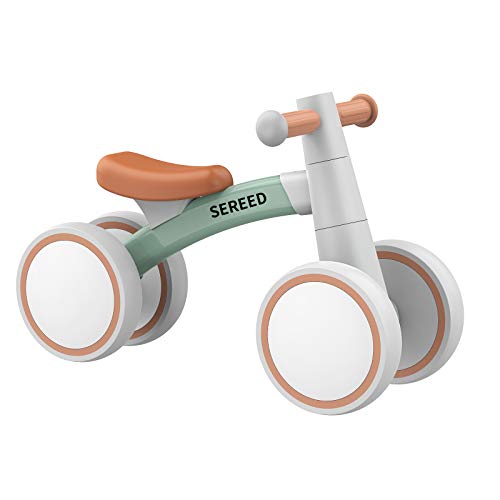
- Designed for ages 12–24 months
- Lightweight aluminum frame
- Stable enclosed-wheel design
Best For: Babies learning balance and steering
Best Powered Progression
STACYC 12eDRIVE Electric Balance Bike

- Three selectable power modes
- Starts in non-powered mode
- Up to 60 minutes of battery runtime
Best For: Ages 3–5 learning powered riding
Best Adjustable Toddler Bike

- Tool-free seat and handlebar adjustments
- Airless EVA tires never go flat
- Supports up to 110 pounds
Best For: Growing toddlers ages 2–3
Best Convertible Design

- Six riding configurations for ages 18–60 months
- Parent push handle and adjustable fit
- Folds for transport and storage
Best For: Families wanting one bike for multiple stages
Best Adjustable Balance Bike for Toddlers

- Adjustable seat and handlebars for ages 2-5
- Puncture-resistant tires for stable outdoor riding
- Customizable plate with three sticker sets
Best For: Growing toddlers needing a durable, adjustable first bike
Best First Balance Bike for One-Year-Olds

- Lightweight 3.3-pound aluminum frame
- Three-position seat for ages 12-24 months
- Motion-activated glowing rear wheel
Best For: Babies beginning balance practice around their first birthday
Best Sporty Balance Bike for Ages 2-5

- Motocross-inspired carbon-steel racing frame
- Tool-free adjustable seat for growing riders
- All-terrain tires and customizable DIY plate
Best For: Ages 2-5 wanting a sporty bike for indoor and outdoor rides
Adjustable Adventure Pick
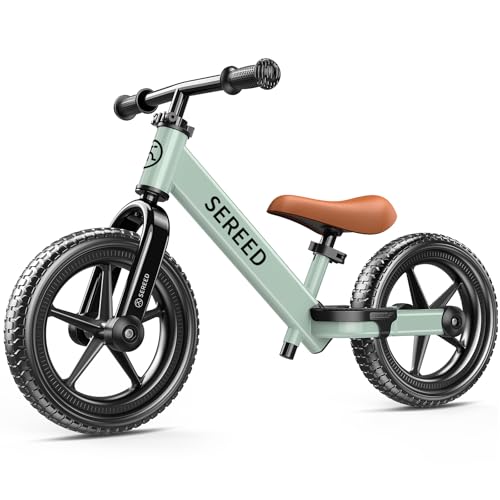
- Adjustable seat and handlebars
- Carbon steel frame supports up to 110 pounds
- Quiet, air-free EVA tires
Best For: Growing toddlers ages 2 to 5
Simple Transition Choice

- Tool-free seat and handlebar adjustment
- Quick spring-buckle assembly
- Air-free EVA tires and carbon steel frame
Best For: Beginner riders ages 2 to 5 on paved surfaces
First Birthday Starter
Baby Balance Bike for 10-24 Months

- Four enclosed wheels improve early stability
- Adjustable soft seat for ages 10 to 24 months
- Lightweight aluminum frame weighs about 3.5 pounds
Best For: Babies and young toddlers learning indoors or on paved surfaces
Best First Ride – SEREED Baby Balance Bike
For toddlers just beginning to explore balance bikes, the SEREED Baby Balance Bike offers a lightweight, intentionally simple introduction to steering and riding. It is designed for ages 12–24 months and weighs about 3.5 pounds, making it easier for young children to move independently.
Best For: Babies 12–24 months who are ready for their first balance-bike experience.
Pros:
- Lightweight aluminum frame is easy for toddlers and parents to carry.
- Wide, enclosed wheels and a 135-degree turning limit support a stable ride.
- Soft seat, non-slip handle, and floor-friendly EVA wheels suit indoor or outdoor use.
- No pedals helps children focus on balance, steering, and coordination.
Cons:
- Its 12–24-month recommendation limits the usable age range.
- There is no brake, so riding requires close adult supervision.
This is a practical pick for parents seeking a compact, beginner-focused balance bike for a very young child. Its low weight and stability-oriented design are especially useful for early practice, though it is not intended as a long-term bike.
Best Powered Progression – STACYC 12eDRIVE Electric Balance Bike
The STACYC 12eDRIVE gives children ages 3–5 a staged way to learn balance bikes, beginning without power before introducing electric assistance. Three selectable power modes let riders build confidence gradually while the aluminum frame keeps the bike relatively lightweight at 17 pounds with its battery.
Best For: Kids ages 3–5, under 75 pounds, who are ready to progress from coasting to powered riding.
Pros:
- Non-powered starting mode supports learning to push, balance, and coast.
- Three power settings allow gradual skill development.
- Industrial-grade lithium-ion battery provides up to 60 minutes of runtime.
- Aluminum TIG-welded frame and BMX-style fork balance durability with a 17-pound weight.
Cons:
- Battery charging takes approximately 30–60 minutes.
- Electric components require more care and have shorter listed warranty coverage than the frame and fork.
- At 17 pounds, it is substantially heavier than a basic toddler balance bike.
Choose this model when a child has outgrown a purely manual balance bike and would benefit from controlled electric progression. The training mode and adjustable speed settings are useful, but the battery-powered design makes it a more specialized and higher-maintenance option.
Best Adjustable Toddler Bike – SEREED Toddler Balance Bike
The SEREED Toddler Balance Bike is built for children ages 2–3 who need room to grow. Tool-free seat and handlebar adjustments, a supportive footrest, and puncture-proof EVA tires make it a practical choice for repeated indoor and outdoor practice.
Best For: Toddlers ages 2–3 who need an adjustable balance bike for ongoing practice.
Pros:
- Seat height adjusts from 12.6 to 17.1 inches, while the handlebar adjusts from 19.6 to 22.5 inches.
- Tool-free quick-release adjustments make fit changes convenient.
- Airless EVA tires are noiseless, anti-slip, and resistant to flats.
- Carbon steel frame supports up to 110 pounds and includes a footrest and soft saddle.
Cons:
- At 7.8 pounds, it is heavier than the smaller SEREED model for younger toddlers.
- It has no brakes, so adults must supervise riding closely.
- The recommended age range is focused on early toddler riding rather than extended use.
This model stands out for its broad adjustment range and maintenance-free tires. It is a solid middle step for toddlers who are ready to ride more independently, especially families that want a bike that can be resized without tools.
Best Convertible Design – JMMD 6-in-1 Toddler Bike
Families comparing balance bikes with longer-term versatility may prefer the JMMD 6-in-1 Toddler Bike. Its convertible setup can shift from a parent-push trike to toddler tricycle, balance bike, and other configurations for ages 18–60 months, while folding storage and a push handle make it suited to outings.
Best For: Families wanting one adjustable bike system for guided rides and gradual independent riding.
Pros:
- Six-in-one convertible design supports multiple riding stages from 18–60 months.
- Parent push handle rotates 135 degrees and adjusts for guided control.
- Includes training wheels, pedals, a kickstand, and a hand brake.
- Folds for transport and arrives 95% pre-assembled.
Cons:
- Its multi-part design is more involved than a basic balance bike.
- The maximum recommended weight is 55 pounds.
- Parents may need to reconfigure the bike as the child advances between modes.
This is the most versatile option in the group for families who want guided control now and balance-bike practice later. Its adjustable components and folding frame add convenience, although the broader feature set may be unnecessary if a child only needs a simple balance bike.
Best Adjustable Balance Bike for Toddlers – KRIDDO Toddler Balance Bike
For families comparing balance bikes for toddlers ages 2 to 5, the KRIDDO model combines a sturdy carbon-steel frame with adjustable handlebars and seat height. Its never-flat tires and customizable plate make it practical for everyday outdoor riding and personalizing.
Best For: Growing toddlers who need an adjustable first balance bike with a durable frame.
Pros:
- Adjustable handlebar and seat accommodate growing children.
- Extra-thick puncture-resistant tires suit grass and sidewalks.
- Customizable plate includes three sticker sets for personalization.
- Soft rubber grips and PU seat add comfort during early practice.
Cons:
- At 6.6 pounds, it is heavier than some lightweight toddler models.
- Its recommended age range begins at 24 months, so it may not suit younger beginners.
With a 110-pound maximum capacity and two-year manufacturer defect warranty, this is a feature-rich choice for toddlers who will use their balance bike over several growing years.
Best First Balance Bike for One-Year-Olds – Umatoll Baby Balance Bike
Among balance bikes designed for very young riders, the Umatoll Baby Balance Bike is intended for ages 12 to 24 months. Its lightweight aluminum frame, adjustable seat, enclosed wheels, and battery-free glowing rear wheel focus on approachable first rides indoors or outdoors.
Best For: Babies and young toddlers starting balance and riding practice around their first birthday.
Pros:
- Lightweight 3.3-pound aluminum frame is easy for small riders to handle.
- Three-position adjustable seat supports ages 12 to 24 months.
- 135-degree steering limiter helps reduce overturning risk.
- Lighted rear wheels glow through motion without batteries.
Cons:
- The 55-pound maximum weight recommendation limits longer-term use.
- There are no brakes, so riding depends on the child’s feet for stopping.
- Its small 6-inch wheels are intended for early toddler use rather than older children.
The enclosed wheels, TPU handle, and quiet EVA tires make this a thoughtfully designed introductory option, especially for parents prioritizing low weight and early-age fit.
Best Sporty Balance Bike for Ages 2-5 – RIDYEE Toddler Balance Bike
For shoppers seeking balance bikes with a more adventurous look, the RIDYEE Toddler Balance Bike uses a motocross-inspired design, carbon-steel frame, and all-terrain tires. Its tool-free adjustable seat and customizable front plate help it stay engaging and useful as children grow from ages 2 to 5.
Best For: Young riders who want a sporty-looking balance bike for indoor and outdoor practice.
Pros:
- Adjustable seat ranges from 13.4 to 15.8 inches without tools.
- Carbon-steel racing frame provides a sturdy, sporty build.
- All-terrain EVA tires support indoor and outdoor riding.
- DIY plate and three sticker sets encourage personalization.
Cons:
- It has no brakes, so children must stop with their feet.
- The rigid suspension provides no suspension system beyond the shock-absorbing seat.
The safety angle limit, anti-slip grip, and shock-absorbing seat add practical touches, while the mountain-inspired styling may appeal to children who want a more distinctive ride.
Adjustable Adventure Pick – SEREED Toddler Balance Bike
Among balance bikes for toddlers, the SEREED SR201 stands out for its broad adjustment range, sturdy carbon steel frame, and portability. Its pedal-free design helps children practice balance and steering, while puncture-resistant EVA tires work indoors or outdoors.
Best For: Toddlers ages 2 to 5 who need a durable, adjustable starter bike for varied terrain.
Pros:
- Tool-free seat and handlebar adjustment supports growing children.
- Wide carbon steel frame supports up to 110 pounds.
- Air-free, anti-slip EVA tires are quiet and low maintenance.
- Includes a customizable plate and stickers.
Cons:
- It has no brakes, so children must control speed with their feet.
- At about 7.8 pounds, it may be heavier than some toddler bikes.
The SEREED is a practical choice when adjustability and rugged construction matter most. Its low-maintenance tires and customizable details add everyday convenience and play value.
Simple Transition Choice – Umatoll Toddler Balance Bike
The Umatoll UT202 is one of the more straightforward balance bikes for children ages 2 to 5. It combines a carbon steel frame, comfortable contact points, air-free EVA tires, and tool-free adjustments to help young riders build balance before moving to a pedal bike.
Best For: Families seeking an easy-to-assemble, adjustable balance bike for paved roads and urban riding.
Pros:
- Seat and handlebars adjust without tools as children grow.
- Air-free EVA tires do not require pumping.
- Spring-buckle design supports quick assembly.
- Soft grips and a comfortable seat encourage beginner riding.
Cons:
- It has no brakes, which is typical of beginner balance bikes but limits stopping features.
- The listed design is intended for paved roads and urban terrain rather than general off-road use.
Choose the Umatoll if convenience is a priority. Its simple setup and growth-friendly adjustments make it a sensible starter option for everyday neighborhood practice.
First Birthday Starter – Baby Balance Bike for 10-24 Months
Designed for younger riders than most balance bikes, this four-wheel baby model is intended for ages 10 to 24 months. Its low center of gravity, enclosed wheels, limited steering angle, and lightweight aluminum frame provide a stable introduction to steering and balance.
Best For: Babies and young toddlers learning to ride indoors or on paved surfaces, especially as a first-birthday gift.
Pros:
- Four-wheel layout and a 135-degree steering limit support stability.
- Adjustable soft seat accommodates children from 10 to 24 months.
- Fully enclosed wheels help protect little feet.
- At about 3.5 pounds, it is easy to carry.
Cons:
- Its age range is limited compared with balance bikes designed for ages 2 to 5.
- The seat adjustment range is relatively narrow.
- It has no brake and is intended for beginner riding.
This model is best viewed as a pre-balance-bike option for very young children. Its stable four-wheel design and light weight make it suitable for early exploration before progressing to a conventional two-wheel balance bike.
How We Picked These Balance Bikes
We selected these Balance Bikes across several common use cases, from compact first bikes for children around 10 to 24 months to adjustable toddler models and a powered option for older beginners. We focused on practical features families typically need: an appropriate starting age, low and manageable proportions, stable wheel layouts, adjustable seating, portability, and useful extras such as pedals, training wheels, brakes, or a push handle.
Because children develop at different rates, the stated age range should be treated as a starting point rather than a substitute for checking the manufacturer’s measurements and safety guidance. A proper fit and supervised riding matter more than choosing the model with the longest advertised age range.
Quick Comparison
| Type | Best For | Features to Look For |
|---|---|---|
| Baby balance bike | Early riders and first birthdays | Low seat, lightweight frame, stable wheels |
| Toddler balance bike | Children learning to scoot and steer | Adjustable seat, easy-grip handlebars, durable tires |
| Convertible bike | Families wanting multiple riding stages | Pedals, training wheels, push handle, or folding frame |
| Electric balance bike | Older children ready for powered practice | Age-appropriate speed, battery controls, protective gear |
Key Buying Factors for Balance Bikes
Fit and Adjustability
Your child should be able to sit comfortably with both feet able to reach the ground. Look for a seat-height range that leaves room to grow without making the bike too large or heavy at the lowest setting. Adjustable handlebars can also improve comfort over time.
Weight and Stability
A lightweight bike is easier for a toddler to control, lift, and recover when it tips. Wider wheel layouts may provide extra stability for very young riders, while two-wheel designs usually offer a more direct path toward traditional cycling balance.
Wheels and Riding Surface
Foam or solid wheels are often quiet and low-maintenance for indoor and smooth outdoor use. Air-filled or larger tires may provide a more comfortable ride on varied pavement, but they can add weight and require more maintenance.
Convertible Features and Portability
Convertible models can extend usefulness, but extra parts may increase weight and setup complexity. If you plan to travel or store the bike in a small space, prioritize a compact or foldable design and check how easily accessories can be removed.
Safety and Supervision
Choose a bike with secure construction, smooth edges, and controls your child can manage. Always follow the product’s age, height, and weight limits, use a properly fitted helmet, and supervise rides away from traffic, stairs, and steep slopes. Electric models require additional attention to speed settings, charging, and protective equipment.
Who Should Buy Which Balance Bikes?
For a child near their first birthday, choose a lightweight baby model with a low seat and stable wheels. For a two-year-old learning to glide independently, an adjustable two-wheel toddler bike is usually the most straightforward choice. Families seeking longer-term flexibility should consider a convertible model with training wheels, pedals, or a parent push handle. If your child is older, confident, and ready for powered riding, an electric balance bike may be appropriate when its speed and safety requirements match their skill level.