Long-distance touring often means leaving your bike outside cafés, hotels, stations, or campsites. A dependable alarm can add a useful layer of security without weighing down your setup.
We’ve compared 10 bike alarms for touring based on alert volume, mounting, weather resistance, power, controls, and everyday practicality.
Best 10 Bike Alarms for Touring Picks for 2026
Best Remote-Controlled Alarm
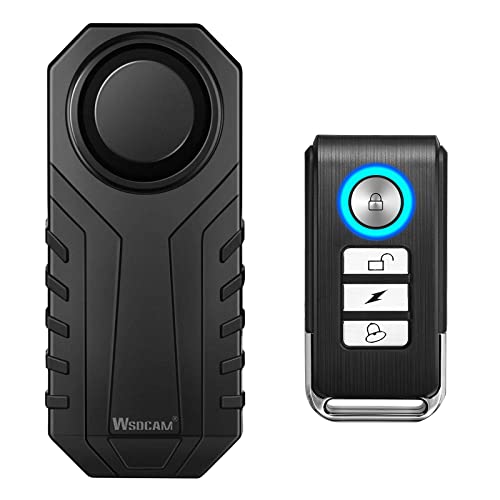
- 113dB vibration alarm
- Seven sensitivity levels
- 66-foot remote range
Best For: Tourers wanting loud, adjustable remote security
Best Smart Tracker Alarm
Knog Scout Bike Alarm & Finder

- 85dB motion alarm
- Apple Find My integration
- 25g low-profile design
Best For: iPhone users prioritizing tracking and discreet mounting
Best Rechargeable Horn Alarm
Waterproof Rechargeable Bike Alarm Horn

- 780mAh USB-rechargeable battery
- Claimed 20–30 days of use
- Water-resistant aluminum housing
Best For: Tourers wanting rechargeable handlebar-mounted security
Best Two-Pack Alarm
USUPERINK Wireless Bike Alarms

- Two alarms included
- 113dB adjustable alert
- IP65 waterproof rating
Best For: Multiple bikes, touring partners, or spare coverage
Best All-in-One Light Alarm
Multifunction Bike Alarm Tail Light

- Combines alarm, tail light, brake light, and horn
- 110dB sound with adjustable volume and sensitivity
- Four light modes and IP65 weather resistance
Best For: Touring cyclists wanting security and rear lighting in one device
Best Long-Range Value
Rechargeable Remote Bike Alarm

- 20-meter remote-control range
- 110dB alarm with seven sensitivity levels
- Three mounting options and IP65 waterproofing
Best For: Touring riders seeking flexible, alarm-only protection
Best for Extended Standby
WSDCAM Fall-Detection Bike Alarm

- 113dB alarm with seven sensitivity settings
- Fall alarm detects vehicle movement beyond 45 degrees
- USB-C rechargeable with extended standby claims
Best For: Outdoor touring with added fall detection and discreet installation
Long-Range Touring Protection

- 110dB siren with three volume levels
- 100m remote and seven sensitivity modes
- IP65 housing with rechargeable battery
Best For: Tourers wanting flexible, long-range remote control
Compact High-Volume Security
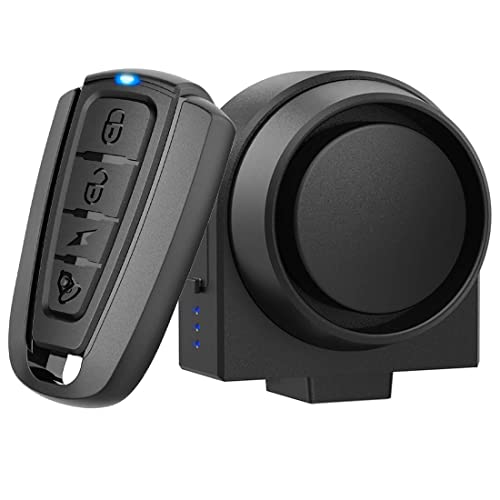
- 115dB siren with three volume levels
- 35g design with USB-C charging
- IPX5 water resistance and 20m range
Best For: Lightweight touring setups with nearby bike parking
Flexible Mounting Choice

- 110dB siren with seven sensitivity levels
- 100m remote with vehicle-search function
- Bracket, zip ties, and adhesive mounting
Best For: Tourers needing adaptable mounting and broad compatibility
Best Remote-Controlled Alarm – Wsdcam 113dB Bike Alarm
Wsdcam 113dB Bike Alarm Wireless Vibration Motion Sensor Waterproof Motorcycle Alarm with Remote
Check Price On AmazonFor riders comparing bike alarms for touring, the Wsdcam offers a loud 113dB vibration alarm, adjustable sensitivity, and remote operation. Its 66-foot wireless range and waterproof housing make it practical for bikes, e-bikes, scooters, and motorcycles.
Best For: Tourers who want a compact, loud alarm with remote arming and vehicle-finding features.
Pros:
- Seven sensitivity levels and three volume levels
- 113dB alarm with vibration and motion detection
- IP55 waterproof construction
- Remote range up to 66 feet, plus vehicle search tones
Cons:
- Notes do not specify battery runtime or charging method
- Remote operation requires carrying the included controller
This is a straightforward choice when a touring setup needs strong audible deterrence and flexible sensitivity settings without a tracking function.
Best Smart Tracker Alarm – Knog Scout Bike Alarm & Finder
The Knog Scout combines an 85dB motion-activated alarm with Apple Find My integration, making it a strong option among bike alarms for touring when location tracking matters. Its compact 25g design can mount under a bottle cage or use anti-tamper screws.
Best For: iPhone users who want discreet bike security with Apple Find My location support.
Pros:
- Apple Find My integration helps locate a lost or stolen bicycle
- Compact 25g design with low-profile mounting
- Can be armed or disarmed by button or companion app
- LEDs indicate alarm and charge status
Cons:
- Apple Find My features are intended for iPhone users
- Its 85dB alarm is quieter than the 113dB alternatives listed here
Choose the Scout when recovery assistance and discreet installation are more important than maximum alarm volume.
Best Rechargeable Horn Alarm – Waterproof Rechargeable Bike Alarm Horn
For touring riders who prefer rechargeable hardware, this waterproof bike alarm horn uses a vibration sensor, remote control, and a 780mAh battery. It provides adjustable sensitivity, a bike-locator bell function, and claimed 20–30 days of use per charge.
Best For: E-bike, MTB, road-bike, and scooter riders seeking a rechargeable alarm with a handlebar mount.
Pros:
- USB-rechargeable 780mAh battery
- Claimed 20–30 days of use and 5–6 hour charging time
- Three adjustable sensitivity levels
- Water-resistant aluminum-alloy housing with included mounting hardware
Cons:
- Alarm output is listed as over 70dB, lower than several competing options
- At 0.5kg, it is heavier than the compact alarms in this roundup
- Notes do not specify the remote-control range
Its rechargeable battery and included handlebar-mount components suit riders who want an integrated, reusable alarm rather than replaceable-battery hardware.
Best Two-Pack Alarm – USUPERINK Wireless Bike Alarms
This two-pack is a practical pick among bike alarms for touring when you want coverage for multiple bikes or an extra unit. Each compact alarm offers a 113dB vibration alert, seven sensitivity settings, three volume levels, and remote control up to 66 feet.
Best For: Couples, multi-bike households, or riders who want a spare alarm and flexible adhesive or strap installation.
Pros:
- Two alarms included in the pack
- 113dB output with adjustable sensitivity and volume
- IP65 waterproof rating for outdoor use
- Installs with adhesive or strap without screws or wiring
Cons:
- Notes do not specify battery life or charging details
- Included alarms may require separate placement and setup on multiple bikes
The two-unit format adds flexibility for touring companions or backup use, while the compact design makes installation easy on different vehicle types.
Best All-in-One Light Alarm – Multifunction Bike Alarm Tail Light
For riders comparing bike alarms for touring, this model combines theft protection with a rear light, brake light, and horn. Its 110dB alarm, remote control, adjustable sensitivity, and rechargeable USB-C design make it a versatile option for bikes, e-bikes, and scooters.
Best For: Touring cyclists who want a security alarm and rear visibility light in one device.
Pros:
- Combines a 110dB alarm, tail light, brake light, and horn.
- Offers seven sensitivity levels and three volume settings.
- Provides four light modes, automatic activation, and brake sensing.
- IP65-rated aluminum-alloy housing with USB-C charging.
Cons:
- At 0.17 kg, it is heavier than a basic alarm-only unit.
- Its rear-mounted design may not suit riders seeking a discreet standalone alarm.
This is the most feature-rich choice for touring riders who value visibility as much as deterrence. Choose it when replacing or supplementing a rear light is useful; otherwise, an alarm-only model may be simpler.
Best Long-Range Value – Rechargeable Remote Bike Alarm
For bike alarms for touring that prioritize straightforward security, this compact NineLeaf unit uses vibration detection and a remote control with up to a 20-meter range. It is rechargeable, weather-resistant, and supports several mounting methods for flexible installation.
Best For: Touring riders who want a dedicated alarm with long standby life and flexible mounting.
Pros:
- 110dB alarm with three adjustable volume levels.
- Seven sensitivity settings help reduce unwanted triggers.
- Remote works up to 20 meters and includes a vehicle-search function.
- Supports adhesive, strap, or bracket installation and is IP65-rated.
Cons:
- It does not include a built-in bike light or brake-light function.
- Initial charging should be completed with the supplied original USB cable.
This model is a practical alarm-only choice for riders who already have lighting covered. Its multiple mounting options are especially helpful when fitting security equipment to different touring bikes or scooters.
Best for Extended Standby – WSDCAM Fall-Detection Bike Alarm
Among bike alarms for touring, the WSDCAM stands out for its fall-alarm feature and extended standby claims. It pairs a 113dB siren with seven sensitivity settings, a 20-meter remote, USB-C charging, and a concealed installation profile.
Best For: Outdoor touring and cycling where fall detection, discreet placement, and long standby are priorities.
Pros:
- Provides a 113dB alarm with three adjustable volume levels.
- Fall detection can sound when the vehicle deviates more than 45 degrees.
- Claims up to three months of daily-use battery life and six to eleven months of standby.
- Compact, concealed design with adhesive and strap installation.
Cons:
- Fall detection may not replace a dedicated personal emergency device.
- It lacks the integrated lighting functions offered by the all-in-one model.
This is a strong fit for riders who want more than basic tamper detection, particularly those interested in the additional fall-alert function. Its discreet body and rechargeable battery also suit longer periods between charging opportunities.
Long-Range Touring Protection – Max 110dB Bike Alarm
For touring riders who want flexible security at multiple stops, this rechargeable alarm combines a loud 110dB siren with a remote rated for up to 100 meters. Its adjustable sensitivity, weather-resistant housing, and mounting options make it a practical choice among bike alarms for touring.
Best For: Riders who want long remote range, customizable sensitivity, and extended battery life on touring trips.
Pros:
- 110dB alarm can sound for up to 30 seconds.
- Seven sensitivity modes and three volume levels support different parking environments.
- IP65 weather-resistant design and three installation methods suit outdoor use.
- USB rechargeable battery may last one to three months per charge.
Cons:
- Requires charging to activate before first use.
- The remote adds another small device to carry.
Its combination of 100-meter remote control, customizable alerts, and claimed extended runtime makes it especially well suited to touring riders who regularly leave a bike unattended. Pair it with a physical lock for layered protection.
Compact High-Volume Security – PADONOW Wireless Remote Alarm
The PADONOW A2 is a compact option for touring cyclists who prioritize a very loud alert without adding much weight. It provides a 115dB siren, adjustable motion sensitivity, USB-C charging, and IPX5 water resistance for everyday outdoor stops.
Best For: Lightweight touring setups needing a loud, rechargeable alarm with straightforward remote operation.
Pros:
- 115dB siren offers the highest stated volume among these options.
- Three volume levels and three sensitivity settings allow basic customization.
- USB-C rechargeable 400mAh battery is designed to stand by for up to three months.
- At 35g, it adds minimal weight to a touring setup.
Cons:
- Remote range is listed at 20 meters, shorter than the other reviewed models.
- It offers three sensitivity levels rather than seven.
This is a sensible pick when low weight and maximum stated alarm volume matter most. Its shorter remote range is better suited to keeping the bike relatively close while stopped.
Flexible Mounting Choice – WSDCAM USB Rechargeable Alarm
WSDCAM offers a versatile touring alarm with a 110dB siren, a 100-meter wireless range, and seven sensitivity levels. The included bracket, zip ties, and double-sided tape make it easier to secure the alarm to different bike shapes or other travel equipment.
Best For: Touring riders who need adaptable mounting and broad compatibility across bikes, scooters, trailers, or luggage.
Pros:
- Seven sensitivity levels and three volume settings support different environments.
- 100-meter remote range includes vehicle-finding tones and three bell choices.
- Bracket, zip ties, and adhesive tape provide three mounting approaches.
- USB-C rechargeable battery may run one to three months per charge.
Cons:
- Charging takes about three hours.
- At 110dB, its stated alarm volume is lower than the PADONOW model.
For touring, the main advantage is versatility: riders can choose a mounting method for a standard frame, irregular surface, or temporary setup. Its long remote range and battery indicators add convenience during repeated travel stops.
How We Picked the Best Bike Alarms for Touring
We focused on alarms suited to the demands of extended rides and frequent stops. The selection includes compact wireless units, rechargeable alarms, models with remote controls, waterproof designs, and options that combine an alarm with a tracker or rear light. We considered practical specifications such as claimed siren volume, vibration sensitivity, battery charging, mounting flexibility, and resistance to rain.
Because alarm performance depends on placement, battery condition, and surrounding noise, decibel ratings should be treated as manufacturer claims rather than a guarantee of real-world loudness. An alarm works best as one part of a broader security setup that includes a quality lock and sensible parking choices.
Quick Comparison
| Feature | What to look for | Why it matters on tour |
|---|---|---|
| Alarm volume | About 110dB or higher | Helps attract attention near busy roads, cafés, and lodging |
| Power | USB or USB-C rechargeable | Easy to recharge from a bike computer, power bank, or wall adapter |
| Weather protection | Water-resistant or IP-rated housing | Better suited to changing outdoor conditions |
| Controls | Remote arming and sensitivity settings | Lets you secure the bike without reaching awkwardly for the unit |
| Tracking | Apple Find My compatibility | Can assist with locating a moved bike, though it is not a replacement for an alarm |
Key Buying Factors for Bike Alarms for Touring
Sound and Detection
A loud siren is useful, but sensitivity control is equally important. Adjustable settings can reduce false alarms caused by wind, passing pedestrians, or a lightly bumped bike. Look for a warning tone or staged response if you park in crowded areas.
Battery Life and Charging
Rechargeable models are convenient, particularly when your touring kit already includes USB charging. Check how often the alarm needs charging, whether the charging port is protected, and whether the remote uses a replaceable battery. A low-battery warning is a valuable convenience.
Mounting and Weather Resistance
The alarm should stay firmly attached without interfering with cables, bags, bottle cages, or folding components. Compact units are easier to conceal. For touring, water resistance and a secure mount matter more than a theoretical maximum volume if the alarm will face regular rain and vibration.
Remote Range and Tracking
Remote controls simplify arming and disarming, but range can vary around buildings and vehicles. Tracker-enabled products may help locate a bike after it has moved, yet they typically depend on a compatible phone network or nearby devices and should supplement, not replace, a strong lock.
Who Should Buy Which Bike Alarms for Touring?
Choose a basic rechargeable remote alarm if you want an affordable deterrent for brief stops. Riders touring through wet climates should prioritize an IP-rated or clearly waterproof model with a protected charging connection. E-bike owners may prefer alarms marketed for larger frames and higher-value components, especially those with adjustable sensitivity.
If discreet recovery assistance is important, a Find My-compatible alarm and tracker is worth considering. Riders who want extra visibility may prefer a model that combines an alarm with a tail or brake light. For shared touring groups or multiple bikes, a two-pack can provide broader coverage, provided each unit has dependable mounting and independent controls.