A good blind spot detection system for cars can make lane changes, merging, and highway driving feel much more confident. The best kits add timely warnings without turning your dashboard into clutter.
Below, we focus on practical buyer needs: sensor type, vehicle compatibility, alert style, and installation complexity, so you can choose a system that fits your car and driving habits.
Best 10 Blind Spot Detection System for Cars Picks for 2026
Rear Radar BSD

- 24GHz radar with rear-side blind zone monitoring
- LED alerts plus buzzer during lane changes
- Requires plastic bumper and pro installation
Best For: Drivers needing a simple radar warning system for supported DC12V vehicles
Mirror Warning Lights

- Visual warning lights for mirror-area awareness
- Helps with lane changes, merging, and parking
- Low-profile pair designed for simple setup
Best For: Drivers wanting a compact visual blind spot aid
77GHz Radar BSD
Multi-Function Detection System

- 77GHz radar with a wide blind-spot detection range
- All-weather warnings for moving vehicles only
- Supports BSD, LCA, DOW, AOA, and RCTA
Best For: Drivers wanting advanced multi-mode radar blind spot coverage
Dual Camera BSD

- Dual 120° cameras with a 6.25-inch IPS display
- Left/right side views plus 1080P recording
- IP68 waterproof cameras with hidden installation
Best For: Drivers who prefer live video blind spot monitoring with recording
24GHz Radar BSD Kit

- Dual 24GHz sensors with 1–32.8 ft range
- Three alert modes for lane changes and hazards
- Fits many DC12V sedans, SUVs, and pickups
Best For: 12V drivers who want radar alerts and can use professional installation
AI Camera BSD System
6.25-Inch Display with Recording

- Dual cameras show left and right blind spots
- 6.25-inch IPS touch screen with auto brightness
- 1080P recorder plus no-drill mounting
Best For: Drivers who want a visual blind spot display and recorder function
BY-J 24GHz BSD System

- BSD, LCA, and DOW alerts in one kit
- Two 24GHz sensors track moving objects only
- Auto starts and stops with the engine
Best For: DC12V drivers wanting multi-function radar safety alerts
Radar Safety Suite
BY-J 77GHz Blind Spot Monitoring System
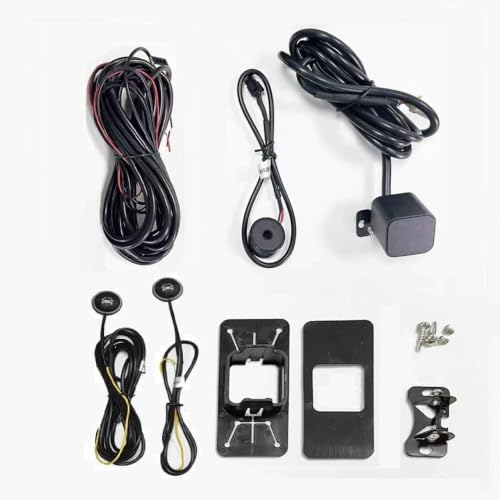
- 77GHz radar with 4T4R chip
- BSD, LCA, DOW, AOA, and RCTA alerts
- Works in rain, fog, and snow
Best For: Drivers wanting a broad radar-based safety system
Camera-View Blind Spot Monitor
AI Blind Spot Camera Display System

- 6.25-inch IPS touchscreen with split rear views
- 1080P cameras with 120° adjustable angles
- Includes recorder function and warning alerts
Best For: Drivers who want live visual blind spot coverage
Universal Radar Warning Kit
BY-J 24GHz Blind Spot Detection System

- 24GHz radar with left and right rear sensors
- BSD, LCA, and optional DOW support
- Up to 98ft detection range
Best For: Soft-fascia vehicle owners needing a universal radar kit
Rear Radar BSD – Lane-Change Alert System
If you want a practical blind spot detection system for cars that focuses on lane-change alerts, the EASYGUARD EBS001 uses two 24GHz microwave sensors to watch the rear sides of the vehicle. It monitors moving objects in the blind area and flashes the LED indicator; when the turn signal is on, it switches to a faster warning mode with three buzzer beeps.
Best For: Drivers who want an affordable rear radar warning system for plastic-bumper vehicles and are comfortable using a professional installer.
Pros:
- Uses 2pcs 24GHz microwave sensors to monitor blind areas behind the car
- Alerts with flashing LED warnings, plus rapid flash and buzzer during lane changes
- Detects moving objects within about 6–12 meters
- Fits many DC12V sedans, SUVs, MPVs, and pickups
Cons:
- Only works with plastic bumpers; not compatible with metal bumpers
- Professional installation is required
- Designed for moving objects, not stationary ones
This is a straightforward radar-based blind spot detection system for cars if your main goal is rear-side warning during lane changes. The biggest limiter is fitment, but for supported vehicles it offers a simple alert setup without unnecessary complexity.
Mirror Warning Lights – Slim Blind Spot Indicators
For drivers who want a minimal blind spot detection system for cars, this Mobestech kit takes a simpler approach with warning lights near the side mirror area. It is designed to provide a visible reminder during lane changes, merging, parking, and general side-area awareness without adding a complex radar module.
Best For: Drivers who want a low-profile visual blind spot indicator rather than a full radar-based system.
Pros:
- Provides a bright visual blind spot warning near the mirror area
- Helps with lane changes, merging, parking, and side mirror awareness
- Slim, low-profile design fits neatly on the vehicle
- Includes a pair of indicator light units
Cons:
- Does not add radar sensing or camera imaging
- Product details focus on indicator lights, so it is less comprehensive than full monitoring kits
- Best suited to drivers who want a simple visual aid
This kit is a practical pick if you want a straightforward blind spot warning light instead of a more involved detection setup. It keeps the installation concept simple and focuses on giving drivers a clear visual prompt when attention is needed.
77GHz Radar BSD – Multi-Function Detection System
If you need a more advanced blind spot detection system for cars, the BY-J uses a 77GHz millimeter-wave radar chip and monitors blind spots on both sides and the rear. It is built for moving-object detection, with LED and buzzer alerts, and adds multiple safety modes for lane changes, door opening, overtaking, and reversing.
Best For: Drivers who want a feature-rich radar system with broad detection coverage and all-weather performance.
Pros:
- 77GHz automotive-grade radar with a wide 3.5m x 70m detection range
- Works in heavy rain, dense fog, and sandstorms at both high and low speeds
- Supports BSD, LCA, DOW, AOA, B-pillar warning, and RCTA functions
- Only warns on moving objects, which helps reduce unnecessary alarms
Cons:
- Only fits DC12V vehicles up to 4.7m without an extension cable
- Plastic bumper required; not compatible with metal bumpers
- Installation and wiring are more involved than a simple indicator-light kit
Compared with basic warning lights, this system offers far more coverage and smarter alert behavior. It is a stronger fit for drivers who want a serious radar-based blind spot monitoring setup with multiple assistance features.
Dual Camera BSD – Blind Spot Display Recorder
For shoppers who prefer a camera-based blind spot detection system for cars, this GRLATG setup combines dual blind spot cameras with a 6.25-inch IPS display. It shows left and right side views on one screen, supports brightness adjustment, and includes a driving recorder function for added monitoring.
Best For: Drivers who want live video views of both blind spots plus a built-in recording feature.
Pros:
- Dual cameras provide 120° side-view coverage for blind spot monitoring
- 6.25-inch IPS display shows left and right images clearly
- Supports sound and light warning on the A65S model
- Includes a driving recorder function and IP68 waterproof cameras
Cons:
- Requires a 5V system and AHD-compatible setup
- Camera-based installation is more involved than mirror lights
- Display size and mounting position may take some planning
This is the most visual option in the group, giving you live image coverage instead of radar alerts alone. If you want to see what is happening in the blind areas and also gain recording capability, this is a strong camera-monitoring choice.
24GHz Radar BSD Kit – Universal Lane Change Warning
If you want a blind spot detection system for cars that focuses on radar-based alerts, this universal 12V kit is built around dual 24GHz millimeter wave sensors. It is designed to warn you when a moving vehicle enters the blind zone, with different alert behavior depending on whether your turn signal or hazard lights are on. That makes it a practical option for drivers who want straightforward lane-change support and extra awareness in poor visibility.
Best For: Drivers of 12V sedans, SUVs, and pickups who want radar-style blind spot alerts and can handle professional installation.
Pros:
- Dual 24GHz radar sensors with a stated detection range of 1–32.8 ft
- Multi-mode alerts for turn signal off, turn signal on, and hazard light use
- Works on DC12V vehicles including sedans, SUVs, and pickup trucks
- Designed to improve awareness in nighttime, rain, snow, or fog
Cons:
- Professional installation is recommended
- Sensor placement, angle, height, and wiring must be set carefully
- Radar sensors cannot penetrate metal surfaces
This is a solid choice if you prefer a radar-based warning kit over a camera display system. The tradeoff is installation complexity, but the multi-mode alerts and universal 12V compatibility make it appealing for safety-focused drivers.
AI Camera BSD System – 6.25-Inch Display with Recording
This blind spot detection system for cars uses cameras and a display instead of radar, making it a good pick if you want a visual view of the blind spot area. The system includes left and right blind spot cameras with 120° adjustable angles, plus a 6.25-inch IPS touch screen that can show both sides at once or switch to a single view. It also adds sound and light warning support on the A65S model and can work as a driving recorder.
Best For: Drivers who want a camera-based blind spot display with easy surface-mount installation and dash-style recording.
Pros:
- Dual cameras provide left and right blind spot views at the same time
- 6.25-inch HD IPS touch display with automatic brightness adjustment
- 1080P image capture and driving recorder function
- No-drill installation with magnetic bracket and double-sided tape
Cons:
- Uses a 5V USB-style power setup rather than a simple 12V radar kit
- Screen and camera setup is more involved than a basic warning-only system
- Built-in warning sound and light are listed for model A65S
For drivers who prefer seeing the blind spot instead of relying only on alerts, this system is feature-rich and practical. The waterproof cameras, adjustable display, and recorder function make it more versatile than a basic warning module, though it does require a more involved install.
BY-J 24GHz BSD System – Lane Change and Door Warning
For shoppers comparing a blind spot detection system for cars, this BY-J kit stands out by combining BSD, lane change assist, and door opening warning in one 24GHz radar setup. It monitors the left and right rear blind spots and only reacts to moving objects, which helps reduce unnecessary alerts. The system is designed to start and stop automatically with the engine, making it a practical safety add-on for daily driving.
Best For: DC12V drivers who want radar-based blind spot, lane change, and door-opening alerts in one system.
Pros:
- Two 24GHz radar sensors monitor rear blind spots for moving objects
- Includes BSD, LCA lane change assist, and DOW door opening warning
- Automatically starts with the engine and shuts off when the engine stops
- Fits many DC12V vehicles with plastic bumpers
Cons:
- Not compatible with metal bumpers
- Vehicle length limit applies unless an extension cable is purchased
- Installation requires wiring and following the manual
This is a well-rounded radar option if you want more than just blind spot warnings. Its extra door-opening protection and engine-linked operation make it especially appealing for drivers who want a fuller safety assist package.
Radar Safety Suite – BY-J 77GHz Blind Spot Monitoring System
If you’re shopping for a blind spot detection system for cars that leans toward radar-based coverage, this BY-J 77GHz kit is built for broader safety support around lane changes, reversing, and door-opening risk. It uses 77GHz millimeter-wave sensing with LED and buzzer alerts, and it is designed to detect moving objects in rain, fog, and snow with fewer false alarms.
Best For: Drivers who want a radar-driven blind spot system with lane-change, door-open, and rear cross-traffic alerts.
Pros:
- 77GHz radar with 4T4R automotive-grade chip for improved precision and anti-interference
- Detects moving objects around the vehicle and supports BSD, LCA, DOW, AOA, and RCTA functions
- Works in rain, fog, and snow and starts/stops automatically with the engine
- Compatible with DC9-16V cars, SUVs, MPVs, pickups, and trucks up to 4.7m
Cons:
- Only warns on moving objects, not stationary ones
- Vehicles over 4.7m may need an extension cable
- Installation and wiring are part of a hardwired kit setup
This is a strong fit if you want a more advanced radar blind spot detection system for cars and can handle a proper installation. The feature set is broad, but the real value is in the moving-object detection and weather resistance.
Camera-View Blind Spot Monitor – AI Blind Spot Camera Display System
This blind spot detection system for cars takes a camera-and-display approach instead of radar, giving you live left and right rear views on a 6.25-inch IPS touchscreen. It is designed to cover blind areas with 1080P cameras, adjustable viewing angles, and automatic brightness changes for day and night driving.
Best For: Drivers who want a visual blind spot monitoring setup with a built-in display and dashcam-style recording.
Pros:
- Shows rear-left and rear-right views simultaneously on a 6.25-inch HD IPS touch display
- 1080P cameras with 120° adjustable viewing angle and manual rotation
- Automatic brightness adjustment for day and night visibility
- Supports driving recorder function and A65S sound-and-light warning
Cons:
- Uses a camera system rather than radar, so it relies on visual coverage
- Requires mounting a display and two side cameras
- Best suited to drivers comfortable with a more involved setup
If you prefer seeing the blind spot directly, this system offers a practical monitor-based alternative with recording support. The value here is the combination of live views, warning features, and easy no-drill camera mounting.
Universal Radar Warning Kit – BY-J 24GHz Blind Spot Detection System
For buyers looking for a blind spot detection system for cars that focuses on lane-change warning and reversing support, this BY-J 24GHz radar kit is a straightforward universal option. It combines BSD, LCA, and door-open warning functions, and it is built around moving-object detection with LED and buzzer alerts.
Best For: Drivers with compatible soft rear fascia vehicles who want a universal radar warning kit for lane changes and reversing.
Pros:
- 24GHz millimeter-wave radar with left-rear and right-rear sensors
- Supports BSD, LCA, and optional door-open warning functions
- Up to 98ft detection range with moving-object-based alerts
- Works on many DC12V sedans, SUVs, MPVs, pickup trucks, and similar vehicles
Cons:
- Does not work through metal bumpers
- Professional installation is required
- Designed for soft rear fascia vehicles only
This is a practical choice if you want a universal radar blind spot detection system for cars and you know your vehicle meets the bumper and voltage requirements. It is less feature-rich than some higher-end kits, but the long detection range and simple alert logic are appealing.
How We Picked the Best Blind Spot Detection System for Cars
We prioritized systems that are broadly compatible, use proven radar or camera-based warning methods, and offer clear driver alerts. We also looked at whether the kit is suitable for everyday commuting, larger vehicles, and mixed driving conditions. For a Blind Spot Detection System for Cars, the most useful options are the ones that balance reliability, ease of installation, and consistent warning behavior.
Quick Comparison
In general, radar-based systems are better for discreet detection and all-weather performance, while camera-based setups can add visual confirmation and recording. Universal 12V kits are often the easiest starting point for sedans, SUVs, trucks, and RVs. More advanced 77GHz models typically offer stronger sensing precision, while 24GHz units can be a practical value choice for many drivers.
Key Buying Factors for Blind Spot Detection System for Cars
Sensor Technology
Radar systems are usually the core choice for blind spot monitoring because they detect vehicles in adjacent lanes without requiring the driver to look for a screen. Camera-plus-display systems can be helpful if you want a visual feed, but they depend more on clean mounting positions and screen visibility.
Vehicle Compatibility and Power
Check whether the kit is designed for 12V vehicles and whether it supports cars, SUVs, pickups, or larger road-going vehicles. A universal Blind Spot Detection System for Cars should still match your bumper, mirror, or rear-quarter mounting needs, so review installation spacing and wiring requirements before buying.
Alert Style and Driver Experience
Look for clear but not distracting warnings. Mirror indicators, buzzers, and on-screen alerts each work differently. The best setup is the one you will notice immediately without creating alert fatigue during normal driving.
Installation and Calibration
Some kits are more DIY-friendly than others. If you want a straightforward upgrade, choose a system with simpler wiring and clear mounting guidance. More advanced radar systems may need better alignment to perform their best.
Who Should Buy Which Blind Spot Detection System for Cars?
Commuters who want a simple safety upgrade should lean toward universal radar-based kits. Drivers who spend lots of time on highways may prefer higher-frequency radar for more refined detection. If you want both awareness and recorded visuals, a camera-based setup may be the better fit. For larger vehicles like SUVs, trucks, and RVs, choose a system specifically described as universal and suitable for bigger blind spots.
Ultimately, the best Blind Spot Detection System for Cars is the one that matches your vehicle, your installation comfort level, and the kind of warnings you prefer while driving.