Fine dust from sanding, carving, polishing, drilling, and nail work can quickly spread across an art studio. The right extractor helps capture particles at the source, protect nearby equipment, and make cleanup easier.
This roundup compares 10 options across high-capacity workshop vacuums, portable extractors, tabletop collectors, and specialized nail-art machines so you can match filtration, airflow, capacity, and portability to your projects.
Best 10 Dust Extractors for Art Studios Picks for 2026
Best Overall HEPA Extractor

- HEPA filtration for fine particulates
- Automatic filter cleaning
- Wet/dry 11-gallon capacity
Best For: Mixed studio cleanup and tool-connected dust collection
Best Compact Enclosed Collector
Danville Materials MacroCab Plus

- Self-contained filtration system
- Integrated LED work light
- Space-conscious 120-volt design
Best For: Compact, detailed studio work
Best High-Capacity Workshop Extractor
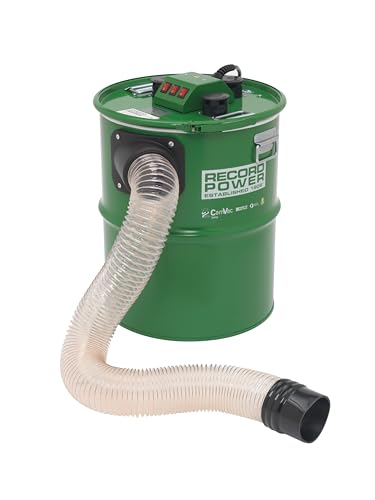
- 90-liter collection capacity
- Twin-motor extraction system
- Sub-micron filter and 4-inch inlet
Best For: Large studios with machines and long hose runs
Best Desktop Fine-Dust Collector

- Compact desktop footprint
- Adjustable low/high suction
- Reusable fine-dust filter
Best For: Nail-art stations and localized bench work
Industrial HEPA Power
3M Xtract 157 Cfm Portable Dust Extractor

- 157 CFM airflow with adjustable settings
- HEPA filter and automatic filter cleaning
- Works with pneumatic and electric sanders
Best For: Heavier studio sanding and connected power-tool use
Compact Nail-Workstation Capture
Makartt Adjustable Nail Dust Collector

- 4200 RPM motor with adjustable speed
- LED display and reusable filter
- Compact design for home or salon use
Best For: Nail art, acrylic filing, and manicure stations
Resin Bench Specialist

- Designed for sanding, drilling, and polishing resin
- Stepless suction control and quiet operation
- Includes 100 quick-change filter papers
Best For: Resin jewelry, epoxy casting, and compact workbenches
Adjustable Studio Extractor
230W Tabletop Nail Dust Collector

- 230W motor with adjustable suction and rotating hose
- Activated carbon filter and quiet 48dB operation
- LED spotlight with tabletop anti-slip design
Best For: Fixed studio benches handling detailed carving or polishing
Portable Studio Extractor
MelodySusie HPro Nail Dust Collector

- Compact 7.67-inch portable design
- Three suction levels with simple button control
- Reusable magnetic fine filter
Best For: Small or mobile studios and beginner users
High-Suction Studio Extractor
ECOSI Dual Turbo Dust Collector

- Dual 8000 RPM motors with stated 1600PA suction
- Ten adjustable suction speeds
- Includes 30 replacement filter papers
Best For: Frequent fine-dust work requiring strong, adjustable extraction
Best Overall HEPA Extractor – Makita VC4210L
For art studios that need versatile dust control, the Makita VC4210L combines wet/dry operation, HEPA filtration, and automatic filter cleaning in a wheeled canister design. Its tool-activated outlet can start and stop the extractor with compatible tools.
Best For: Artists who need a general-purpose extractor for hard floors, workshop cleanup, and tool-connected dust collection.
Pros:
- HEPA filter captures 99.97% of particulates 0.3 microns and larger.
- Automatic filter cleaning helps support longer filter life.
- 11-gallon capacity and wet/dry capability add versatility.
- Included anti-static hose, adapters, and disposal options support varied setups.
Cons:
- Its corded canister format may be more equipment than needed for small desktop tasks.
- The supplied specifications list no manufacturer warranty.
With strong suction, a 60 dB listed noise level, and broad accessory coverage, this is a practical all-around choice when your studio handles more than light surface dust.
Best Compact Enclosed Collector – Danville Materials MacroCab Plus
The Danville Materials MacroCab Plus is a self-contained dust collection and filtration system for art studios where a contained footprint matters. Its integrated LED light and quiet filter are useful additions for detailed, close-up work.
Best For: Studios seeking a compact, self-contained collector with built-in illumination and a space-conscious frame.
Pros:
- Self-contained collection and filtration system.
- Built-in bright LED light can improve visibility around the work area.
- Designed with a sturdy, sleek frame and efficient footprint.
- Listed 120-volt power suits standard electrical service.
Cons:
- The supplied notes do not specify collection capacity or filtration efficiency.
- Its compact design may be less suitable for high-volume workshop debris.
This model is best considered when organization and localized dust control are priorities, but buyers needing detailed airflow or capacity figures should verify those specifications before purchasing.
Best High-Capacity Workshop Extractor – Record Power CGV386-5-US
For larger art studios and workshop environments, the Record Power CGV386-5-US offers a 90-liter drum, twin motors, and a 4-inch inlet. Its sub-micron filtration and included hose hardware are designed to support machines, reducers, and longer hose runs.
Best For: High-volume studios connecting multiple woodworking or fabrication machines and hand tools.
Pros:
- Large 90-liter capacity reduces emptying frequency.
- Twin motors provide a combination of airflow and pressure for workshop extraction.
- Supplied sub-micron filter is designed to remove 95% of 0.3-micron particles.
- Includes 4-inch hose, bayonet adaptor, and DX100X easy-fit cuff.
Cons:
- Its large industrial form factor may be excessive for small studios.
- The supplied setup uses a 4-inch inlet, so smaller tools may require reducers.
- Noise reduction depends on an optional accessory.
This is the strongest fit for demanding, centralized dust extraction rather than occasional craft cleanup. Its capacity and hose compatibility make it particularly appropriate where several machines share one system.
Best Desktop Fine-Dust Collector – MelodySusie SPro
The MelodySusie Classic Nail Dust Collector SPro is a compact option for localized fine dust, especially during acrylic nail filing and polishing. Its reusable filter, adjustable suction, and wrist-rest surface make it suited to close-up bench work rather than whole-studio extraction.
Best For: Nail-art stations and small studio workspaces needing quiet, adjustable desktop dust collection.
Pros:
- High-power fan is designed to collect dust from 360 degrees.
- Low and high suction settings provide adjustable control.
- Reusable magnetic filter can be cleaned with a brush or hairdryer.
- Compact 3.15-by-6.3-by-3.15-inch design includes a wrist-rest surface.
Cons:
- Its small desktop design is intended for localized nail dust, not broad studio cleanup.
- The supplied notes do not provide a dust capacity or filtration-efficiency rating.
Among these dust extractors for art studios, this is the most specialized and portable choice. It makes sense for manicure or similarly localized work where convenience and a small footprint matter most.
Industrial HEPA Power – 3M Xtract 157 Cfm Portable Dust Extractor
For art studios using sanders on hard floors or hardwood, the 3M Xtract is a substantial corded option among dust extractors for art studios. Its 35-liter canister, HEPA filter, adjustable airflow, and automatic filter cleaning are suited to demanding sanding work.
Best For: Art studios with electric or pneumatic random orbital sanders and heavier dust-collection needs.
Pros:
- 157 CFM fan airflow with adjustable settings.
- HEPA filtration and automatic filter cleaning without stopping airflow.
- Automatic on/off compatibility with pneumatic and electric sanders.
- Portable 35-liter canister design.
Cons:
- Corded electric operation limits placement flexibility.
- At 69 dB, it may be noticeable in quieter studio spaces.
- Its larger industrial format may be excessive for light craft projects.
This is the strongest fit of the three for serious sanding workflows. Choose it when tool integration, capacity, and HEPA filtration matter more than the smallest footprint.
Compact Nail-Workstation Capture – Makartt Adjustable Nail Dust Collector
For manicure stations and small filing tasks, the Makartt offers a compact approach to dust extractors for art studios. Its 4200 RPM motor, adjustable speed control, LED display, and reusable filter let users tune collection for acrylic filing, manicures, and pedicures.
Best For: Nail artists, manicure workstations, and home or salon users who need a lightweight, space-saving collector.
Pros:
- Adjustable suction with an LED display and speed-control knob.
- Designed to capture nail dust and debris from multiple directions.
- Reusable filter can be cleaned with a hairdryer or brush.
- Compact, lightweight design measuring 9.72 by 9.41 by 2.99 inches.
Cons:
- Its intended use is nail dust collection rather than general studio sanding.
- The filter may need replacement every two to three months depending on use.
- It requires an adapter connection for power.
This collector makes the most sense when your studio work centers on nails and acrylic filing. It is less appropriate for large-volume woodworking or broad surface sanding.
Resin Bench Specialist – Compact Resin Dust Collector
Resin artists working on jewelry, castings, or cured pieces may prefer this compact option among dust extractors for art studios. It is designed for sanding, drilling, polishing, and post-processing resin, with adjustable suction and disposable filter papers for quick changes.
Best For: Resin jewelry makers, epoxy crafters, UV-resin users, and artists with limited bench space.
Pros:
- Claims to trap over 99% of airborne particles during resin work.
- Stepless suction control supports delicate and stronger extraction tasks.
- Includes 100 disposable filter papers with tool-free replacement.
- Compact footprint and 2.13-pound weight suit portable workstations.
Cons:
- Disposable filters require ongoing replacement.
- The compact design is intended for resin and bench-scale tasks, not industrial extraction.
- The dust tray requires weekly cleaning.
This is a focused choice for resin workflows where clean surfaces and a small footprint are priorities. Its supplied filter papers and simple maintenance are convenient for frequent bench work.
Adjustable Studio Extractor – 230W Tabletop Nail Dust Collector
For art studios handling detailed carving, model work, or other dusty desk-based tasks, this 230W tabletop unit offers adjustable suction in a compact format. Its 360° rotating hose, LED light, and activated carbon filter make it a versatile option among dust extractors for art studios, though its design is especially oriented toward nail and dental-style precision work.
Best For: Artists and makers who need adjustable, focused extraction for tabletop carving or polishing.
Pros:
- 230W brushless motor with adjustable suction and a 360° rotating hose extending up to 23.62 inches.
- Activated carbon filter helps trap fine dust and reduce odors.
- Quiet 48dB operation, LED spotlight, and anti-slip pads support detailed work.
- Includes a clear cover, filter, power cord, adapter, and bilingual manual.
Cons:
- Its 7.1-pound tabletop form is less portable than slimmer dust collectors.
- The included 1-liter capacity may require attention during frequent, heavy-duty use.
- Controls and features are tailored toward nail, dental, and polishing applications.
This is the most feature-rich choice of the three for a fixed workbench. Choose it when directed extraction, lighting, odor reduction, and quieter operation matter more than maximum portability.
Portable Studio Extractor – MelodySusie HPro Nail Dust Collector
The MelodySusie HPro is a compact option for artists who move between work areas or have limited bench space. Its reusable fine filter, three suction levels, and low-noise operation make it a practical pick among dust extractors for art studios where portability and simple controls are priorities.
Best For: Mobile makers, beginners, and small studios needing a lightweight tabletop dust collector.
Pros:
- Portable 7.67-inch format weighs 1.92 pounds and saves manicure-table or studio space.
- Three suction settings—low, medium, and high—provide straightforward adjustment.
- Reusable magnetic filter can be cleaned with a hairdryer or dust brush.
- Ventilation and heat dissipation features support extended use.
Cons:
- The supplied notes do not specify suction pressure, wattage, or noise level.
- The filter is suggested for replacement every three to four months for optimal performance.
- Its compact design may be better suited to lighter, close-up work than large-volume extraction.
Choose the HPro when easy transport and uncomplicated operation outweigh the need for published high-power specifications. The reusable filter also helps reduce routine replacement waste.
High-Suction Studio Extractor – ECOSI Dual Turbo Dust Collector
For studios that want stronger, highly adjustable extraction, this ECOSI model combines two 8000 RPM brushless turbo motors with 1600PA suction. It is one of the more performance-focused dust extractors for art studios, with ten suction levels, replaceable filter papers, and a slim portable body.
Best For: Nail artists, model makers, and detail-oriented studios that generate frequent fine dust.
Pros:
- Dual 8000 RPM turbo motors provide stated 1600PA suction and 360° dust capture.
- Ten suction speeds allow precise control through a single knob.
- Includes 30 filter papers for quick replacement and less routine cleaning.
- Safety cover pauses operation when lifted, while bottom ventilation supports heat dissipation.
Cons:
- Disposable filter papers require ongoing replacement, unlike a reusable-filter design.
- The supplied notes do not specify a decibel rating.
- Its strongest settings may be more capacity than occasional, light-duty users need.
This is the strongest match for users who want measurable suction and fine-grained speed control. The 30 included filter papers add convenience, while the slim body keeps the unit practical for portable studio setups.
How We Picked the Best Dust Extractors for Art Studios
We grouped these Dust Extractors for Art Studios by the kind of work they support: general workshop dust, high-volume sanding, resin and polishing debris, and fine nail-filing particles. We focused on practical specifications such as filtration, container capacity, airflow, inlet size, speed control, hose design, portability, and replacement-filter availability.
Because studio needs vary widely, no single machine is ideal for every maker. A large cyclonic extractor may suit a shared wood or sculpture studio, while a compact tabletop collector can be more appropriate for a manicure station or small resin workspace.
Quick Comparison
- Best for general workshop use: A HEPA-rated wet/dry extractor with a tool-activated outlet and durable hose.
- Best for high-volume dust: A large-capacity cyclonic collector with a wide inlet and strong continuous airflow.
- Best for nail studios: A dedicated tabletop or portable collector with adjustable speed and easily replaced filters.
- Best for resin and polishing: A compact collector with close-range capture and disposable filter papers.
- Best for portability: A smaller corded extractor that can move between benches without taking up much space.
Key Buying Factors for Dust Extractors for Art Studios
Filtration and Particle Capture
Look for HEPA filtration or a clearly stated fine-particle rating when working with dry sanding dust, pigments, or nail filings. A pre-filter, cyclone, or disposable collection bag can extend the life of the main filter and maintain airflow.
Airflow and Source Capture
Airflow matters, but placement matters just as much. A flexible hose, adjustable nozzle, rotating arm, or close-fitting hood can capture dust before it reaches your breathing zone. For power tools, check that the inlet diameter and connectors match your equipment.
Capacity and Maintenance
Large containers reduce interruptions during heavy work, while compact collectors are easier to store. Check how often filters need cleaning, whether bags or papers are readily available, and how messy emptying the unit will be.
Noise, Controls, and Workspace Fit
Noise can become tiring in a small studio or salon. Adjustable speed, automatic tool activation, a digital display, and a long power cord can improve daily usability. Confirm the machine’s voltage and available outlet before buying.
Who Should Buy Which Dust Extractors for Art Studios?
Choose a HEPA wet/dry extractor if you need one versatile machine for sanding, carving, cleanup, and occasional wet materials. Choose a high-capacity cyclonic model for frequent production work, multiple users, or large volumes of wood and sculpture dust.
Choose a dedicated nail dust collector for acrylic filing, gel removal, or salon work. These models are generally more convenient at a manicure table than a full-size shop vacuum. Choose a compact resin or polishing collector when your priority is close-range capture at a small bench and easy disposable-filter replacement.
Before ordering, measure your available space, identify the dust type you create most often, and verify electrical requirements, filter costs, and hose compatibility. Consistent source capture plus suitable respiratory and eye protection remains important, especially when working with hazardous pigments, resins, or treated materials.