When you’re out in the wilderness, reliable communication is essential for your safety. The right GPS handheld with satellite texting can keep you connected, even in the most remote areas. In 2025, a variety of devices offer advanced features and durability for adventurers like you. From two-way messaging to robust battery life, these tools guarantee you’re prepared for anything. Curious about which models stand out and what aspects to take into account? Let’s explore the top options available.
Garmin inReach Mini 2 Satellite Communicator

The Garmin inReach Mini 2 Satellite Communicator is perfect for adventurers who value safety and connectivity while exploring remote areas. Compact and lightweight at just 3.5 ounces, it fits easily in your pocket. With two-way messaging and an SOS feature, you can stay connected and call for help when needed. The 14-day battery life in tracking mode guarantees you won’t lose touch during long trips. Plus, it integrates seamlessly with the Garmin Explore app for trip planning. Whether you’re hiking or camping, this durable communicator offers peace of mind, allowing you to focus on the adventure ahead.
Best For: Adventurers and outdoor enthusiasts seeking reliable communication and safety features while exploring remote areas.
Pros:
- Compact and lightweight design makes it easy to carry during hikes and outdoor activities.
- Two-way messaging and SOS functionality provide peace of mind and enable quick communication in emergencies.
- Long battery life of up to 14 days in tracking mode ensures connectivity during extended trips.
Cons:
- Requires an active satellite subscription for full functionality, adding ongoing costs.
- Response times for messages may vary (5-20 minutes), which can be a concern in urgent situations.
- Some users report hidden costs in the Freedom plan, making it potentially more expensive than anticipated.
ZOLEO Satellite Communicator – Two-Way Global SMS Text Messenger & Email
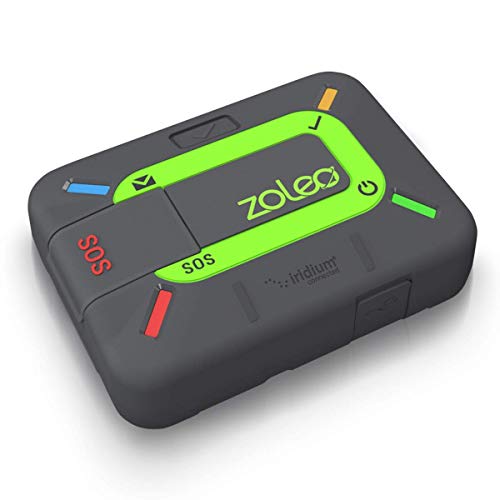
For adventurers venturing into remote territories, the ZOLEO Satellite Communicator stands out as an essential tool. This compact device enables global satellite messaging, keeping you connected beyond cell coverage. You can send SMS and emails through Iridium’s satellite network or Wi-Fi, ensuring communication in the wild. Its emergency SOS feature alerts a 24/7 monitoring center with your GPS location, providing peace of mind. With unlimited check-ins and a rugged design, ZOLEO’s impressive battery life lasts over 200 hours. Plus, the user-friendly app makes setup a breeze, making it a reliable companion for your outdoor adventures.
Best For: Adventurers and outdoor enthusiasts who require reliable communication in remote areas without cell service.
Pros:
- Easy-to-use design with a user-friendly app and quick setup.
- Reliable SOS feature with fast response times from emergency services.
- Long battery life, lasting over 200 hours for extended trips.
Cons:
- Monthly subscription required, which may be a drawback for some users.
- No screen for displaying messages, relying solely on audio and visual confirmations.
- Limited functionality in terms of messaging options compared to smartphones.
Garmin GPSMAP 67i Rugged GPS Handheld

Adventurers seeking reliable navigation in the wild will appreciate the Garmin GPSMAP 67i Rugged GPS Handheld. Its large 3” sunlight-readable display makes viewing easy, while preloaded TopoActive maps and multi-band GNSS support guarantee precise navigation. You can stay connected with two-way messaging and location tracking through the global Iridium satellite network. In emergencies, the interactive SOS feature connects you to Garmin Response℠ for 24/7 support. Plus, when paired with your smartphone, you’ll access weather updates and trip planning tools. With impressive battery life—up to 425 hours in expedition mode—this device is perfect for extended adventures.
Best For: Adventurers and outdoor enthusiasts who need reliable navigation and communication tools in remote areas.
Pros:
- Large, sunlight-readable display enhances visibility in various lighting conditions.
- Comprehensive communication features, including two-way messaging and SOS support, ensure safety in emergencies.
- Long battery life with multiple tracking modes allows for extended use during adventures.
Cons:
- Requires an active subscription for certain features like interactive SOS and premium mapping content.
- May be less user-friendly for those not familiar with GPS devices or outdoor navigation.
- Initial setup and pairing with a smartphone may take time and require technical knowledge.
Garmin GPSMAP 65 Handheld GPS

Seeking a reliable navigation companion for your outdoor excursions? The Garmin GPSMAP 65 is an excellent choice. Weighing just 7.7 ounces, it features a 2.6” sunlight-readable color display and rugged, weather-resistant design. Its advanced GNSS support and multi-band technology guarantee superior accuracy, typically within 6 feet, even in challenging environments. You can quickly acquire satellites, even indoors. With Bluetooth connectivity and compatibility with the Garmin Explore app, managing routes and waypoints is a breeze. While some users find the software complex, its high accuracy and versatility make it a favorite for hiking, geocaching, and more.
Best For: Outdoor enthusiasts seeking a reliable and accurate navigation device for activities like hiking and geocaching.
Pros:
- Durable and weather-resistant design, ideal for rugged outdoor use.
- High accuracy with GNSS support, typically within 6 feet, even in challenging environments.
- Bluetooth connectivity and Garmin Explore app compatibility for easy route management.
Cons:
- Some users find the software complex and difficult to navigate.
- Requires firmware updates via Garmin Express or mobile app, which can be cumbersome.
- Buyers outside North & South America may need to purchase additional maps for local navigation.
Garmin inReach Mini 2 Satellite Communicator for Hiking

The Garmin inReach Mini 2 Satellite Communicator stands out as an essential tool for hikers who venture into remote areas where cell service is nonexistent. With global coverage via the Iridium satellite network, you can send two-way messages and trigger an interactive SOS, ensuring help is just a text away. Its compact and durable design makes it easy to carry, while features like TracBack Routing help you find your way back. Plus, the battery lasts up to 14 days in tracking mode. With included accessories, you’re all set for your next adventure, confident in your ability to stay connected.
Best For: Hikers and outdoor adventurers who require reliable communication and safety features in remote locations without cell service.
Pros:
- Global connectivity through the Iridium satellite network allows for messaging and emergency SOS capabilities anywhere.
- Compact and durable design ensures ease of transport while being rugged enough for harsh outdoor conditions.
- Long battery life of up to 14 days in tracking mode provides peace of mind during extended trips.
Cons:
- Requires subscription for satellite airtime, which may be an additional cost for users.
- Limited functionality compared to smartphones, as it primarily focuses on messaging and SOS features.
- Small screen size may make typing and reading messages more challenging compared to larger devices.
Garmin eTrex SE GPS Handheld Navigator

For those who thrive in the great outdoors, the Garmin eTrex SE GPS Handheld Navigator stands out with its impressive battery life, lasting up to 168 hours in standard mode and an astonishing 1,800 hours in expedition mode. Its 2.2” high-resolution display guarantees readability, even in bright sunlight. With a digital compass for accurate heading, you won’t lose your way. Plus, you can easily connect to the Garmin Explore app for software updates and trip planning. Enjoy enhanced tracking with multi-GNSS support and tackle any weather, thanks to its water-resistant design rated to IPX7. Adventure awaits!
Best For: Outdoor enthusiasts and adventurers who require reliable navigation tools in challenging environments.
Pros:
- Long battery life of up to 168 hours in standard mode and 1,800 hours in expedition mode.
- High-resolution display that remains readable even in bright sunlight.
- Multi-GNSS support for enhanced tracking and navigation accuracy.
Cons:
- Requires two AA batteries which are not included, adding to initial costs.
- Limited screen size at 2.2 inches may not suit users who prefer larger displays.
- Reliance on the Garmin Explore app for certain features may be inconvenient for some users.
Garmin Montana 760i Rugged GPS Handheld Navigator

Adventure seekers will appreciate the Garmin Montana 760i Rugged GPS Handheld Navigator, designed to withstand the toughest conditions while providing reliable navigation. Its 5-inch glove-friendly touchscreen is easy to read, even in harsh weather, thanks to its IPX7 water rating and shock protection. With 24 hours of battery life in GPS mode and up to 432 hours in expedition mode, you can rely on it for extended adventures. Plus, its 2-way satellite messaging keeps you connected when it matters most. Navigate confidently with preloaded topographical maps and advanced sensors, ensuring you’re always on the right track.
Best For: Adventure seekers and outdoor enthusiasts who require a durable and reliable GPS navigator for various terrains and conditions.
Pros:
- Rugged design with an IPX7 water rating and MIL-STD 810 for thermal and shock protection, making it suitable for extreme environments.
- Long battery life, offering 24 hours in GPS mode and up to 432 hours in expedition mode, ensuring extended use during adventures.
- 2-way satellite messaging capability enhances safety with texting and SOS signals, keeping users connected in remote areas.
Cons:
- Subscription required for using the 2-way satellite messaging feature, which may incur additional costs.
- Size and weight may be cumbersome for some users looking for a more compact GPS solution.
- Learning curve for navigating advanced features and settings, which may be overwhelming for casual users.
Spot X Bluetooth 2-Way Satellite Messenger

Equipped with SOS protection and global satellite coverage, the Spot X Bluetooth 2-Way Satellite Messenger is perfect for outdoor enthusiasts who need reliable communication in remote areas. Weighing just 7 ounces, it’s portable and easy to carry. The Bluetooth sync feature allows you to connect to your cellphone, enhancing family communication and search-and-rescue capabilities. While users praise its effective SOS feature, some report challenges with message confirmation and 5G interference. Despite these limitations, it’s a solid choice for hiking and camping, especially with its dedicated mobile number for receiving messages. Just remember, a subscription is required for full functionality.
Best For: Outdoor enthusiasts who require reliable communication and SOS capabilities in remote areas.
Pros:
- Effective SOS feature for emergency situations.
- Bluetooth sync capability enhances communication with family and search-and-rescue teams.
- Lightweight and portable design, making it easy to carry on hikes and camping trips.
Cons:
- Struggles with message confirmation and receiving messages in 5G areas.
- Device may go into “pause” mode when stationary, affecting tracking accuracy.
- Battery can deplete quickly with continuous message attempts without confirmation.
Garmin 010-02256-00 eTrex 22x, Rugged Handheld GPS Navigator, Black/Navy

The Garmin 010-02256-00 eTrex 22x stands out as an excellent choice for outdoor enthusiasts who need a reliable GPS navigator in rugged environments. Weighing just 5 ounces, it features a 2.2-inch sunlight-readable color display and preloaded Topo Active maps, perfect for hiking or cycling. With up to 25 hours of battery life using AA batteries, you won’t get stranded easily. Its IPX7 waterproof rating guarantees durability, while GPS and GLONASS satellite support keeps you on track. Though some find the interface dated, its reliability in remote areas makes it a solid companion for adventures without cell service.
Best For: Outdoor enthusiasts such as hikers, cyclists, and geocachers seeking a reliable GPS navigator for use in remote areas without cell service.
Pros:
- Lightweight and portable design at just 5 ounces, making it easy to carry on long treks.
- Long battery life of up to 25 hours in GPS mode, ensuring you stay on track during extended adventures.
- IPX7 waterproof rating provides durability against water exposure, suitable for rugged outdoor conditions.
Cons:
- Dated user interface may not be as intuitive or modern compared to more recent GPS devices.
- Screen visibility issues reported by some users in bright daylight, potentially affecting usability.
- Requires a micro SD card for map updates, which can be an added expense and inconvenience.
Garmin GPSMAP 67i Rugged Hiking GPS with inReach Satellite Technology

For those who crave exploration in remote areas, the Garmin GPSMAP 67i stands out with its inReach Satellite Communication feature. This rugged device enables two-way messaging, interactive SOS alerts, and location sharing through the global Iridium satellite network. With its multi-band GNSS support and integrated sensors, you’ll enjoy precise navigation even in challenging terrain. The 3” sunlight-readable display makes it easy to view high-resolution maps, while the seamless smartphone integration allows for fast messaging and trip planning. Plus, the included accessories enhance your outdoor experience, ensuring you’re well-equipped for any adventure. Stay connected and safe on your journeys!
Best For: Outdoor enthusiasts and hikers who seek reliable navigation and communication in remote areas without cell coverage.
Pros:
- Two-way satellite messaging and interactive SOS alerts provide peace of mind in emergencies.
- Multi-band GNSS support enhances positioning accuracy in challenging terrains.
- Seamless smartphone integration allows for efficient trip planning and messaging.
Cons:
- Active subscription required for full inReach satellite communication features.
- Higher price point compared to standard GPS devices.
- Requires regular charging to ensure functionality during extended trips.
Factors to Consider When Choosing a GPS Handheld with Satellite Texting
When you’re choosing a GPS handheld with satellite texting, consider its global coverage capabilities to guarantee you stay connected wherever you roam. You’ll also want to look at the messaging features and options, as well as battery life, since you don’t want to run out of juice in the wilderness. Finally, think about size, weight, durability, and water resistance to make sure your device can handle any adventure.
Global Coverage Capabilities
Choosing a GPS handheld with satellite texting capabilities means considering global coverage, which is essential for adventurers heading into remote areas without cellular service. Look for devices that connect to reliable satellite networks like Iridium or Globalstar. Iridium offers near-complete global coverage, ensuring you can send messages or SOS alerts even in the most isolated locations. Keep in mind that you’ll need an active subscription plan for messaging features, and some plans may have geographical limitations. Also, be aware that satellite messaging performance can vary; response times can range from a few seconds to 20 minutes, depending on satellite availability and signal strength. Always consider the specific regions you plan to explore for ideal connectivity.
Messaging Features and Options
Satellite texting capabilities can greatly enhance your communication options while exploring off-the-grid locations. Look for GPS handhelds that offer two-way messaging, enabling you to send and receive texts or emails, even when cellular networks are out of reach. Consider the satellite network used; options like Iridium provide global coverage, ensuring you stay connected almost anywhere. Emergency features, such as interactive SOS alerts, are essential too, allowing you to send distress signals with your GPS location for swift help. Additionally, check for features like unlimited check-ins and location sharing to keep your friends and family updated on your adventures. Finally, understand the subscription plans required for full functionality, as costs can vary considerably based on the satellite messaging service you choose.
Battery Life Considerations
Considering battery life is essential for any adventurer relying on a GPS handheld with satellite texting. You’ll want to check how long the device lasts in different modes; some can last up to 425 hours in expedition mode, compared to just 14 days in standard mode. Look for units that offer extended battery life options, as this can vary from several days to weeks based on your settings. Devices with lithium-ion batteries often outlast those using standard AA batteries. Features like adjustable tracking intervals can help conserve battery during long outings. Keep in mind that using satellite messaging or GPS tracking can drain your battery quicker, so weigh your connectivity needs against battery longevity.
Size and Weight
When you’re out in the wild, the size and weight of your GPS handheld can make a world of difference. Compact devices like the Garmin inReach Mini 2, measuring 2.04 x 3.9 x 1.03 inches and weighing just 3.5 ounces, are easy to carry for outdoor adventures. If you’re setting out on long treks, every ounce counts, so a lighter option, such as the ZOLEO Satellite Communicator at 5.3 ounces, might be ideal. However, consider the trade-offs: smaller devices may lack features, while larger models offer better functionality and display. Think about your specific activities—hiking may demand a more portable option, while camping might require a device with enhanced navigation capabilities. Choose wisely!
Durability and Water Resistance
Durability and water resistance are essential factors in choosing a GPS handheld with satellite texting, especially for adventurers facing unpredictable conditions. Start by checking the water resistance rating; look for IPX7, which can withstand immersion in water up to 1 meter for 30 minutes. Verify the device meets military standards (MIL-STD-810) for shock resistance and temperature extremes. Weight and dimensions matter too; a lightweight, compact design enhances portability while maintaining durability. Examine the construction materials; rugged devices often use reinforced plastics or aluminum to handle drops and rough use in the wilderness. Finally, consider battery life in extreme conditions, as long-lasting batteries guarantee your device remains functional even during adverse weather, allowing for extended use without recharging.
Subscription Plans and Costs
After ensuring your GPS handheld is tough enough to withstand harsh conditions, it’s time to evaluate the subscription plans and costs associated with satellite texting. Subscription options often include annual contracts and month-to-month flexibility, catering to your specific usage needs. Costs can vary widely; expect monthly fees ranging from $50 to over $100, depending on the level of service. Be mindful of potential hidden fees, such as annual charges, so review the fine print carefully. Many plans offer unlimited check-ins or location sharing, enhancing your safety and communication in remote areas. Ultimately, consider the overall value of the subscription, balancing costs against the peace of mind it provides when you venture off the beaten path.
Navigation and Mapping Features
Maneuvering the great outdoors requires more than just a reliable satellite texting feature; it demands a GPS handheld that’s equipped with robust guidance and mapping capabilities. Look for devices that support multi-band GNSS like GPS, Galileo, and QZSS to enhance positional accuracy in dense forests or urban canyons. Preloaded topographical maps are essential for detailed terrain insights, ensuring you navigate effectively. Opt for units that allow downloading additional maps via Wi-Fi or have expandable memory options to customize your mapping experience. A sunlight-readable color display makes viewing maps easier under bright conditions. Additionally, built-in altimeters, barometers, and electronic compasses provide crucial information about elevation, weather changes, and direction, enhancing your overall navigation capabilities.
User Interface and Usability
When you’re exploring the great outdoors, choosing a GPS handheld with a user-friendly interface can make all the difference in your experience. A user-friendly interface enhances usability, allowing quick access to essential features like messaging and navigation, which is vital in emergencies. Devices with touchscreen displays provide clearer visibility and easier interaction, especially in bright sunlight. If you prefer tactile feedback, look for models with simple button designs or joystick controls. Compatibility with mobile apps for trip planning and messaging can streamline your adventures. Additionally, a rugged design and intuitive layout guarantee the device remains functional in challenging environments. Prioritize these factors to guarantee a smooth and efficient outdoor experience while staying connected.