When you’re out in the wild hunting, having a reliable GPS device can make all the difference. You want something that’s not only rugged and durable but also packed with features to help you navigate challenging terrains. In this guide, we’ll explore the 10 best handheld GPS devices for hunting in 2025, ensuring you find the right fit for your adventures. Let’s see which models stand out and why they should be on your radar.
Garmin 010-02256-00 eTrex 22x, Rugged Handheld GPS Navigator, Black/Navy

The Garmin 010-02256-00 eTrex 22x is an excellent choice for hunters who need a dependable GPS navigator in rugged environments. Weighing just 5 ounces, this handheld device features a 2.2-inch sunlight-readable color display, ensuring visibility in harsh conditions. With preloaded Topo Active maps and 8 GB of internal memory, you’re set for your outdoor adventures. Its GPS and GLONASS support enhance tracking capabilities, while the IPX7 waterproof rating means you won’t worry about rain or splashes. Enjoy up to 25 hours of battery life on two AA batteries, making it perfect for extended hunting trips.
Best For: The Garmin 010-02256-00 eTrex 22x is best for outdoor enthusiasts like hikers and hunters who require a reliable GPS navigator in rugged and remote environments.
Pros:
- Compact and lightweight design makes it easy to carry during outdoor activities.
- IPX7 waterproof rating ensures durability in various weather conditions.
- Long battery life of up to 25 hours allows for extended use without frequent recharging.
Cons:
- Screen visibility issues in direct sunlight may affect usability during bright days.
- User interface can be challenging for some, leading to a learning curve.
- Requires a micro SD card for map updates, which is an additional cost and step.
Garmin GPSMAP 65 Handheld GPS

For avid hunters seeking reliable navigation in challenging terrains, the Garmin GPSMAP 65 stands out with its advanced GNSS support and multi-band technology, ensuring maximum accuracy even in dense forests or urban canyons. Weighing just 7.7 ounces, its rugged, weather-resistant design is perfect for outdoor use. The 2.6” sunlight-readable color display makes it easy to read in bright conditions. Plus, with Bluetooth and ANT+ connectivity, managing tracks and routes via the Garmin Explore app is a breeze. While some users have noted software complexities, the unit’s accuracy and reliability make it a solid choice for your hunting adventures.
Best For: Avid hunters and outdoor enthusiasts seeking reliable navigation in challenging terrains with high accuracy.
Pros:
- Advanced GNSS support and multi-band technology for optimal accuracy in dense forests and urban canyons.
- Rugged and weather-resistant design suitable for outdoor use, with a lightweight build of just 7.7 ounces.
- Bluetooth and ANT+ connectivity allows easy management of tracks and routes via the Garmin Explore app.
Cons:
- Some users report complex software usability, requiring multiple apps for updates and map management.
- Firmware updates must be done via Garmin Express or mobile app, which can be cumbersome for some users.
- Buyers outside North & South America may need to purchase additional maps for local navigation.
Garmin eTrex 32x, Rugged Handheld GPS Navigator

Designed for outdoor enthusiasts, the Garmin eTrex 32x offers a rugged handheld GPS navigator that excels in challenging environments. With a 2.2-inch sunlight-readable color display, it’s compact yet powerful, weighing just 5 ounces. Preloaded with Topo Active maps, you’ll navigate routable roads and trails effortlessly. Plus, dual-satellite support guarantees reliable tracking, even in tough conditions. The 8 GB internal memory and micro SD card slot let you expand your map options. With a battery life of up to 25 hours, you can count on it for long adventures. Rated 4.2 stars, it’s a top choice for serious hunters.
Best For: Outdoor enthusiasts looking for a reliable and rugged GPS navigator for hiking and cycling.
Pros:
- Compact and lightweight design, making it easy to carry on long adventures.
- Preloaded with Topo Active maps for seamless navigation on various terrains.
- Long battery life of up to 25 hours in GPS mode ensures extended use during outdoor activities.
Cons:
- Small display size may not suit users who prefer larger screens for easier reading.
- Limited internal memory (8 GB) may require additional micro SD cards for extensive map downloads.
- Some users may find the interface less intuitive compared to more modern GPS devices.
Garmin Montana 700 Rugged GPS Handheld

Equipped with a 5-inch glove-friendly color touchscreen, the Garmin Montana 700 Rugged GPS handheld is an ideal companion for hunters who crave accuracy and durability in the field. Weighing just 14.6 ounces, it combines a robust design with features like routable TopoActive maps and multi-GNSS support for precise positioning. The 3-axis compass and barometric altimeter enhance navigation, while Wi-Fi, Bluetooth, and ANT+ connectivity allow seamless data sharing. With over a week of battery life in Expedition mode and MIL-STD 810 durability ratings, this device withstands the toughest conditions while helping you track your adventures effortlessly.
Best For: The Garmin Montana 700 is best for outdoor enthusiasts and hunters seeking a reliable, rugged GPS handheld device with advanced navigation features.
Pros:
- Large, glove-friendly touchscreen for easy visibility and operation in various weather conditions.
- Extended battery life in Expedition mode, lasting over a week for prolonged adventures.
- Durable construction rated to MIL-STD 810, ensuring resistance to harsh environments.
Cons:
- Relatively heavy at 14.6 ounces compared to some other handheld GPS devices.
- Higher price point may be a barrier for casual users or those on a budget.
- Learning curve for users unfamiliar with advanced GPS features and settings.
Garmin GPSMAP 67 Rugged GPS Handheld

The Garmin GPSMAP 67 Rugged GPS Handheld stands out as the ideal companion for serious hunters seeking reliable navigation in challenging terrains. With its multi-band GNSS and topo mapping features, you’ll enjoy enhanced accuracy even in dense forests or steep hills. The 3-inch sunlight-readable display makes it easy to view maps, while the robust battery lasts up to 182 hours in standard mode. Waterproof and impact-resistant, this device is built for harsh conditions. Plus, it supports Bluetooth connectivity for live weather updates. Though it may take some time to master, its performance and reliability are well worth the investment.
Best For: Serious hunters and outdoor adventurers seeking reliable navigation in challenging terrains.
Pros:
- Accurate tracking with multi-band GNSS technology for enhanced performance in steep and dense environments.
- Impressive battery life lasting up to 182 hours in standard mode, ideal for multi-day trips.
- Rugged construction that is waterproof and impact-resistant, designed for harsh outdoor conditions.
Cons:
- Steeper learning curve for beginners, requiring some time to master the interface.
- Higher price point compared to basic handheld GPS units.
- May be overwhelming for casual users due to its feature-rich design.
Garmin GPSMAP 67i Rugged Hiking GPS with inReach Technology

For hunters who venture into remote areas where cell coverage is unreliable, the Garmin GPSMAP 67i Rugged Hiking GPS with inReach Technology stands out with its innovative satellite communication features. You can send two-way messages, trigger interactive SOS alerts, and share your location via the global Iridium network. With multi-band GNSS support, it guarantees accurate positioning even in challenging terrain. The 3” sunlight-readable color display lets you view detailed maps, including public land and hunting boundaries. Plus, it integrates seamlessly with your smartphone for quick messaging and planning trips using the Garmin Explore app. Adventure confidently with this essential tool.
Best For: Hunters and outdoor enthusiasts venturing into remote areas with unreliable cell coverage who need reliable navigation and communication tools.
Pros:
- Innovative satellite communication with two-way messaging and interactive SOS alerts ensures safety in remote locations.
- Multi-band GNSS support enhances positioning accuracy, even in challenging terrain.
- Seamless smartphone integration allows for quick messaging and trip planning through the Garmin Explore app.
Cons:
- Active subscription required for inReach features like SOS alerts and two-way messaging, which can add to overall costs.
- Higher price point compared to standard GPS devices, which may deter budget-conscious buyers.
- Learning curve associated with advanced features and settings, which may require time to master for new users.
A8 Handheld GPS for Hiking

If you’re an outdoor enthusiast looking for a reliable navigation tool, the A8 Handheld GPS Navigator for hiking stands out with its rugged, waterproof design and multi-GNSS support. Its 3.2-inch sunlight-readable display guarantees you can see your route clearly, even in bright conditions. With 16GB of internal memory, you can save up to 20,000 waypoints and 1,000 routes. The 4000mAh battery offers up to 24 hours of use. While it’s great for casual hikers, the learning curve may pose challenges, and map detail is limited. Overall, it’s a solid entry-level option for your outdoor adventures.
Best For: Casual hikers and outdoor enthusiasts seeking a reliable and budget-friendly navigation tool.
Pros:
- Rugged and waterproof design (IP66) suitable for outdoor conditions.
- Long-lasting 4000mAh battery provides up to 24 hours of use.
- Supports multi-GNSS for improved position accuracy and navigation capabilities.
Cons:
- Limited map detail for Canada and lacks points of interest.
- Slow USB data transfer for downloading maps can be frustrating.
- Learning curve may be challenging for new users, with small buttons difficult to use with gloves.
Garmin Montana 700 Rugged GPS Handheld (Renewed)
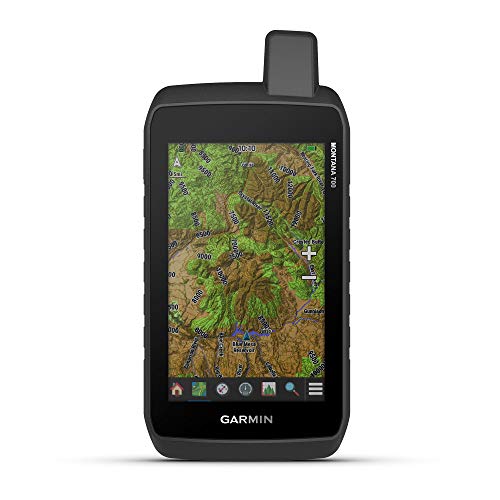
Designed for outdoor enthusiasts, the Garmin Montana 700 Rugged GPS Handheld excels in providing accurate navigation and mapping features essential for hunting adventures. Its glove-friendly 5” color touchscreen is 50% larger than previous models, offering easy readability in any weather. With multi-GNSS support and preloaded TopoActive maps, you’re equipped for diverse terrains. The device is built to withstand tough conditions, boasting MIL-STD 810 ratings for thermal, shock, and water resistance. While users appreciate its accuracy, some note bulkiness and interface challenges. Overall, it’s a reliable choice for your next hunting expedition, backed by a 90-day limited warranty.
Best For: Outdoor enthusiasts seeking a rugged and reliable GPS handheld device for navigation in diverse terrains.
Pros:
- Large, glove-friendly 5” color touchscreen enhances readability in various weather conditions.
- Multi-GNSS support and preloaded TopoActive maps provide accurate navigation for hunting and outdoor activities.
- Durable design with MIL-STD 810 ratings ensures resistance to thermal, shock, and water damage.
Cons:
- Bulkiness may be a concern for users looking for a more compact device.
- Interface challenges can lead to a steeper learning curve for some users.
- Not compatible with USB-C, which may limit connectivity options.
Garmin eTrex SE GPS Handheld Navigator

The Garmin eTrex SE GPS Handheld Navigator is perfect for outdoor enthusiasts who demand reliability and performance in the field. With a 2.2” high-resolution display, you’ll easily read your screen in bright sunlight. Enjoy an impressive battery life of up to 168 hours in standard mode, thanks to its two AA batteries. It supports multiple GNSS systems, enhancing your tracking in tough environments. Plus, you can connect wirelessly with the Garmin Explore app for updates and trip planning. Its water-resistant design guarantees durability, so you can tackle any weather during your adventures confidently.
Best For: Outdoor enthusiasts seeking a reliable and durable GPS navigator for various weather conditions and challenging environments.
Pros:
- High-resolution 2.2” display that is easily readable in bright sunlight.
- Exceptional battery life, lasting up to 168 hours in standard mode and 1,800 hours in expedition mode.
- Multi-GNSS support for enhanced tracking accuracy in difficult terrain.
Cons:
- Requires two AA batteries (not included), which may need frequent replacement during extended trips.
- Limited screen size may not display detailed maps as effectively as larger devices.
- Wireless connectivity features require pairing with the Garmin Explore app for full functionality.
Garmin Montana® 710 Rugged GPS Handheld Navigator

For outdoor enthusiasts seeking a reliable navigation tool, the Garmin Montana® 710 rugged GPS handheld navigator stands out with its 5-inch glove-friendly touchscreen and extensive map compatibility. It includes TopoActive maps and supports additional downloads for various terrains. Built to MIL-STD 810 standards, it’s durable and water-resistant, making it perfect for tough conditions. The rechargeable battery lasts up to 24 hours in GPS mode, and you can also use AA batteries. However, while the intuitive touchscreen enhances navigation, some users report slow map redraws and syncing issues, so keep these in mind before upgrading from older models.
Best For: Outdoor enthusiasts and adventurers seeking a durable and versatile GPS navigation tool for varied terrains.
Pros:
- Durable design: Built to MIL-STD 810 standards for thermal, shock, and vibration resistance, with an IPX7 water resistance rating.
- Extensive map compatibility: Comes with TopoActive maps and allows for downloading additional maps for various environments.
- Long battery life: Offers up to 24 hours in GPS mode and 432 hours in expedition mode, with the option to use AA batteries.
Cons:
- Screen brightness issues: Some users report difficulties viewing the screen in bright sunlight.
- Slow map redraws: Users have noted performance issues with map redraw speeds during navigation.
- Software complexity: Concerns about the need for multiple apps for device management and difficulties in transferring data from older models.
Factors to Consider When Choosing GPS Hunting Handhelds With Maps
When choosing a GPS hunting handheld with maps, you need to take into account several key factors. Display quality and size, battery life, and mapping capabilities are essential for effective navigation. Additionally, durability and weather resistance, along with multi-GNSS support, can make a big difference in your hunting experience.
Display Quality and Size
Choosing the right handheld GPS device for hunting hinges greatly on display quality and size. A larger display, like 5 inches, considerably enhances visibility and navigation, making it easier to read maps and track your location in real-time. For outdoor use, sunlight-readable displays are essential; high-resolution color screens improve clarity in bright conditions. Pay attention to pixel resolution, as it affects the detail and sharpness of the maps, helping you identify key features. Touchscreen functionality can also enhance your experience, offering intuitive interaction with maps compared to traditional button-operated devices. Finally, verify the device has a rugged design to withstand harsh outdoor conditions, maintaining readability and functionality no matter the environment.
Battery Life Expectations
While hunting, you’ll want to guarantee your handheld GPS device has a reliable battery life to keep you on track during long excursions. Battery life can vary considerably, with some units lasting up to 25 hours in standard mode, while others can stretch to 168 hours in expedition mode. Consider the battery type—alkaline, non-rechargeable lithium, or rechargeable NiMH—as it impacts performance. Many models accept standard AA batteries, which you can easily swap in the field. Look for devices with energy-saving modes to extend battery life during multi-day trips. Also, think about how often you’ll use the GPS and under what conditions, as factors like screen brightness and GPS update frequency can affect battery longevity.
Mapping Capabilities
Mapping capabilities play an essential role in the effectiveness of handheld GPS devices for hunting. Look for devices preloaded with detailed TopoActive maps that feature routable roads and trails, fundamental for outdoor navigation. Supporting multi-GNSS satellite systems like GPS, GLONASS, and Galileo enhances accuracy in challenging terrains, such as dense forests or mountains. It’s important to guarantee the device has enough internal memory or a micro SD card slot for downloading additional maps to cover various geographic areas. A high-resolution, sunlight-readable display is critical for spotting features and routes in bright conditions. Finally, evaluate the device’s ability to upload custom maps or access premium mapping content for specific hunting-related information. This will greatly enhance your navigation experience.
Durability and Weather Resistance
When you’re out in the field, the final thing you want is a fragile GPS device that can’t handle the elements. Look for a handheld unit with a rugged design and a durability rating like MIL-STD 810, guaranteeing it can withstand harsh outdoor conditions. Opt for devices with an IPX7 waterproof rating, which means they can handle immersion in water up to 1 meter for 30 minutes. Evaluate build materials; high-quality plastics or rubberized coatings enhance shock resistance and grip in wet conditions. Consider models rated for temperature extremes to guarantee functionality in both hot and cold environments. Ultimately, a glove-friendly touchscreen or tactile buttons will help you navigate easily, even in adverse weather.
Multi-GNSS Support
Choosing a handheld GPS device with multi-GNSS support can make a significant difference in your hunting experience, especially in varied terrains. These devices tap into multiple global positioning satellite systems like GPS, GLONASS, Galileo, BeiDou, and QZSS, enhancing your positioning accuracy and reliability. When you’re maneuvering through dense forests or urban areas, multi-GNSS support reduces location errors, ensuring you stay on track. Additionally, they quickly acquire satellite signals, which is essential for timely guidance in remote locations. With multi-band technology, you’ll receive more precise location data, even in challenging conditions. This capability also offers robust navigation tools, such as real-time tracking and waypoint management, making your outdoor adventures smoother and more enjoyable.
User Interface Design
Finding your way through dense woods or open fields can be challenging, so the user interface design of your handheld GPS device plays an essential role in your hunting experience. Look for a device that prioritizes simplicity and intuitiveness, allowing you to operate functions quickly with minimal distractions. While button-operated interfaces may seem outdated, they provide reliable tactile feedback when touchscreens can falter outdoors. A clear, sunlight-readable display is vital for visibility in various lighting conditions. Additionally, consider devices that incorporate digital compasses and altimeters to enhance navigation accuracy. Finally, access to training resources like tutorial videos or manuals can greatly improve your experience, helping you navigate complex features with confidence.
Connectivity Options
Connectivity options can greatly enhance your hunting experience with handheld GPS devices, so it’s essential to take them into account carefully. Look for models that offer Bluetooth and ANT+ connectivity, allowing you to sync with smartphones for easy data management. Wi-Fi support is also important; it enables you to download high-resolution maps and software updates directly to your device. Additionally, consider compatibility with apps like Garmin Explore to manage your routes, tracks, and waypoints efficiently. Multi-GNSS support is critical, as devices accessing multiple satellite systems improve tracking accuracy in tough environments. Finally, some units let you upload custom maps, giving you tailored terrain information for a more precise navigation experience during your hunts.