Changing light can make a cycling route surprisingly difficult, especially when a ride moves between open roads, wooded trails, and shaded streets. The best photochromic cycling sunglasses automatically adjust lens tint so your eyes stay more comfortable without constant lens changes.
We compared these 10 options for lens performance, coverage, ventilation, fit, weight, and practical riding features. Use the guide below to narrow the list by riding style, weather, prescription needs, and budget.
Best 10 Photochromic Cycling Sunglasses Picks for 2026
Adaptable Value
KAPVOE K9023 Photochromic Cycling Glasses

- Transitions from clear to dark gray with UV exposure
- TR90 frame with UV400 polycarbonate lenses
- Includes adjustable nose pad and myopia frame
Best For: Cyclists wanting versatile fit and prescription-frame compatibility
Premium All-Day Comfort
Tifosi Moab Fototec Cycling Sunglasses
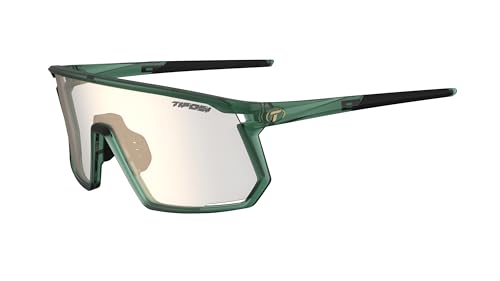
- Fototec lens adapts across roughly 27–75% VLT
- Wraparound shield offers full wind and debris coverage
- 31-gram frame with venting and secure rubber grip
Best For: Medium-to-large riders on road, gravel, and MTB routes
Ultralight Rimless Pick
ROCKBROS 22g Photochromic Sports Sunglasses

- Ultralight 22-gram construction
- Rimless design supports peripheral visibility
- Adjustable nose bridge and UV400 polycarbonate lenses
Best For: Long rides and activities where minimal weight matters
Ventilated Everyday Option
KAPVOE K63 Photochromic Cycling Sunglasses

- Transitions between clear and gray in changing light
- Vented design helps reduce fogging and drag
- TR90 frame with UV400 shatter-resistant lenses
Best For: Cycling, running, and daytime outdoor activities
Prescription-Ready Pick
ROCKBROS Anti-Fog Photochromic Cycling Goggles

- Wide 180-degree wraparound view
- Built-in frame for prescription lenses
- 83%-to-16% light-transmittance range
Best For: Nearsighted riders and broad eye coverage
Wide-View Prescription Ready
ROCKBROS Photochromic Wraparound Sunglasses
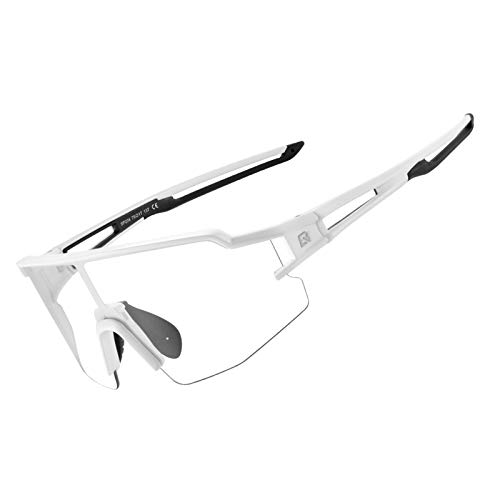
- 83% to 16% light transmittance range
- Includes a prescription-compatible myopia frame
- UV400 polycarbonate wraparound lens
Best For: Cyclists needing adaptive tint and prescription compatibility
Lightweight Everyday Option
ROCKBROS Transparent Photochromic Sunglasses

- Adaptive 83% to 16% transmittance
- Transparent wraparound frame and lightweight build
- Includes a myopia frame and protective case
Best For: Everyday cycling and outdoor use in changing light
Anti-Fog Trail Pick
ROCKBROS Black Photochromic Cycling Sunglasses

- Anti-fog coated photochromic lens
- Lightweight 27.22 g construction
- UV400 wraparound coverage with myopia frame
Best For: Active riders who want anti-fog protection in changing light
Adaptable Value – KAPVOE K9023 Photochromic Cycling Glasses
The KAPVOE K9023 is a practical choice if you want photochromic cycling sunglasses that transition from clear to dark gray as UV intensity changes. Its adjustable nose pad, flexible TR90 frame, and included myopia frame make it especially versatile for riders who need a customizable fit.
Best For: Cycling, mountain biking, and outdoor users who want included prescription-frame compatibility.
Pros:
- Photochromic lens changes from approximately 85% to 15% visible light transmission.
- TR90 frame and shatterproof polycarbonate lenses with UV400 protection.
- Adjustable rubber nose pad and included myopia frame support a personalized setup.
Cons:
- Non-polarized lenses may not reduce reflected glare as much as polarized alternatives.
- Universal one-size fit may not suit every face shape equally.
With its broad activity range and useful included accessories, the K9023 is a well-rounded option for riders seeking adaptable protection without switching lenses manually.
Premium All-Day Comfort – Tifosi Moab Fototec Cycling Sunglasses
The Tifosi Moab is designed for riders who want photochromic cycling sunglasses with a larger wraparound shield and a lightweight feel. Its Fototec lens adapts across changing light, while venting, water resistance, and secure rubber grip help support demanding road, gravel, and MTB rides.
Best For: Medium-to-large adult riders seeking full coverage for road, gravel, and mountain biking.
Pros:
- Clarion Gold Fototec lens adjusts across roughly 27–75% visible light transmission.
- Full-frame wraparound coverage helps shield eyes from wind, debris, and glare.
- At 31 grams, the TR-90 frame is lightweight, with venting and anti-fog features.
- Hydrophilic rubber contact points and adjustable ear pieces help maintain stability.
Cons:
- The medium-large fit may be less suitable for smaller faces.
- Non-polarized lenses do not provide polarized glare reduction.
The Moab stands out for riders prioritizing coverage, fit security, and changing-light performance, though its larger sizing should be checked before purchase.
Ultralight Rimless Pick – ROCKBROS 22g Photochromic Sports Sunglasses
For riders who dislike heavy eyewear, the ROCKBROS 22g model is a lightweight option among photochromic cycling sunglasses. Its rimless design preserves peripheral visibility, while the photochromic lens adjusts to changing light without requiring a lens swap.
Best For: Long rides and outdoor activities where low weight and broad peripheral vision are priorities.
Pros:
- Weighs only 22 grams to reduce pressure on the nose and temples.
- Rimless construction provides a wide, unobstructed peripheral view.
- Thickened polycarbonate lenses offer UV400 protection and shatter resistance.
- Adjustable soft rubber nose bridge helps customize the fit.
Cons:
- Rimless construction may offer less frame coverage than full-frame shields.
- Non-polarized lenses may leave some reflected glare visible.
The ROCKBROS is a compelling minimalist choice when weight and visibility matter most, with enough adjustability for cycling, running, golf, and other outdoor use.
Ventilated Everyday Option – KAPVOE K63 Photochromic Cycling Sunglasses
The KAPVOE K63 offers practical photochromic cycling sunglasses performance for riders moving between clear and sunny conditions. Its vented lens design is intended to help limit fogging and reduce drag, while the flexible TR90 frame and soft nose pad support everyday comfort.
Best For: Cycling, running, fishing, and daytime driving in changing outdoor light.
Pros:
- Lens changes from clear to gray according to surrounding light.
- Thickened polycarbonate lenses provide UV400 protection and shatter resistance.
- Air-inlet design helps reduce fogging and drag during high-speed riding.
- Flexible TR90 frame, soft nose pad, and included inner-frame accessory add versatility.
Cons:
- The supplied notes state that lenses are not included with the inner-frame accessory.
- Non-polarized lenses may not minimize reflected glare as effectively as polarized options.
The K63 is a sensible everyday model for active users who value ventilation and a flexible fit, but buyers should review the inner-frame configuration carefully before ordering.
Flexible Sports Pick – ROCKBROS Photochromic Sports Sunglasses
These photochromic cycling sunglasses are a versatile choice for riders and multi-sport users who want lenses that adapt as outdoor light changes. The lightweight 30 g design combines a secure fit with removable eyewear retention for active use.
Best For: Cycling, pickleball, tennis, running, and other outdoor workouts.
Pros:
- Photochromic lenses adjust to changing light and provide UV protection.
- Removable elastic band adds security during intense activities.
- Non-slip nose pads and ergonomic shaping help maintain a stable fit.
- Lightweight composite frame and scratch-resistant coating support regular use.
Cons:
- Non-polarized lenses may not reduce glare as much as polarized alternatives.
- One-size fit may not suit every face shape.
Choose this pair if adaptable lenses and a versatile, secure design matter more than specialized cycling-only features. Its removable band is particularly useful for high-movement activities.
Prescription-Ready Pick – ROCKBROS Anti-Fog Photochromic Cycling Goggles
For riders who need broad coverage and prescription compatibility, these photochromic cycling sunglasses pair a 180-degree wraparound view with lenses that shift from clear to darker tint. The integrated myopia frame makes them especially practical for nearsighted cyclists.
Best For: Cycling, running, fishing, and outdoor users who need prescription-lens compatibility.
Pros:
- Photochromic lenses transition from 83% transmittance indoors to 16% in bright conditions.
- Large wraparound lens provides a wide field of view and helps limit blind spots.
- Integrated myopia frame supports prescription lenses; the frame is recommended for myopia below 400° and astigmatism below 200°.
- Polycarbonate lenses provide UV400 protection and impact resistance.
Cons:
- Prescription lenses are not included.
- Non-polarized lenses may be less effective against reflected glare.
- The oversized design may feel less discreet than standard sunglasses.
This is the strongest option here for riders prioritizing prescription compatibility, expansive coverage, and all-day light adaptation. Confirm the stated prescription range before ordering.
Ultra-Lightweight Pick – ROCKBROS Photochromic Cycling Glasses
These photochromic cycling sunglasses stand out for their 28 g weight and adjustable fit. Their lenses transition from clear to deep gray as sunlight increases, while the flexible TR90 frame and included myopia frame add practicality for regular outdoor rides.
Best For: Cyclists and runners seeking lightweight, adjustable eyewear with myopia support.
Pros:
- At 28 g, the glasses are designed for comfortable extended wear.
- Photochromic lenses adapt from clear to deep gray with changing sunlight.
- Adjustable rubber nose pad and raised grip dots help improve stability.
- Flexible TR90 frame is designed to withstand everyday cycling use.
Cons:
- The included myopia frame may require separate prescription lenses.
- Medium sizing and an adjustable fit may not provide the same coverage for every user.
- Product details list polarized lenses, but do not specify a polarization strength.
Consider this model when low weight and a customizable nose fit are your top priorities. The myopia-frame provision also makes it a useful choice for riders who need corrective-lens support.
Wide-View Prescription Ready – ROCKBROS Photochromic Wraparound Sunglasses
For riders seeking photochromic cycling sunglasses with broad coverage, this ROCKBROS model combines an oversized wraparound lens with adaptive tinting. The lens transitions from 83% transmittance in indoor conditions to 16% in bright light, while the included myopia frame supports prescription-lens compatibility.
Best For: Cyclists who want a wide field of view, adaptive light control, and an included frame for prescription lenses.
Pros:
- Oversized wraparound design provides a stated 180° field of view.
- Photochromic lens adapts between lighter and darker conditions.
- Includes a myopia frame, hard case, pouch, cleaning cloth, and other accessories.
- Polycarbonate lenses provide UV400 protection and impact resistance.
Cons:
- Prescription lenses are not included.
- The lenses are non-polarized.
- Prescription compatibility is recommended only below the listed myopia and astigmatism limits.
This is a practical all-day option for riders who move between changing light and need prescription compatibility. Its accessory bundle also makes it ready for regular outdoor use.
Lightweight Everyday Option – ROCKBROS Transparent Photochromic Sunglasses
These photochromic cycling sunglasses are suited to riders who want one pair for variable lighting. Their transparent frame and wraparound photochromic lens provide a lightweight setup, with tint adjustment from 83% transmittance indoors to 16% in bright conditions.
Best For: Cyclists and outdoor users looking for lightweight, adaptable eyewear with a transparent frame.
Pros:
- Adaptive lens changes tint according to sunlight intensity.
- Wraparound design offers a stated 180° wide field of view.
- Includes an integrated myopia frame for compatible prescription lenses.
- Comes with a hard case, pouch, cleaning cloth, and additional accessories.
Cons:
- Prescription lenses are not included.
- Non-polarized lenses may not provide polarized glare reduction.
- The supplied details list scratch-resistant coating but do not specify an anti-fog coating for this variant.
The transparent styling and lightweight 0.09 kg construction make this a versatile choice for cycling, running, driving, or fishing. Consider it if you value adaptable tinting over polarization.
Anti-Fog Trail Pick – ROCKBROS Black Photochromic Cycling Sunglasses
For active riders comparing photochromic cycling sunglasses, this black ROCKBROS version adds an anti-fog coating to its adaptive wraparound lens. It is designed to shift from 83% transmittance in lower light to 16% in bright conditions while keeping the frame lightweight at 27.22 g.
Best For: Cyclists who prioritize anti-fog performance, lightweight coverage, and changing-light versatility.
Pros:
- Anti-fog coating is listed for the photochromic lens.
- Lightweight 27.22 g construction supports active use.
- Wraparound lens provides a stated 180° field of view.
- Includes a myopia frame and UV400 impact-resistant PC lens.
Cons:
- Prescription lenses are not included.
- The lenses are non-polarized.
- As with the other variants, the myopia frame is recommended only within the stated prescription limits.
The anti-fog coating makes this variant particularly appealing for cycling and running where condensation can be distracting. Its adaptive tint and lightweight frame round out a capable outdoor setup.
How We Picked the Best Photochromic Cycling Sunglasses
We focused on the features that matter most when sunglasses are worn for cycling: photochromic lens behavior, UV protection, visibility, coverage, ventilation, stability, and comfort over long rides. We also considered frame weight, nose and temple grip, lens shape, anti-fog design, and whether a model accommodates a myopia insert or prescription setup.
Product descriptions and specifications were compared across the selected models, but real-world tint speed can vary with temperature, UV exposure, and the conditions behind a windshield or helmet visor. Treat advertised claims as useful indicators rather than a substitute for fit and on-road testing.
Quick Comparison
| Best For | Features to Prioritize | Models to Consider |
|---|---|---|
| Mixed-light road rides | Broad tint range, clear optics, secure fit | KAPVOE K9023, KAPVOE K63 |
| Lightweight performance | Low frame weight, wraparound coverage, ventilation | ROCKBROS 22g, Tifosi Moab |
| Fog-prone conditions | Ventilation channels and anti-fog treatment | ROCKBROS anti-fog models |
| Prescription support | Compatible insert or optical frame | ROCKBROS models with myopia-frame support |
| Multi-sport use | Adjustable grip and versatile coverage | ROCKBROS cycling and pickleball models |
Key Buying Factors for Photochromic Cycling Sunglasses
Lens Range and UV Protection
Look for a lens that becomes sufficiently clear in shade while darkening enough for bright roads. UV400 protection is a useful baseline, but it does not describe how quickly a lens changes tint or how dark it becomes. Riders who spend much of the day in dense shade should prioritize a clear low-light state.
Coverage and Optical Clarity
A larger shield or wraparound lens blocks more wind, dust, and peripheral glare. Check for distortion near the edges, particularly if you use a strong prescription or frequently look downward at a cycling computer.
Ventilation and Anti-Fog Performance
Open vents can reduce condensation during climbs and cold starts, although they may allow more wind or rain through. Anti-fog coatings help, but keeping the glasses clean and leaving space between the lens and face is still important.
Fit, Weight, and Stability
Choose a frame that stays planted when you turn your head or ride over rough surfaces. Adjustable nose pads, grippy temple tips, and helmet compatibility often matter more than a small difference in lens darkness. Lightweight frames reduce pressure during long rides.
Who Should Buy Which Photochromic Cycling Sunglasses?
Choose a full-coverage shield if you ride quickly, encounter strong wind, or want maximum protection from debris. A lighter, ventilated design is better for hot-weather training and riders who dislike pressure from heavier frames. If your routes alternate between forest and open road, prioritize a wide photochromic range and clear low-light visibility. Riders who need corrective vision should select a model specifically designed for a myopia insert or consult an optician about prescription compatibility.
Before buying, confirm the listed lens category, frame dimensions, return policy, and whether the package includes a case, replacement lens, or prescription insert. The best Photochromic Cycling Sunglasses are ultimately the pair that fits securely, maintains clear vision, and remains comfortable for the full length of your usual ride.