When you’re exploring remote areas, staying connected is crucial for your safety. The right GPS satellite phone can offer essential tracking features and reliable communication, no matter where you are. From compact devices like the Garmin inReach Mini 2 to robust options like the BlueCosmo IsatPhone 2.1, there are numerous choices tailored to adventurers. Curious about which devices stand out and what factors you should consider? Let’s take a closer look.
Garmin inReach Mini 2 Satellite Communicator

If you’re an avid hiker or adventurer seeking reliable communication in remote areas, the Garmin inReach Mini 2 Satellite Communicator is your ideal companion. Weighing just 3.5 ounces, this compact device fits easily in your pocket. With a battery life of up to 14 days in tracking mode, you can stay connected without worry. It features two-way messaging, emergency SOS capabilities, and TracBack routing to navigate back to your starting point. Plus, you can sync it with your smartphone using the Garmin Explore app for enhanced mapping. While subscription costs apply, the safety and connectivity it offers make it worth the investment.
Best For: Outdoor enthusiasts and hikers who require reliable communication and safety features in remote areas.
Pros:
- Compact and lightweight design makes it easy to carry on any adventure.
- Long battery life of up to 14 days in tracking mode ensures extended use without frequent recharging.
- Two-way messaging and emergency SOS capabilities provide peace of mind for safety in the wilderness.
Cons:
- Requires an active subscription for full functionality, which can add to overall costs.
- Response times for messaging may vary, potentially causing delays in communication.
- Some users find the subscription pricing structure to be complex and potentially expensive for occasional use.
ZOLEO Satellite Communicator – Two-Way Global SMS Text Messenger & Email
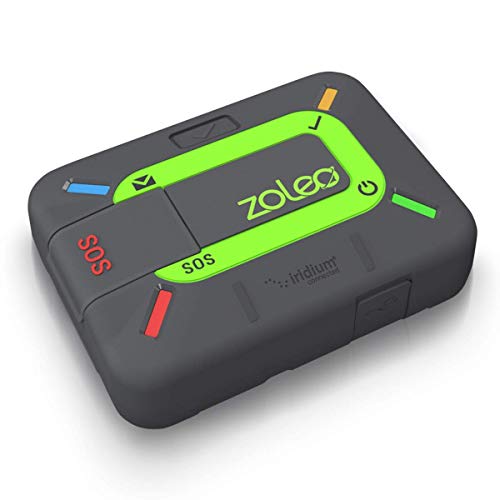
The ZOLEO Satellite Communicator is ideal for adventurers and outdoor enthusiasts who need reliable communication in remote areas without cellular coverage. It enables global SMS messaging and email via the Iridium satellite network, cellular, or Wi-Fi. You’ll appreciate its rugged design, boasting an IP68 rating and over 200 hours of battery life. The emergency SOS feature sends your GPS location to a 24/7 monitoring center, ensuring help is just a message away. With unlimited check-ins and location sharing, you can keep your loved ones updated, making it a must-have for your outdoor adventures. Enjoy peace of mind with ZOLEO!
Best For: Outdoor adventurers and enthusiasts who require reliable communication in remote locations without cellular coverage.
Pros:
- Durable rugged design with an IP68 rating, making it suitable for harsh outdoor conditions.
- Emergency SOS feature provides immediate alerts with GPS location to a 24/7 monitoring center.
- Unlimited check-ins and location sharing enable users to keep loved ones informed of their status.
Cons:
- Monthly subscription required, which may be an additional cost for some users.
- No screen interface may limit ease of use for those who prefer visual confirmation.
- Connectivity may be less reliable in extremely remote areas, despite satellite capabilities.
BlueCosmo Inmarsat IsatPhone 2.1 Satellite Phone Kit
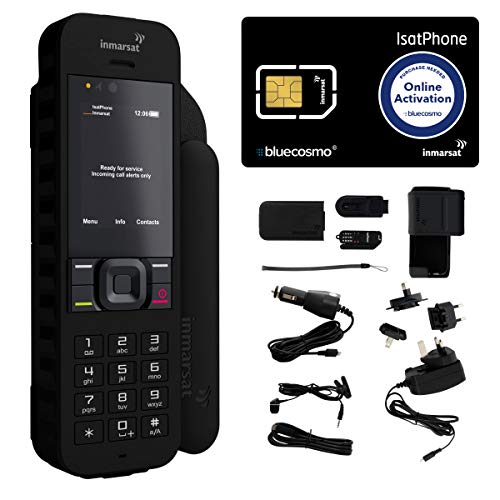
For outdoor enthusiasts and adventurers seeking reliable communication in remote locations, the BlueCosmo Inmarsat IsatPhone 2.1 Satellite Phone Kit stands out with its global coverage and no roaming charges. Weighing just 11.2 ounces, it’s portable and designed to withstand tough conditions, featuring shock resistance and water resistance. With up to 8 hours of talk time and 160 hours of standby, you’ll stay connected when it matters most. Plus, its built-in GPS tracking and Emergency SOS functionality provide peace of mind. The complete kit includes everything you need, ensuring you’re ready for any adventure.
Best For: Outdoor enthusiasts and adventurers seeking reliable communication in remote locations.
Pros:
- Durable design with IK04 shock resistance and IP65 water and dust resistance ratings.
- Global coverage with no roaming charges for voice calls and SMS.
- Long battery life with up to 8 hours of talk time and built-in GPS tracking for added safety.
Cons:
- Heavier than some other portable communication devices at 11.2 ounces.
- Proprietary OS may limit compatibility with third-party applications.
- Requires a subscription for satellite service, which can be an additional cost.
Spot Trace Satellite Tracking Device

Ideal for outdoor enthusiasts and travelers alike, the Spot Trace Satellite Tracking Device offers peace of mind by ensuring you can keep tabs on your assets in real-time. This handy device tracks vehicles, luggage, and loved ones using satellite technology, making it perfect for hiking and camping. It utilizes GPS to pinpoint locations and sends status messages, helping you monitor moving trucks or boats. Additionally, it’s a lifesaver for lost luggage and can even keep an eye on your kids’ backpacks. With easy activation and a subscription plan, you can explore confidently, knowing your assets are secure.
Best For: Outdoor enthusiasts, travelers, and parents looking to keep track of their assets and loved ones in real-time.
Pros:
- Allows real-time tracking of vehicles, luggage, and loved ones using satellite technology.
- Helps locate lost luggage and monitor children’s backpacks during commutes.
- Easy activation with flexible subscription plans for users.
Cons:
- Requires a subscription for full functionality, which may be an additional cost.
- Limited battery life depending on usage and tracking frequency.
- GPS signal may be affected in dense urban areas or remote locations.
Garmin GPSMAP 67i Rugged GPS Handheld

Designed for adventurers and outdoor enthusiasts, the Garmin GPSMAP 67i Rugged GPS Handheld stands out with its large 3” sunlight-readable color display, ensuring easy navigation even in bright conditions. You’ll love the preloaded TopoActive maps and multi-band GNSS support, allowing for precise navigation wherever you go. With two-way messaging and location tracking via the global Iridium satellite network, staying connected is a breeze. Plus, its interactive SOS feature connects you to Garmin Response℠ for emergencies. The internal battery lasts up to 425 hours in expedition mode, making it a reliable companion for your wildest adventures.
Best For: Outdoor adventurers and enthusiasts seeking a reliable and feature-rich GPS handheld device for navigation and emergency communication.
Pros:
- Large, sunlight-readable color display for easy visibility in bright conditions.
- Long battery life of up to 425 hours in expedition mode, ideal for extended trips.
- Two-way messaging and SOS capabilities via the global Iridium satellite network enhance safety during adventures.
Cons:
- Requires an active subscription for some communication features, which may incur additional costs.
- Some jurisdictions may regulate or prohibit the use of satellite communication devices.
- May have a learning curve for users unfamiliar with GPS technology and features.
Garmin inReach SE+, Handheld Satellite Communicator with GPS Navigation

The Garmin inReach SE+ stands out as an excellent choice for adventurers and outdoor enthusiasts who need reliable communication in remote areas. With 100% global Iridium satellite coverage, you can send two-way text messages, ensuring you stay connected wherever you go. Its interactive SOS function connects you to a 24/7 search and rescue center for peace of mind. Plus, GPS navigation features, including preloaded TOPO maps and a digital compass, help you navigate confidently. Weighing just 8 ounces, it’s lightweight and portable, making it an essential companion for your outdoor expeditions. Stay safe and connected with the inReach SE+.
Best For: Adventurers and outdoor enthusiasts seeking reliable communication and navigation in remote areas.
Pros:
- 100% global satellite coverage for two-way messaging, ensuring you can communicate from anywhere.
- Interactive SOS function provides peace of mind with access to a 24/7 search and rescue monitoring center.
- Lightweight design at only 8 ounces, making it easy to carry on any outdoor expedition.
Cons:
- Requires a subscription plan for messaging services, which may be an additional cost.
- Limited display resolution (200 x 265 pixels) may affect visibility in certain lighting conditions.
- Some users may find the learning curve steep when first using the device and its features.
Garmin inReach Mini 2 Satellite Communicator for Hiking

For outdoor enthusiasts who venture into remote areas, the Garmin inReach Mini 2 Satellite Communicator is an essential companion. It utilizes the Iridium satellite network, ensuring global connectivity for two-way messaging and interactive SOS alerts. You can share your location with loved ones via Garmin MapShare and even post on social media. The compact, durable design is water-resistant and built to MIL-STD-810 standards, perfect for rugged adventures. With up to 14 days of battery life and features like TracBack routing, you’ll feel secure knowing you can navigate back safely, even in the most isolated environments.
Best For: Outdoor enthusiasts and hikers who need reliable communication and navigation tools in remote areas.
Pros:
- Global connectivity through the Iridium satellite network for messaging and SOS alerts, even without cell service.
- Durable and compact design, water-resistant and built to withstand rugged outdoor conditions.
- Long battery life with up to 14 days in tracking mode, ensuring it lasts through extended adventures.
Cons:
- Subscription required for satellite airtime, which may add ongoing costs.
- Limited screen size may make it challenging to read messages or navigate for some users.
- Higher initial investment compared to traditional GPS devices or communication tools.
Spot Gen 4 Satellite GPS Messenger

When you’re venturing into the great outdoors, the Spot Gen 4 Satellite GPS Messenger stands out as an essential tool for ensuring safety and connectivity. Weighing just 5 ounces, this handheld device uses the Globalstar satellite network to keep you connected beyond cell towers. With its SOS button, you can send your GPS coordinates to emergency responders in critical situations. Plus, its tracking feature allows you to share location updates with friends and family while you hike or camp. Whether you’re exploring remote trails or ensuring your children’s safety, the Spot Gen 4 is a reliable companion for all your adventures.
Best For: Outdoor enthusiasts, hikers, and families seeking reliable communication and safety solutions in remote areas.
Pros:
- Critical communication beyond cell towers ensures connectivity in remote locations.
- SOS button provides peace of mind by allowing users to quickly alert emergency responders.
- Lightweight and portable, making it easy to carry on all outdoor adventures.
Cons:
- Requires a subscription plan for service, which may incur additional costs.
- Limited functionality compared to smartphones, primarily focused on GPS and emergency features.
- Battery life may be affected by frequent use of tracking features, requiring regular battery replacements.
Garmin GPSMAP 65 Handheld GPS

Equipped with advanced multi-band technology, the Garmin GPSMAP 65 Handheld GPS stands out as an excellent choice for outdoor enthusiasts seeking reliable navigation in challenging environments. With a 2.6-inch sunlight-readable display and weighing just 7.7 ounces, it’s designed for rugged use. You’ll appreciate its quick satellite acquisition and accuracy within six feet, even in dense forests. Bluetooth and ANT+ connectivity allow seamless integration with the Garmin Explore app for managing routes and waypoints. While the button-operated interface might feel a bit dated, its reliable performance and weather-resistant build make it an invaluable companion for hiking and geocaching adventures.
Best For: Outdoor enthusiasts, hikers, and geocachers looking for reliable navigation in challenging environments.
Pros:
- High accuracy with a typical precision of around 6 feet, ideal for dense forests and urban canyons.
- Rugged and weather-resistant design that withstands outdoor conditions, ensuring durability during adventures.
- Bluetooth and ANT+ connectivity enables easy management of routes and waypoints through the Garmin Explore app.
Cons:
- Button-operated interface may feel outdated to some users, lacking the modern touch-screen experience.
- Software usability concerns, with reports of complexity and the need for multiple apps for updates and map management.
- International users may need to purchase additional maps for navigation outside North and South America.
Spot X Bluetooth 2-Way Satellite Messenger

The Spot X Bluetooth 2-Way Satellite Messenger stands out as an ideal choice for adventurers and outdoor enthusiasts seeking reliable communication in remote areas. Weighing just 7 ounces and measuring 2.9 x 0.94 x 6.54 inches, it’s portable yet powerful. With Bluetooth sync, you can connect to your cellphone for seamless messaging and emergency SOS features. It operates on the Globalstar satellite network, ensuring you stay connected while hiking or camping. However, be mindful of its limitations in 5G areas and the battery drain from continuous messaging attempts. Overall, it’s a solid investment for off-grid communication needs.
Best For: Adventurers and outdoor enthusiasts needing reliable communication in remote areas.
Pros:
- SOS Protection: Offers effective emergency SOS feature for safety in off-grid situations.
- Bluetooth Sync: Allows seamless connection with your cellphone for family communication.
- Portable Design: Lightweight and compact, making it easy to carry on hikes and camping trips.
Cons:
- 5G Interference: Struggles to function in areas with 5G networks, limiting usability in some locations.
- Battery Drain: Continuous messaging attempts can quickly deplete the battery.
- Positioning Sensitivity: Requires a clear sky and horizontal positioning for optimal performance.
Factors to Consider When Choosing a GPS Satellite Phone with Tracking
When you’re choosing a GPS satellite phone with tracking, it’s essential to take into account several key factors. Think about the coverage area availability, communication features, and how long the battery lasts in tough conditions. Also, consider the phone’s size for portability and the subscription plans that fit your budget.
Coverage Area Availability
Choosing a GPS satellite phone with tracking can feel overwhelming, especially with so many options available. To guarantee reliable connectivity, pick a phone that operates on a satellite network with global coverage, like Iridium or Globalstar. Keep in mind that some networks may have limitations in specific regions, which can impact tracking and communication reliability. Emergency SOS features are vital; they allow you to send immediate alerts to monitoring centers during emergencies. Additionally, look for real-time tracking capabilities so you can share your location with others. Finally, evaluate the subscription plans associated with the device, as they can vary widely in coverage, costs, and the frequency of location updates provided. Make a choice that fits your needs.
Communication Features Offered
Reliable coverage is just one piece of the puzzle in selecting a GPS satellite phone with tracking capabilities. You’ll want to prioritize two-way messaging, which lets you send and receive texts globally, guaranteeing you can communicate even in remote areas. Look for devices equipped with interactive SOS features that connect you to a 24/7 monitoring center for immediate help during emergencies. Location-sharing options are essential, allowing you to share your GPS coordinates with family and friends for added safety. Additionally, check for multiple connectivity options like Bluetooth and Wi-Fi to integrate easily with your smartphone. Finally, make sure the phone includes emergency features, such as GPS tracking and alerts, to send precise location information to responders when you need it most.
Battery Life and Durability
While evaluating GPS satellite phones, you can’t overlook battery life and durability, as these factors are essential for outdoor adventures. Battery life can vary considerably; some devices offer up to 14 days in tracking mode, while others last over 200 hours with minimal use. Consider how often you’ll use the phone and the tracking intervals, as shorter intervals drain the battery faster. Durability is equally important—look for models with water resistance ratings like IPX7 or shock resistance ratings like IK04, guaranteeing they withstand harsh conditions. Some devices use rechargeable lithium-ion batteries, while others may rely on standard batteries for flexibility in remote areas where charging isn’t an option. Choose wisely to guarantee reliable connectivity when you need it most.
Size and Portability
When you’re out in the wilderness, the size and portability of your GPS satellite phone can make all the difference. Most devices weigh between 3.5 ounces and 11.2 ounces, making them easy to carry during your outdoor adventures. Look for compact dimensions, typically ranging from 2 to 6.5 inches in length, so you can conveniently stash it in your backpack or pocket while hiking or camping. A lightweight design enhances comfort on long treks, as heavier devices can lead to fatigue. Make certain the form factor allows for easy handling and operation, especially in emergencies when quick access is essential. Finally, choose a phone with rugged construction to withstand outdoor conditions without adding unnecessary bulk.
Subscription Plans and Costs
Choosing the right subscription plan for your GPS satellite phone can greatly impact your overall experience and budget. Most satellite devices require active plans, with monthly or annual fees that vary based on service levels and features. Be aware of additional costs, like activation fees or overage charges for exceeding message limits, so you know what you’re getting into. Some services offer flexible options, such as month-to-month plans or the ability to pause services, which can benefit infrequent users. Consider the range of subscription tiers available, allowing you to select a plan that matches your anticipated usage. Ultimately, evaluating the total cost of ownership, including all fees, is essential to determine the long-term value of your GPS satellite phone.
SOS Emergency Functionality
The SOS emergency functionality is an essential feature to look for in a GPS satellite phone, especially if you frequently venture into remote areas. This feature allows you to trigger alerts for immediate assistance, connecting you to a 24/7 monitoring center for rescue coordination. Many devices use global satellite networks, like Iridium, ensuring your SOS messages can be sent even without cell coverage. The SOS feature usually includes GPS location tracking, providing responders with your precise coordinates for quick rescue efforts. Additionally, some phones offer extra emergency services, such as medical assistance and extraction options. Remember, subscription plans are often required to activate full SOS functionality, so it’s vital to understand the associated costs and coverage options.
User Interface and Usability
Understanding the SOS emergency functionality is only part of what makes a GPS satellite phone effective. A user-friendly interface is essential for quick navigation, especially in stressful situations. Many devices feature touchscreen displays that simplify operation, but having physical buttons can also enhance usability outdoors, particularly when you’re wearing gloves. Clear visual and audio confirmations for sent messages and SOS alerts let you know your communications have gone through. Additionally, compatibility with mobile apps can boost your experience, offering features like trip planning and easy device settings access. Finally, intuitive setup processes and straightforward instructions are critical, reducing the learning curve for those new to satellite communication technology. Choosing wisely guarantees you stay connected when it matters most.
Device Compatibility and Integration
When selecting a GPS satellite phone, it’s crucial to take into account how well it integrates with your existing devices and apps. Make sure the satellite phone or GPS device you choose is compatible with operating systems like Android and iOS for ideal app support. Look for devices with Bluetooth connectivity, allowing you to seamlessly pair with your smartphone for enhanced functionality. Check for support of specific apps tailored for trip planning, mapping, and real-time tracking, which can greatly improve your outdoor experience. Additionally, consider compatibility with other accessories or wearable tech to extend communication and SOS functionality. Finally, verify that the device can sync with online platforms for managing routes, waypoints, and statistics for a thorough navigation experience.